| Czech
International Air Fair 2006 Highlights |
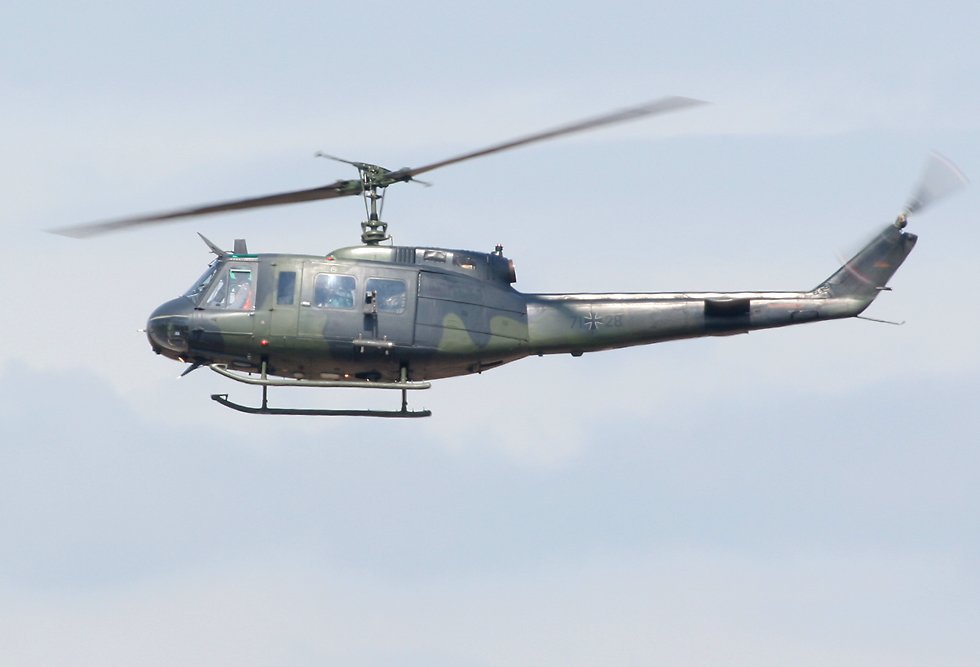
| It
was very worthwhile hanging around Brno airport for arrivals coming in
ahead of the 2006 Czech International Air Fair. This was especially
true for someone accustomed to American airshows where virtually no foreign
aircraft are seen flying; it was great to see aircraft from many different
European nations arriving, even if they were fairly pedestrian types like
this German Army UH-1D Iroquois helicopter. |
 |
| Another
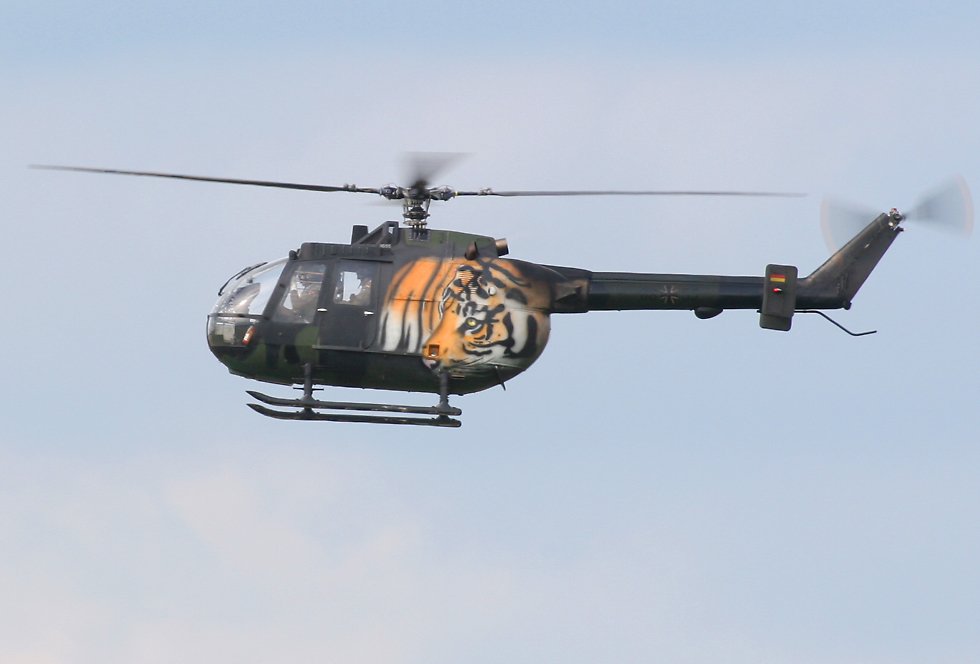
German Army helicopter, but of a much less frequently seen type, a Bo-105
manufactured by the German company Bölkow, which became part of Messerschmitt-Bölkow-Blohm
and was then swallowed by Eurocopter, never to be seen again.
While it's not a type seen in the United States, it was commercially successfully
and was sold in about 20 countries around the world. This one
has the type of tiger motif typically sported by aircraft which participate
in NATO military exercises called "tiger meets". |
 |
| Another
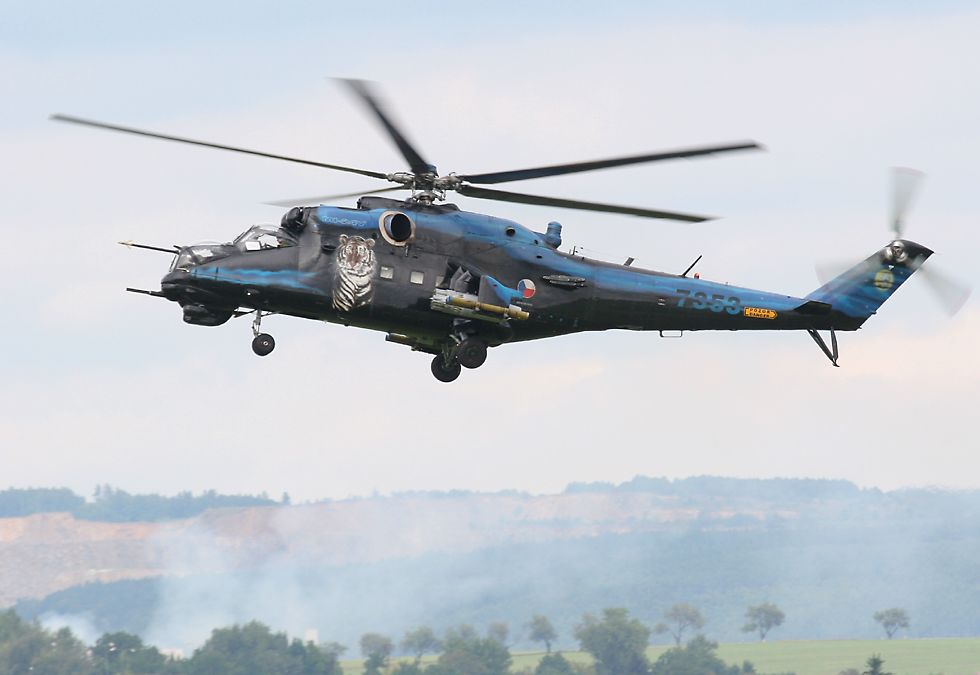
tiger, but this Russian designed Mi-24 "Hind" helicopter definitely wouldn't
have been part of a tiger meet 10 or 15 years ago, instead the people at
the tiger meet would have been training to fight against it!
It was the Mi-24 that prompted me to make the trip from Los Angeles to
Brno, because it's such an icon of Russian military power and yet virtually
impossible to see in the United States. |
 |
| There
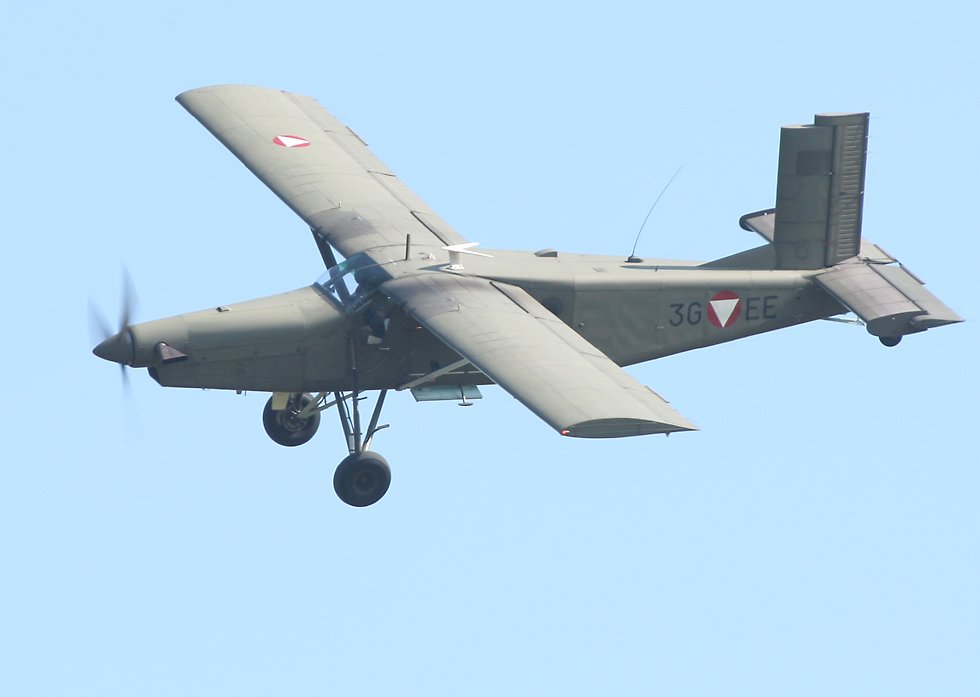
were also plenty of fixed wing aircraft flying in on arrivals day, like
this Austrian Air Force PC-6 Turbo Porter designed by the Swiss company
Pilatus. It's rather a crude looking aircraft, with a rectangular
slab of a tail, very straight wings and fixed undercarriage, however its
short takeoff and landing performance even with a load of cargo or passengers
is excellent, making it worthy of its nickname "jeep of the air".
The first flight I ever made in a light plane was in a Porter doing tourist
flights in New Zealand, taking off at a regular airport but landing on
a snow covered glacier using skis. It's had many military operators
around the world, including both the United States air force which operated
it as the AU-23A Peacemaker and the US army which operated it as the UV-20
Chiricahua. |
 |
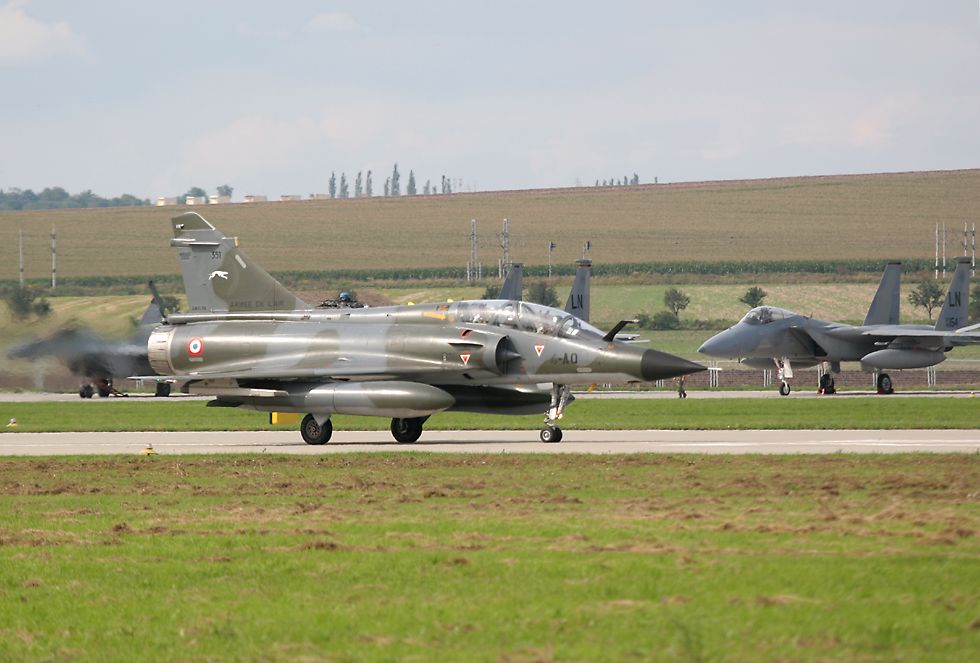
| The
French Armee De L'Air sent a couple of Mirage 2000Ns to the show, unfortunately
only for static display and not flying, though you can see one
of their Mirage 2000Ns flying at the 2005 MAKS airshow in Moscow.
Some people might unkindly say that it was typical that the French decided
to land in the other direction to everyone else, the first one popped his
chute on landing but unfortunately I wasn't in position and the second
one didn't repeat the trick. The British also sent several
aircraft for static display only, a pair of Tornadoes and a Harrier "jump
jet", and the United States sent the two F-15 Eagles you see here from
Lakenheath in the UK. |
 |
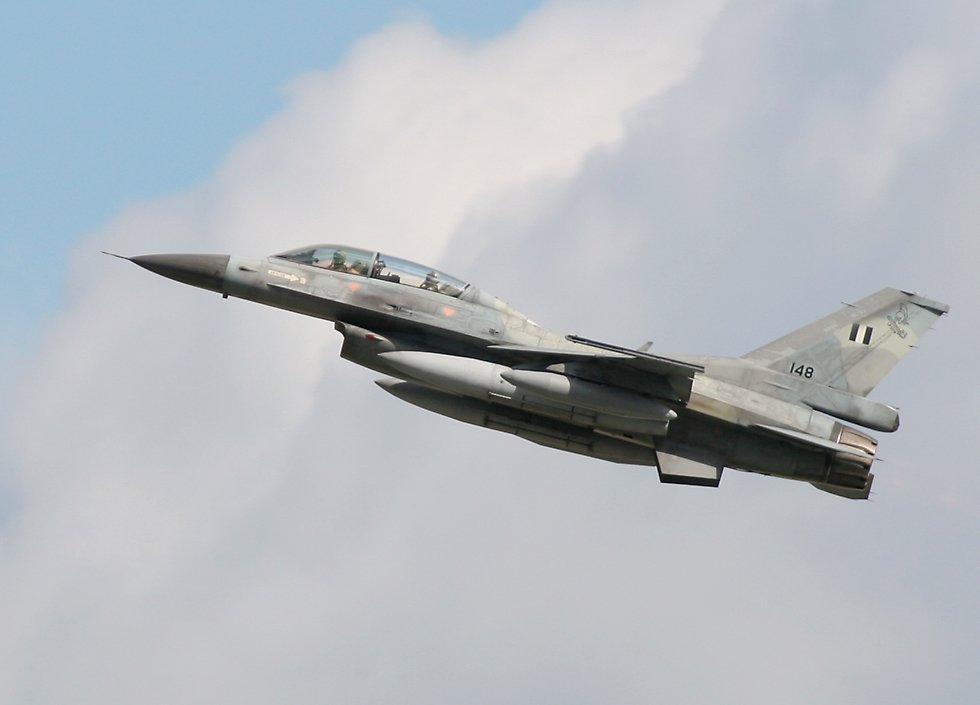
| The
United States also sent their Viper East demonstration team to display
with an F-16 Fighting Falcon, but in Europe they have a couple of hard
acts to follow, since the Dutch and Belgian F-16 displays are both really
dazzling and have extras that the Americans don't employ, like smoke and
flares. Several other countries sent F-16s for display at Brno,
but the one everyone wanted to see was this rarely encountered Greek air
force example. It was escorted in by a couple of Gripens, as
were the F-15s, but I took this shot on departures day when hardly anyone
else was around. |
 |
| There
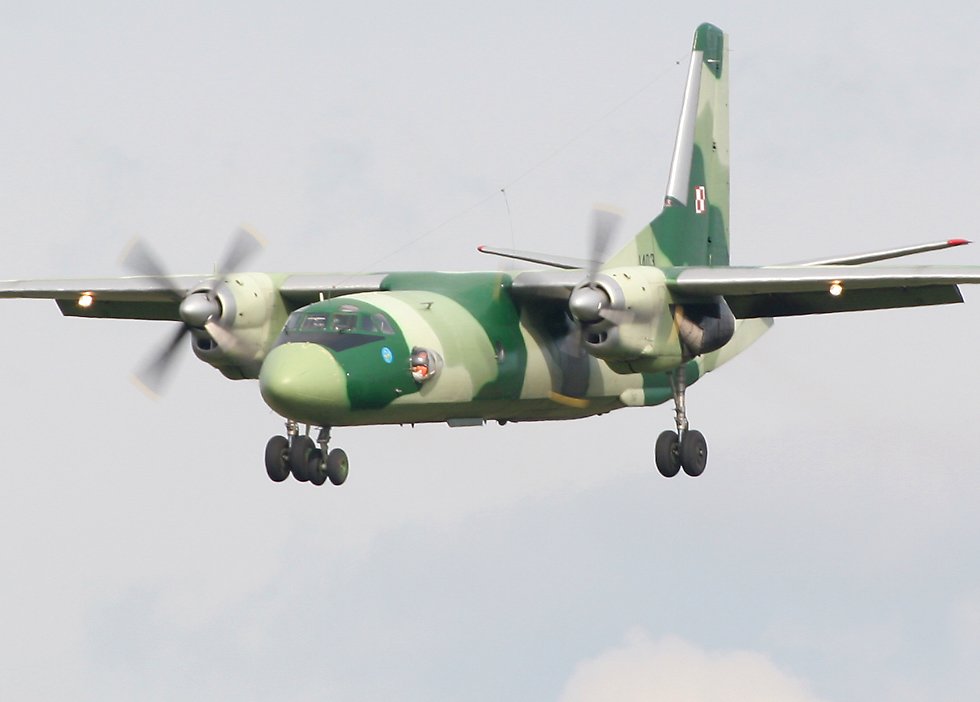
was a nice selection of exotic transport types, with several Antonov An-26
"Curl" aircraft showing off their distinctive downwardly bent outer wings
on static display. The colourful example you see here is a
Polish air force example; it's a very successful and reliable aircraft
which has been exported to dozens of countries and even reverse-engineered
by the Chinese as the Y-7. |
 |
| This
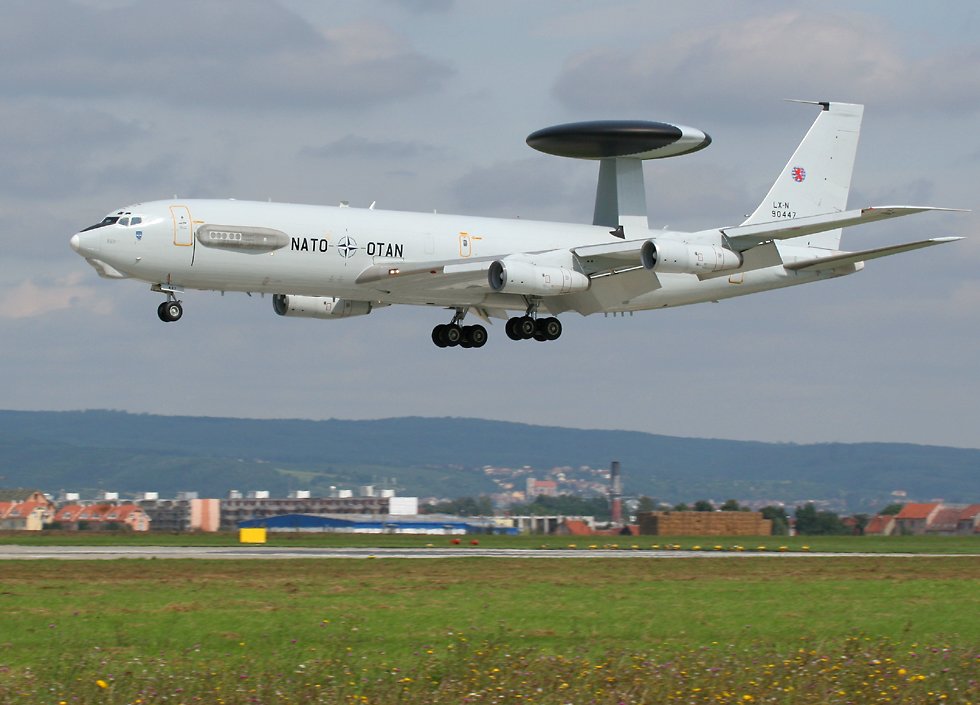
E-3A Sentry AWACS aircraft operated by NATO is an American design but pretty
exotic. This is the first one I've seen flying, and although
it was only on static display during the show it did a touch-and-go before
coming around to land on arrivals day. I was able to get this
and other photos of it landing by joining several friendly locals inside
the tall airport perimeter fence, courtesy of a couple of loose planks! |
 |
| The
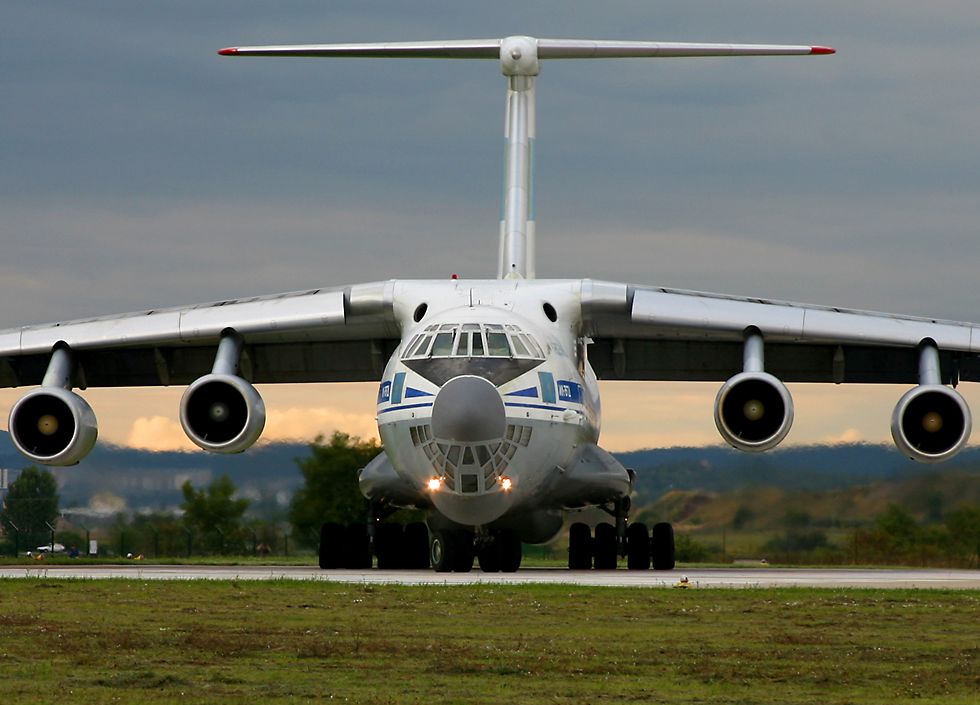
E-3A is large but it wasn't the largest plane to fly over the weekend,
that honour belongs to this Russian-designed Ilyushin IL-76, which carries
the NATO reporting name "Candid". Some military versions of
the IL-76 have a gun installation in the tail with two radar-directed 23mm
cannon. The aircraft you see here is operated by Kazakhstan
and was on a cargo-hauling mission, so it was pure luck that it was present
during the show. It was also pure luck that I went to see it
together with a couple of Dutch guys I met at the show, only a few minutes
before the plane started up and headed away. |
 |
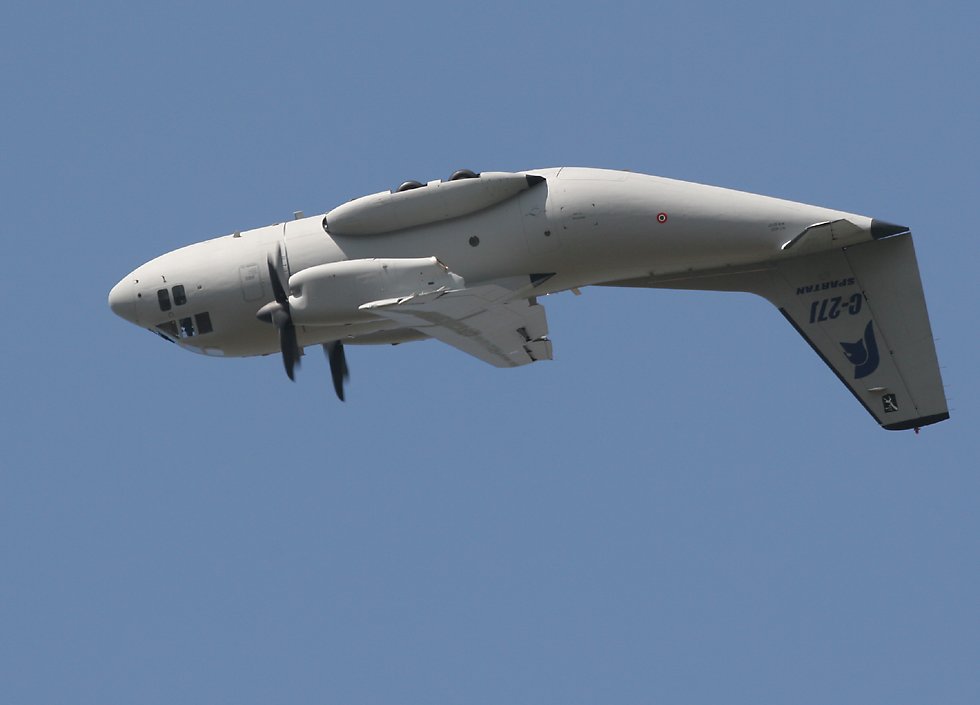
| The
fourth juicy cargo type at the show was this Italian air force C-27J Spartan,
acting as support ship for the Frecce Tricolori jet display team.
However, as you can see the C-27 has a few tricks of its own!
The Spartan was derived from the Italian designed G222, which also flew
some wild maneuvers at airshows, indeed I was present at the 2002 Royal
International Air Tattoo in the UK when a
G222 had a dramatic but non-fatal landing accident. The G222 also did
a pretty spectacular display
at RIAT 2002 but it only performed barrel rolls, whereas the C-27 can
do a regular loop, as you see here. |
 |
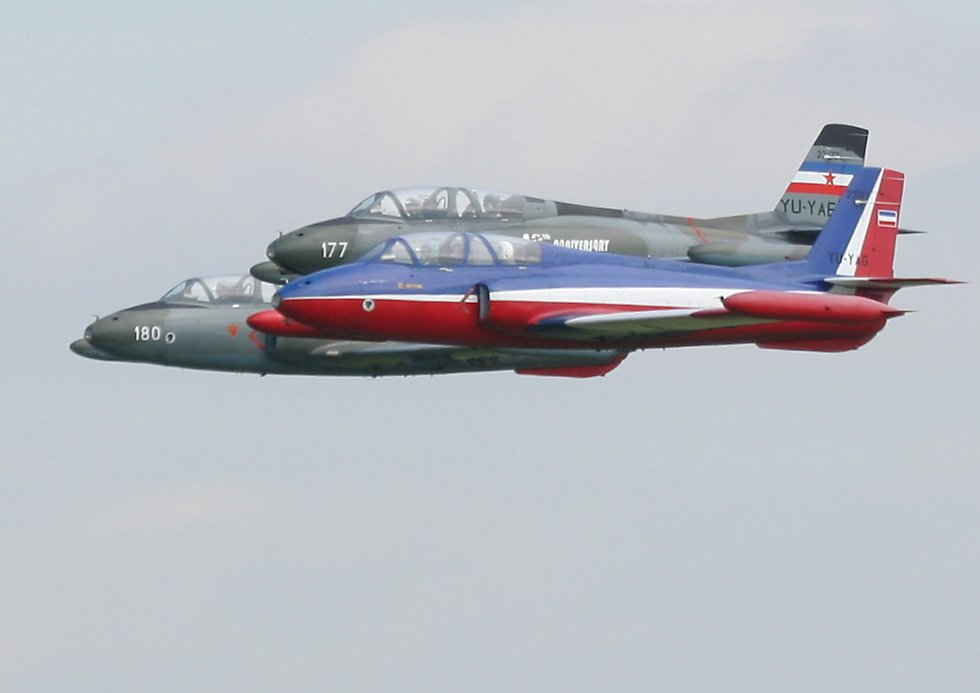
| The
Galeb flying club based in Belgrade sent over a trio of Soko G-2 Galeb
trainers, two of which were painted in their original Yugoslav air force
color scheme. The Galeb (which means "seagull") was designed
in Yugoslavia and over 250 were built, with some exported to Libya and
Zambia. They were armed with two 12.7mm machine guns mounted
in the nose, and could also carry 350kg of ordnance under the wings. |
 |
| Here's
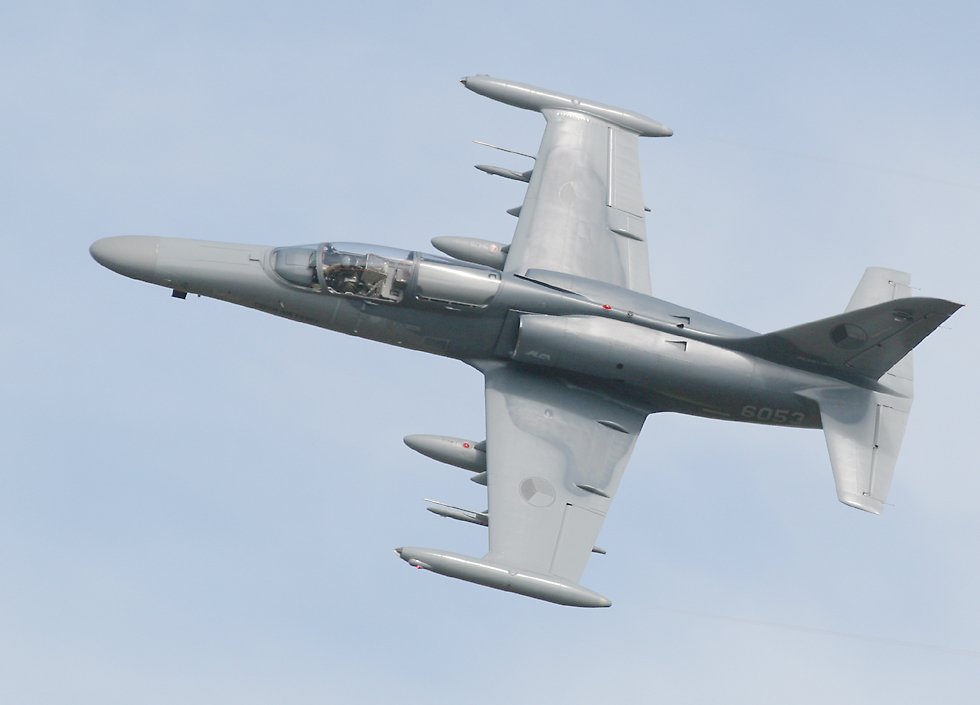
another rather more capable strike aircraft, the Czech designed Aero L159A
Advanced Light Combat Aircraft (ALCA). Based on the very successful
Soviet standard trainer, the L39 Albatros, the L159A has a much longer
nose, wingtip fuel tanks and four hardpoints which can carry bombs, rockets
and gunpods. The Czech air force has 72 of them, two of which
put on a very good display doing a simulated attack against the airport.
The Aero company also put on an excellent display of their two-seat L159B
Albatros II trainer. |
 |
| Now
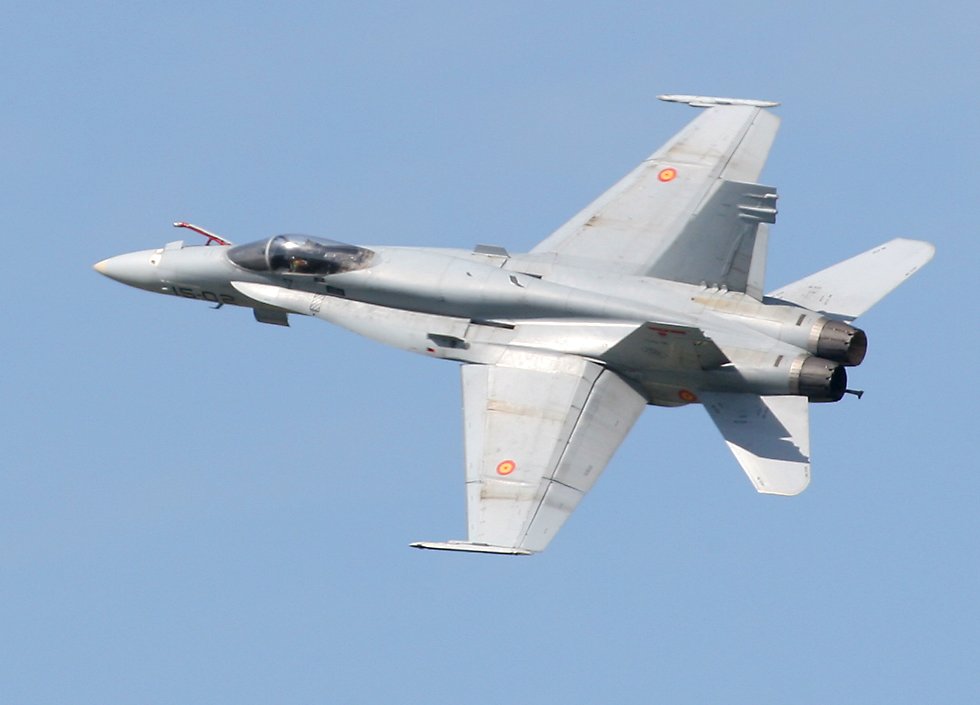
we move up to the big boys, starting with this Spanish air force Hornet,
which carries the designation EF-18A+, quite a mouthful! The
"E" doesn't stand for "electronic" as it would with an America aircraft,
instead it stands for "España" ("Spain"). The display
was very dynamic, with steep dives, sharp banking as well as fast and slow
passes in both a clean configuration and also with the undercarriage, probe
and tailhook hanging out. |
 |
| Now
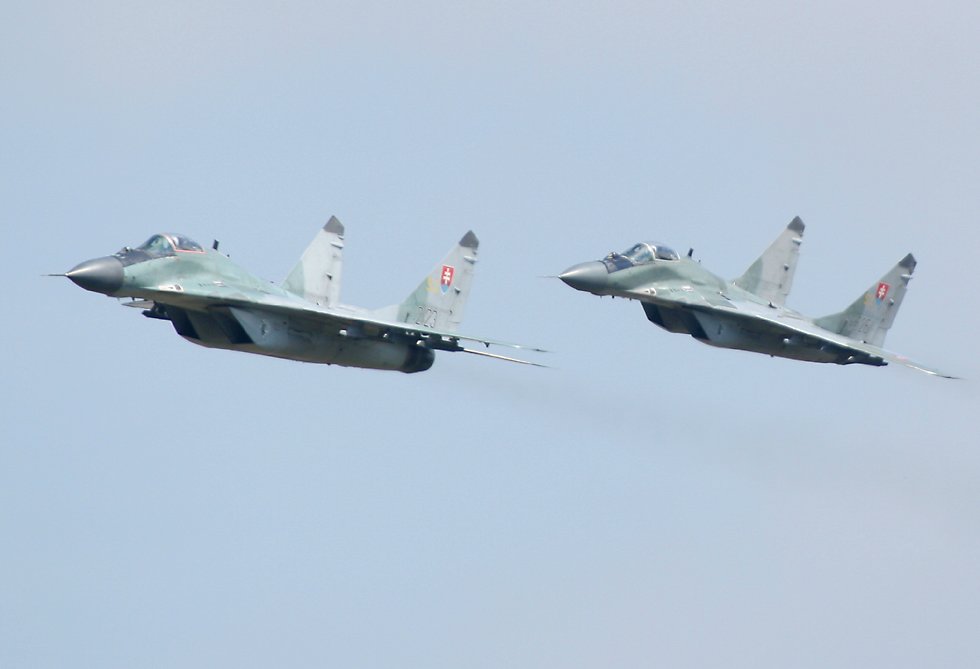
to the bad boys, a pair of Slovakian air force MiG-29 "Fulcrum" fighters.
The MiG-29 and the Sukhoi Su-27 were Russian responses to the development
of the F-15 Eagle, and both have proven to be very capable aircraft.
Indeed any F-18 pilot who decided to get into a dogfight with a MiG-29
might soon regret the decision, since the Fulcrum can out-turn the Hornet
and quickly gain the upper hand. |
 |
| The
Hungarian air force also sent a MiG-29, which did a display every bit as
good as the Hornet, though when power was applied the engines were noticeably
smokier, like the F-4 Phantom and other earlier generation American aircraft. |
 |

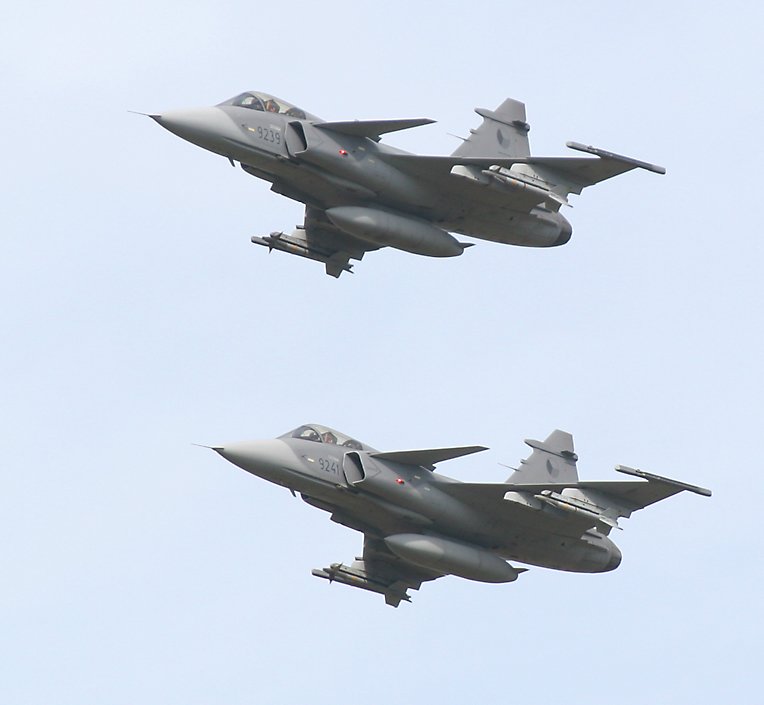
The Fighting Falcons, Hornet and MiGs were nice, but the stars of the show
as far as fighters were concerned were these Saab JAS-39C Gripens, recently
acquired by the Czech air force through a leasing arrangement.
As you might expect, the Gripen ("Gripen" means "griffon" in Swedish) is
already in service with the Swedish air force; the Empire Test Pilots'
School in the UK has a few, deliveries have begun to the South African
air force, and it has also been ordered by the Hungarian air force.
The Swedish acronym "JAS" stands for "fighter", "attack" and "reconnaisance",
emphasizing its multirole capabilities.
The Gripens were busy even before the show began, escorting the F-15 Eagles
and the Greek F-16 on arrivals day right up to Brno airport.
As you can see, these two were loaded with (presumably inert) air-to-air
missiles, they can carry up to 6 short-range Sidewinders or 4 medium-range
missiles of various types. They also have a single 27mm cannon,
which you can see mounted at the bottom of the nose. |
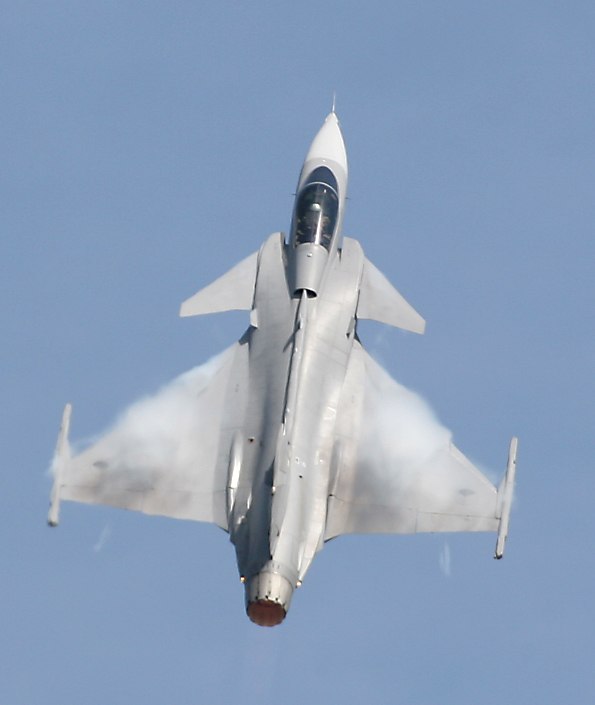
 The
Gripen is capable of Mach 2 and the Czech pilots put on a very good display,
particularly considering how recently the aircraft were acquired.
The small canard wings near the front provide good turning and pitch control,
also allowing a greater payload to be carried, and by turning them downwards
the landing run can be reduced. |
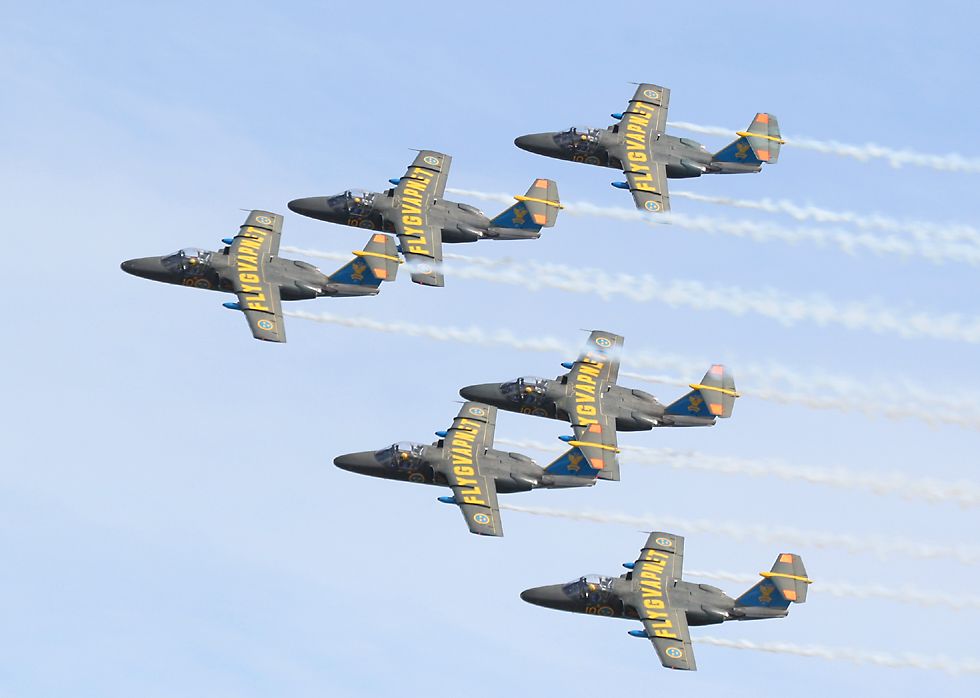
| Perhaps
to show their gratitude to the Czechs for buying the Gripen, the Swedes
also sent down their air force display team, called "Team 60" after the
Saab 105 trainers which they fly, which are referred to in the Swedish
air force as the SK 60. |
 |

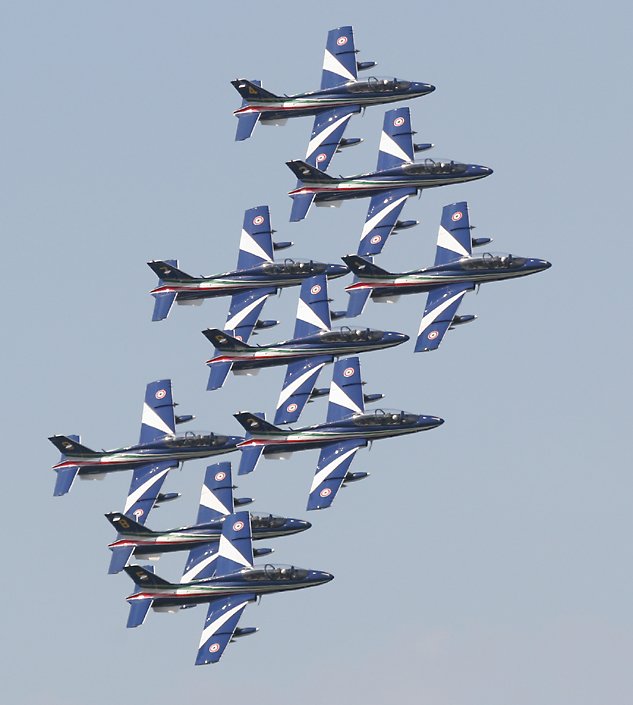
Several national jet display teams were at the show, the best of which
was probably the Italian air force team Frecce Tricolori, meaning "the
three-colored arrow".
They do an excellent display in their 10 Aermacchi MB-339 trainers, 9 flying
formation and a solo, making them the largest jet team in the world.
They're certainly the smokiest, dumping vast quantities of red, green and
white smoke into the air before and during their performance.
I imagine the long-suffering inhabitants of Brno would have been washing
their houses for some time after the show! |
| Many
people were hoping for the Russian air force Swifts to fly their MiG-29s
at the show, it didn't happen but I did see the Swifts perform the following
week at Gidroaviasalon
2006 in the Russian Black Sea resort town of Gelendzhik.
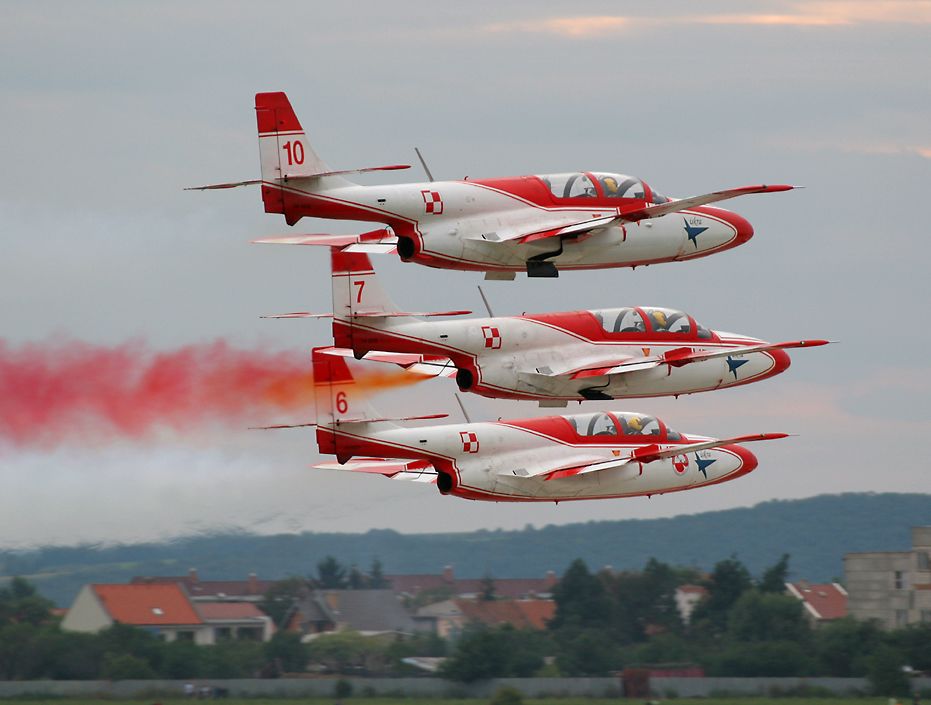
So the final display team at Brno was the Polish air force team, called
the "White and Red Sparks", flying TS-11 Iskra trainers. |
 |
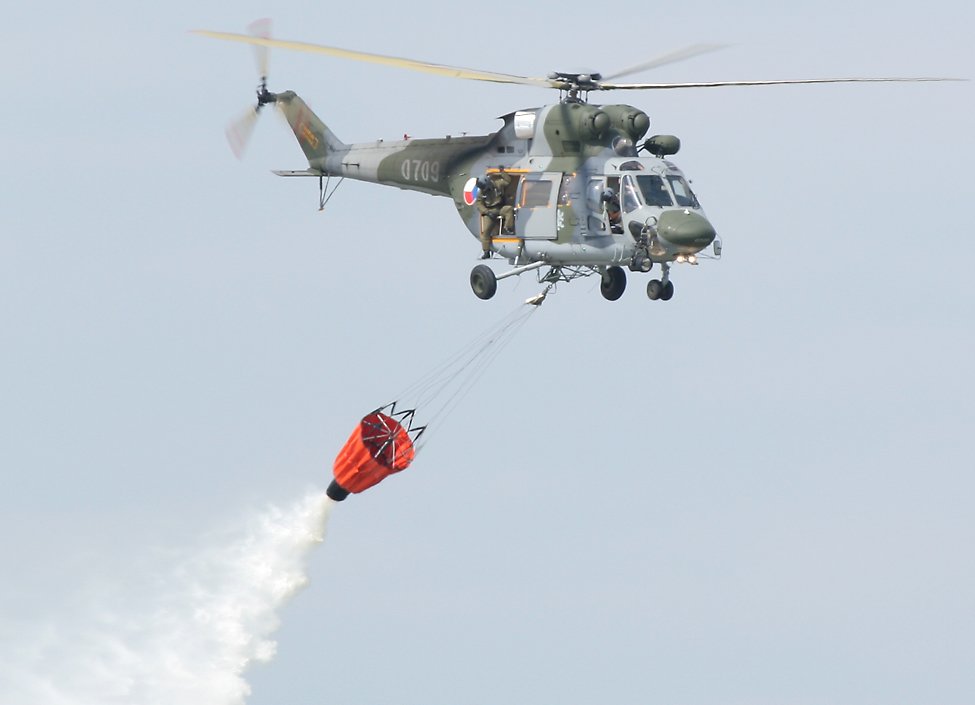
| As
you've seen, the show had lots of interesting stuff for helicopter fanciers
like myself, including a few types I was unfamiliar with like this Polish
designed W3A Sokol ("Falcon"). As well as this fire-fighting
demonstration, they also did a search and rescue display where a crewman
hung at the end of the hoist as the helicopter maneuvered in front of the
crowd. |
 |
| The
W3A is quite a bit smaller than the Czech air force's other main utility
helicopter, the Mi-8 helicopter designed by the Russian design bureau Mil.
Code named "Hip" by NATO, the Mi-8 first flew in 1961 and became one of
the most successful helicopters in the world, with exports to over 50 countries.
As well as having a large cargo payload or being able to carry 24 passengers,
it can also be fitted with rockets and guns for use in an attack role. |
 |
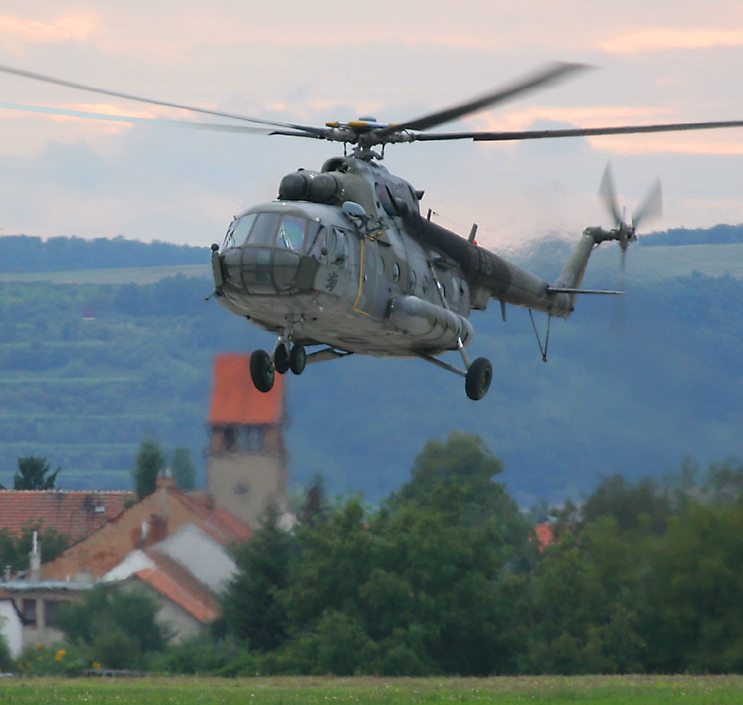
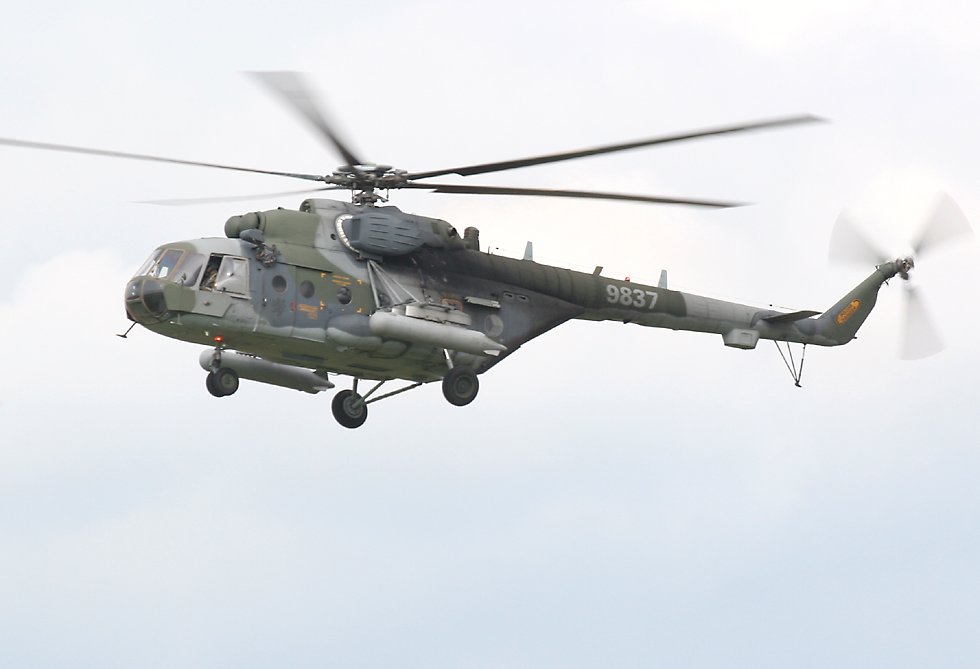
| The
Czechs liked the Mi-8 so much that they bought 16 of its successor in 2005,
in the form of brand new Mi-17 "Hip-H" helicopters. The Mi-17
is a development of the Mi-8, in Russian service they're actually called
Mi-8MT, and other designations already exist - the Czech ones are sometimes
referred to as the Mi-171Sh. The main distinguishing feature
of the Czech Hip-H is a square-cut loading ramp at the rear, rather than
the rounded clamshell doors at the back of the Mi-8. The Mi-17
you see here is also fitted with an infra-red suppression system on the
outlets of the two jet engines, and also with external pylons, in this
case carrying only fuel tanks. |
 |
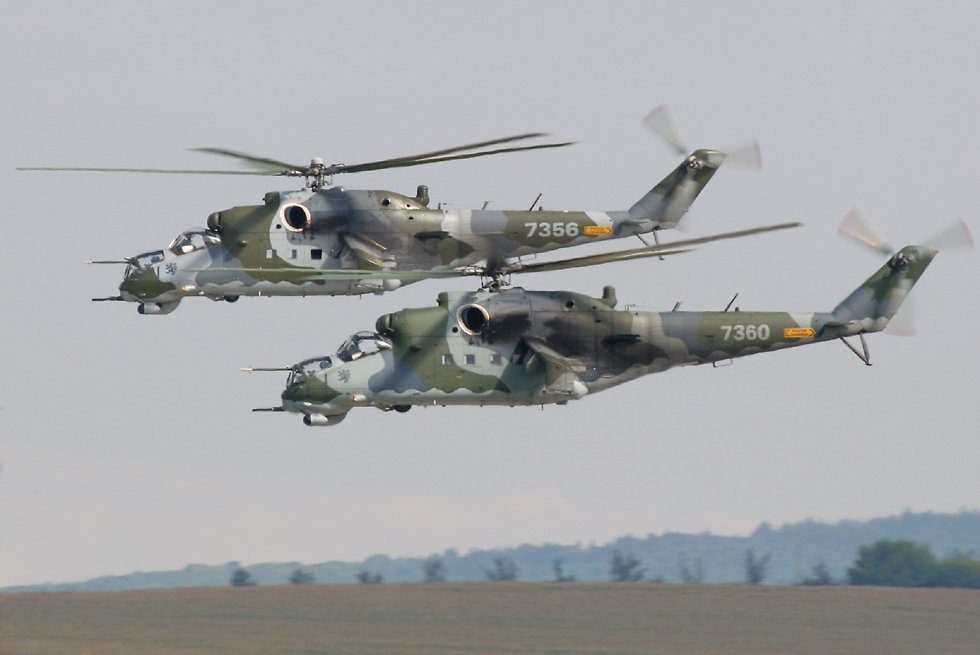
| After
reviewing American use of helicopters in Vietnam, the Russians used the
Mi-8 as a starting point for development of the Mi-24 "Hind", which became
famous fighting in Afghanistan. Early versions like the Hind-A
didn't have the now familiar bubble canopies, instead they had squared-off
"glasshouse" canopies like the
Vietnamese air force Hind-A I saw in Hanoi, which was used against
the Khmer Rouge in Cambodia. |
 |
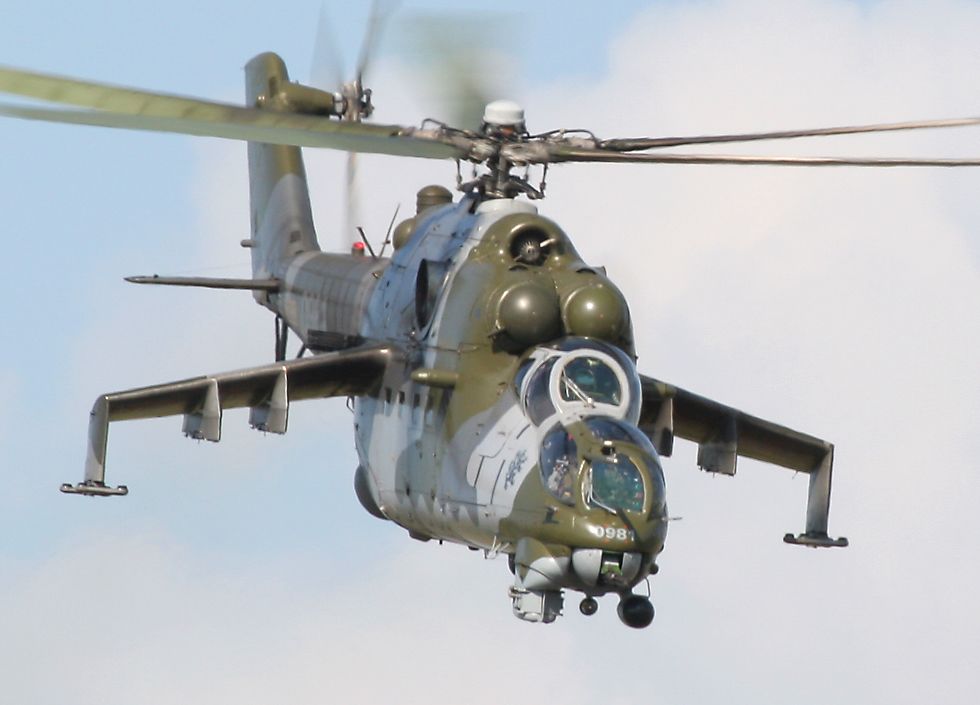
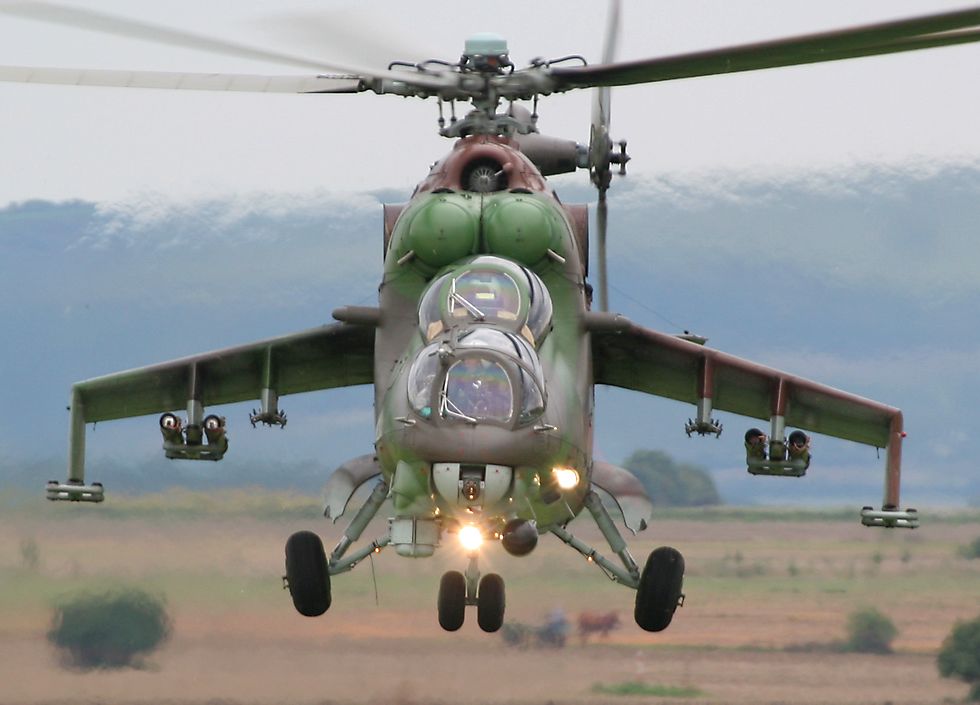
| The
Hind is an awe-inspiring machine which has earned respect in the many military
engagements it's engaged in. Over 2000 have been constructed,
with about 600 exported. The pilots are enclosed in titanium
armour and the rotors are also made of titanium to allow them to withstand
being hit by gunfire. The undercarriage is retractable, which
allows a high rate of speed. |
 |
| The
Hind can carry an enormous amount of firepower, starting with the swivel
mounted gun you can see on the centreline in front of the forward crewman,
who acts as gunner. The gun is usually a multi-barrelled 12.7mm
type, but it's also possible to fit a pair of 30mm cannon to the starboard
side of the nose. There's also a full range of guided and unguided
rockets which can be fitted on the pylons below the stub wings for use
against tanks and other ground targets. This photo shows a
Slovakian air force Hind, which carries a different colour scheme than
the Czech ones. |
 |
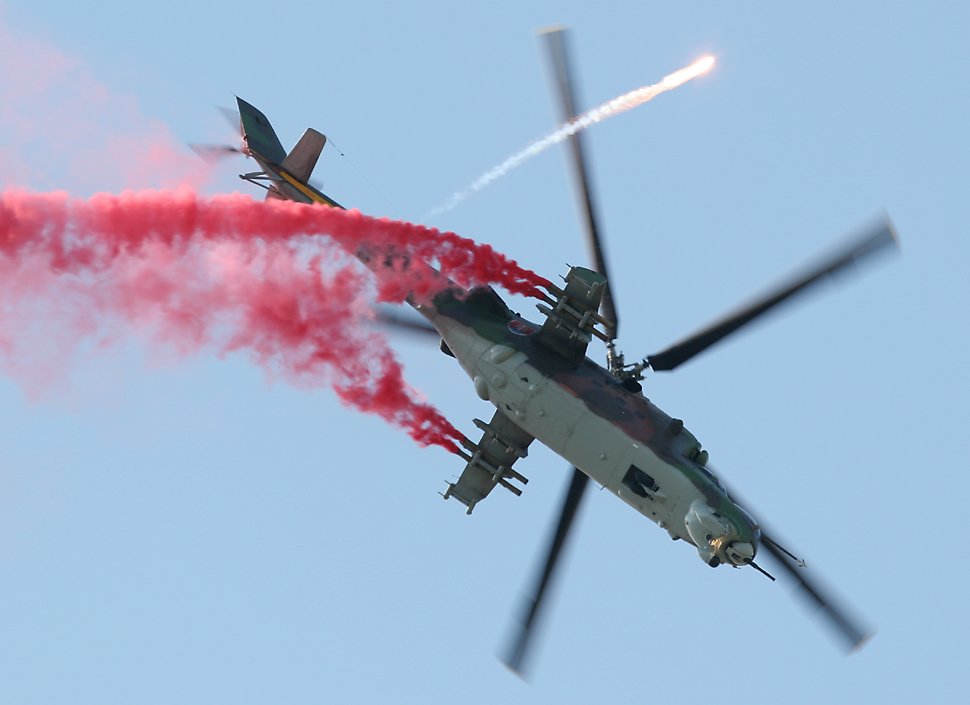
| It
was the hope of seeing a Hind in action that brought me from Los Angeles
to Brno, and I saw more than enough to keep me happy for a while.
In particular, the Slovakian demo team went beyond a straight demonstration
of maneuverability to give a full-on display with both smoke and flares.
The former was done just for the heck of it, but flares are a standard
part of operating in hostile territory, where shoulder-fired surface-to-air
missiles have proven a serious problem to helicopters of all types. |
 |
 |