
Wildlife of the Philippines
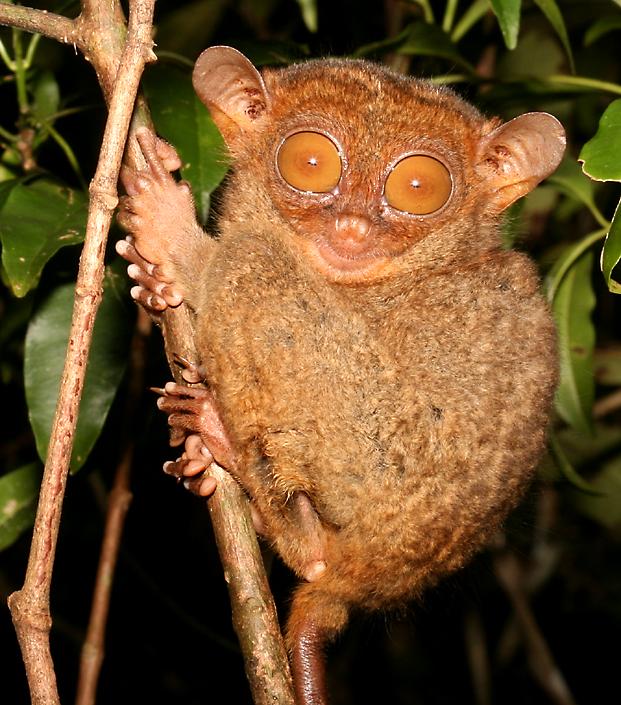
You'd be hard pressed to find a cuter or more loveable creature than this one, a Philippines tarsier. Tarsiers like this are among the smallest primates on the planet, and although they used to be relatively widespread, they're now only found in small pockets of forest on several of the Philippines islands, and in Indonesia on the islands of Borneo and Sulawesi. This one was at the Tarsier Visitors Center on the island of Bohol, which runs the foremost preservation effort for them in the country. Not only are tarsiers one of the smallest primates, they're also one of the most ancient, having been around for 45 million years, fossils showing that they once also lived in North America, Europe and mainland Asia. Tarsiers get their name from the extremely long tarsus bones in their feet. Imagine this little fluffball without all of its fur and you'll realize just how long those feet and legs are, enabling this pint-sized critter to jump an extraordinary four meters from tree to tree, all the better to catch the insects which are their main prey. Their toes are almost sucker-like, with peculiar looking grooming claws which stick straight out from some of the toes. If the legs are out of scale, then so too are the eyes, which occupy a very large proportion of the skull. They have the largest eyes compared to their size of any mammal, and if tarsiers were the same size as a human then those eyes would be 150 times the volume of our own. The large eyes are an adaptation which allows them to move and hunt at night. Those eyes are practically immobile, but tarsiers make up for that by their ability to turn their head 360 degrees around, and they can also rotate their ears in a large arc to catch the noise of jungle insects, as well as birds and snakes, which they're also said to occasionally feed on. They're the only primate which is exclusively carnivorous. |
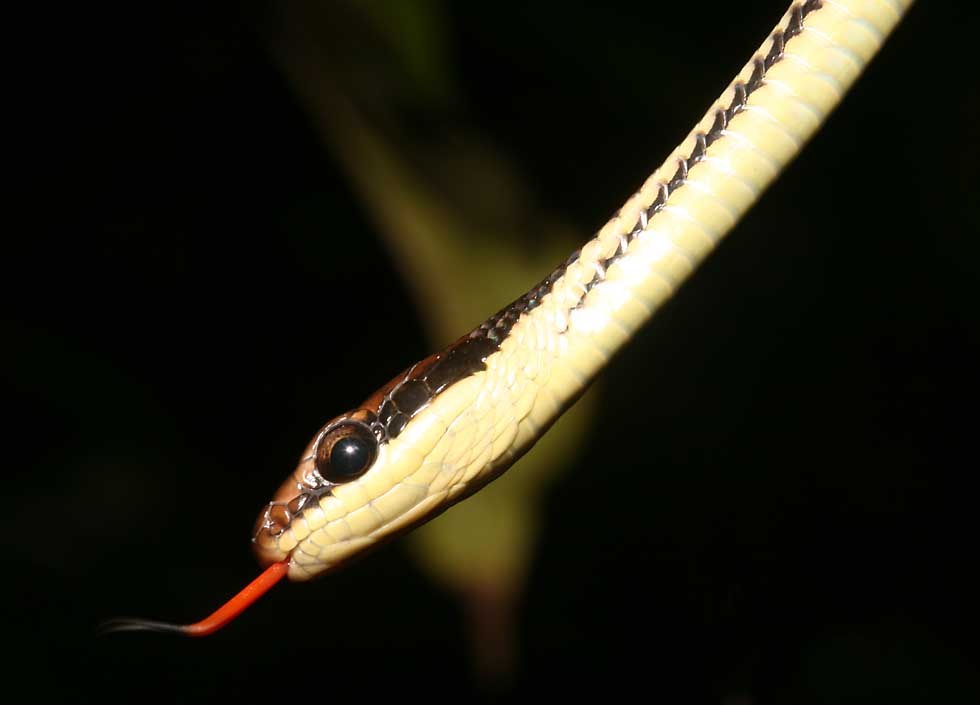

Due to my restricted time in the forest, this is almost the only foreign trip I've ever made without getting any photos of birds or butterflies. About the closest I got was this caterpillar, which I think might be a species of skipper butterfly. If that's true then the photo only half counts, since the skipper family is stuck somewhere between regular butterflies and moths. |

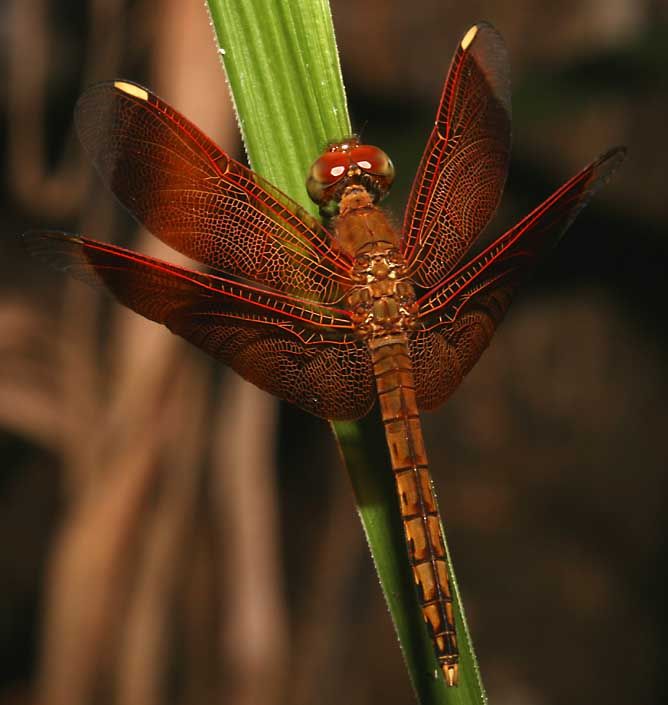
I might not have photographed any butterflies, but I did at least get a few shots of an almost equally photogenic group of insects, the dragonflies. This one goes by the rather fancy scientific name Neurothemis ramburii ramburii - so good they named it twice! It's sometimes called a variable skimmer, and is therefore a member of the largest family of dragonflies, called skimmers or perchers, which contains over 1000 species. |
|
This one is Agrionoptera insignis to its scientific friends, and the red swampdragon to everyone else! This is one of the dragonflies of Fiji that I photographed a few years ago, a few of which ended up on a set of Fijian postage stamps, for which I also wrote the accompanying brochure. |
 |
|
Beetles are the most common types of insect on the planet, but I was only able to photograph two during my trip, an attractive green weevil and this gold-colored beauty. |
 |
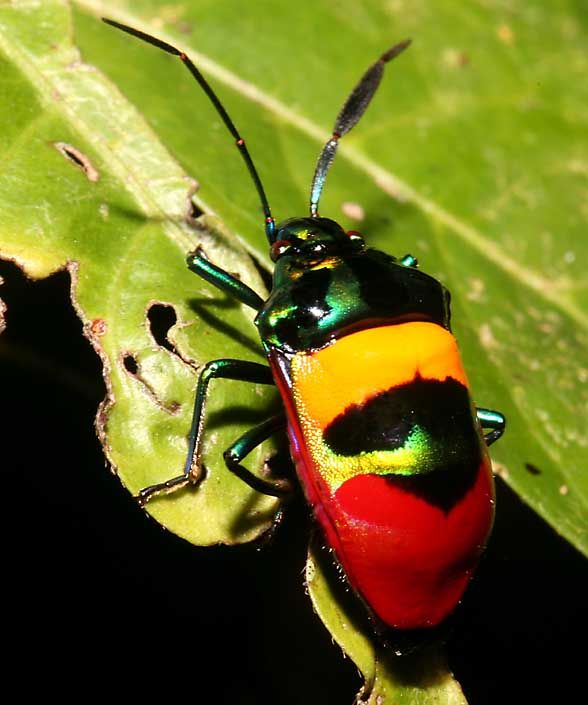
For some months I though that this was a beetle, but someone pointed out to me that it has a sucking mouthpiece rather than jaws and therefore belongs to the group called "the true bugs". The true bugs can have very interesting shapes and can be every bit as colorful as beetles, you can see a whole collection of them including this one on my true bug wallpaper page. |
|
This funny looking thing is another true bug - you can see its rostrum or piercing mouthpiece folded backwards underneath its body. |
|

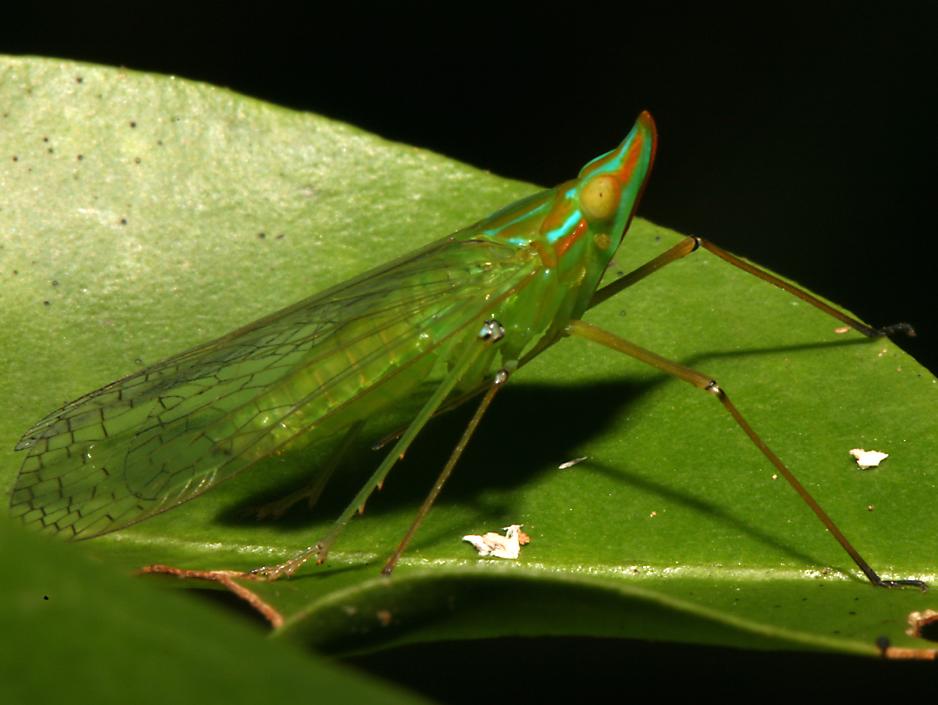
Yet another type of true bug, belonging to a family called "planthoppers", most of which have bodies and wings shaped like the ones you see here. Planthoppers aren't common in the United States, but they make me quite nostalgic for my early childhood days in New Zealand, because my grandparents had a passionfruit vine which was infested with them. Passionfruit are fairly common in New Zealand, but in the United States they're only occasionally seen in the supermarket and even then I don't buy them because they cost the ridiculous amount of $2.50 each. Nostalagia has its limits! |
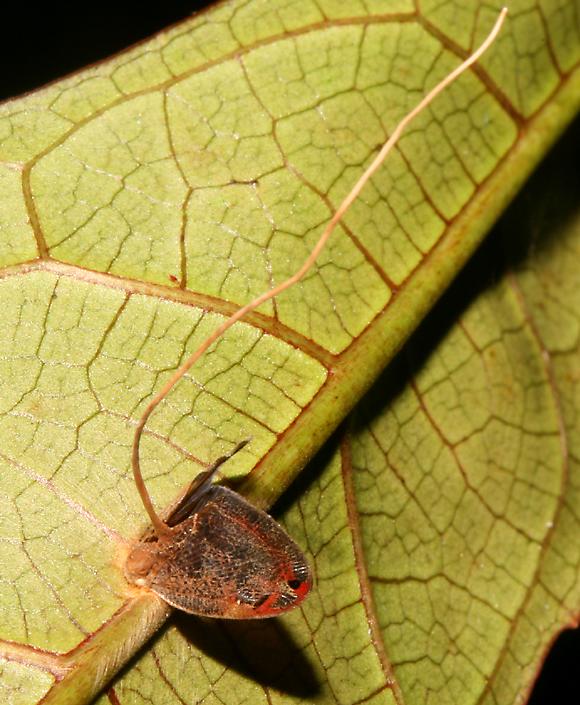
OK, that's clearly a planthopper, but what on earth is that strange looking thing protruding from it? It's actually a fungus, which has infected this individual and eventually killed it, before sending out this strange looking fruiting body, in the hope of spreading its spores and infecting other passersby. Such fungal attacks on insects are relatively common in the tropics, and apparently many of the fungi infect just a single species of insect. It's a considerable risk, especially for insects which congregate together, so some ants have evolved behavior to carry infected individuals far from the nest and leave them to die, in the hope that the rest of the colony won't be infected. |
|
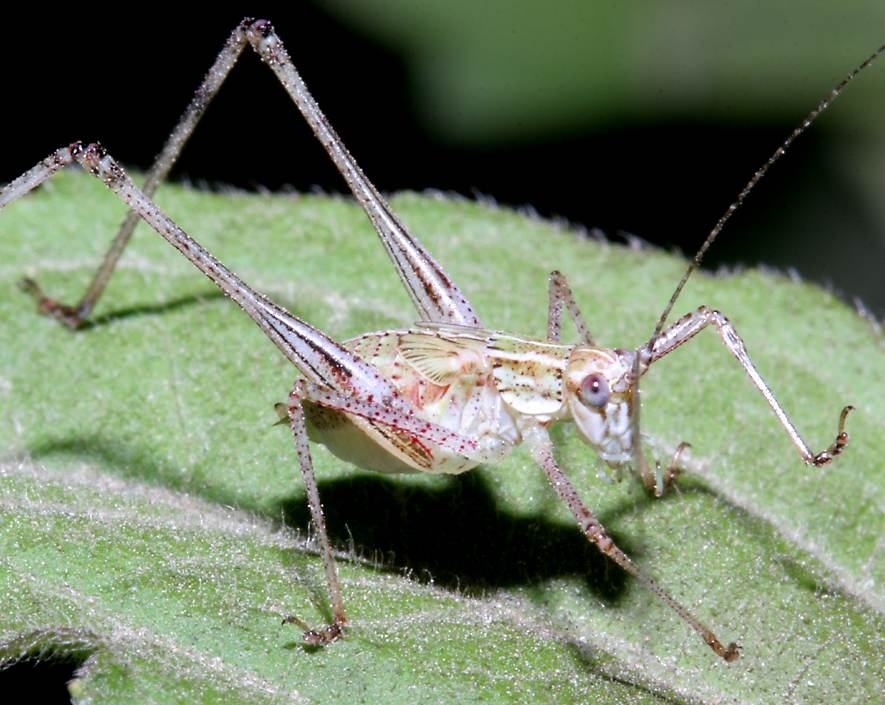
Look, ma, no hands! A juvenile cricket struts its stuff, though what the point is of lifting its front feet I can't guess. Maybe it has a hands-free mobile phone? |
 |
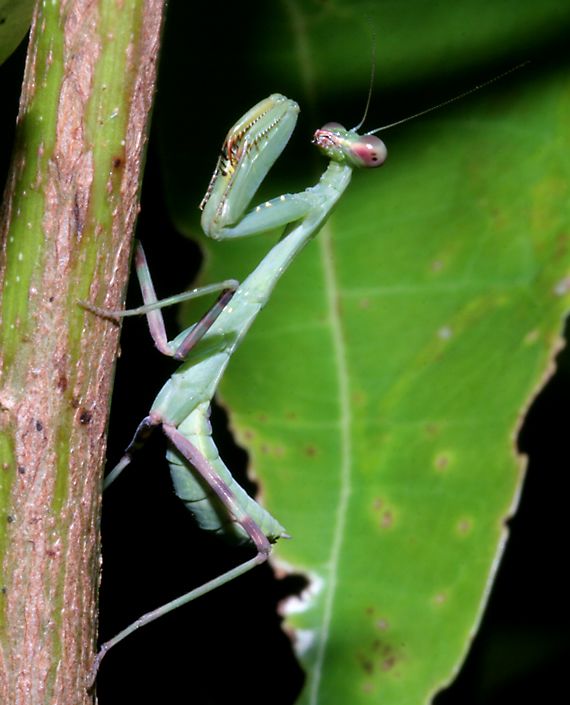
There are about 1,800 species of praying mantis in the world, most of which are in Asia. This is only a small one, but a 45 centimeter monster was recorded in China in the 1920s. They're highly visual predators, catching their prey in their viciously spiked front legs and then biting their heads off before proceeding with the rest of the body. Female praying mantises will even bite the head off a male who is mating with them, but the male's simple nervous system doesn't let that stop him from continuing to mate! Along with tarantula spiders and scorpions, praying mantises have become quite popular as pets, since they can be easily housed and kept alive with crickets or other prey. |
|
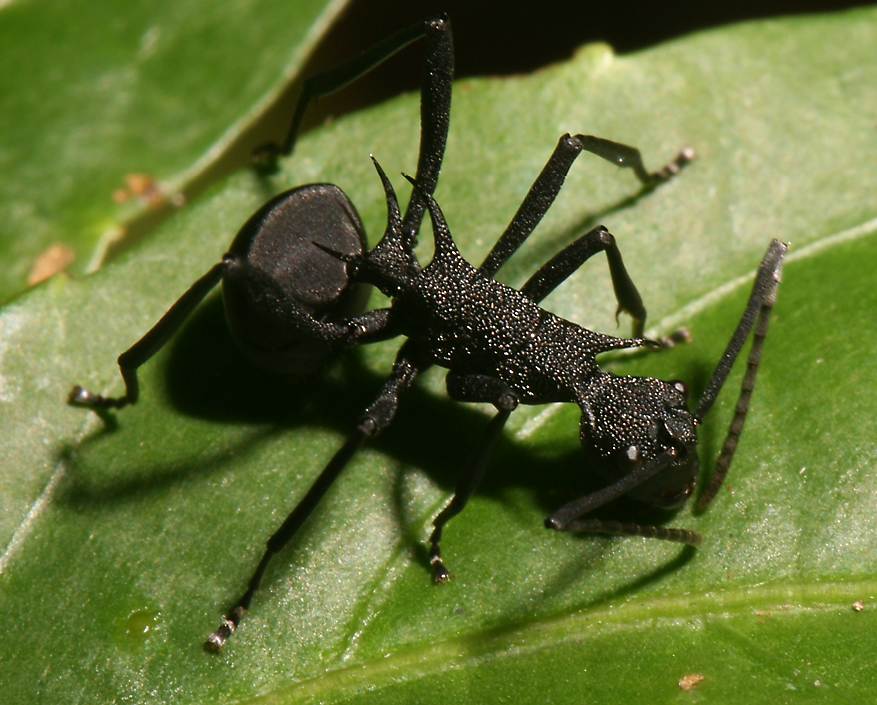
If this ant had a name then it would probably be "Spike". I guess the spikes behind its head and at the back of its body make it harder for an enemy to eat. |
 |
|
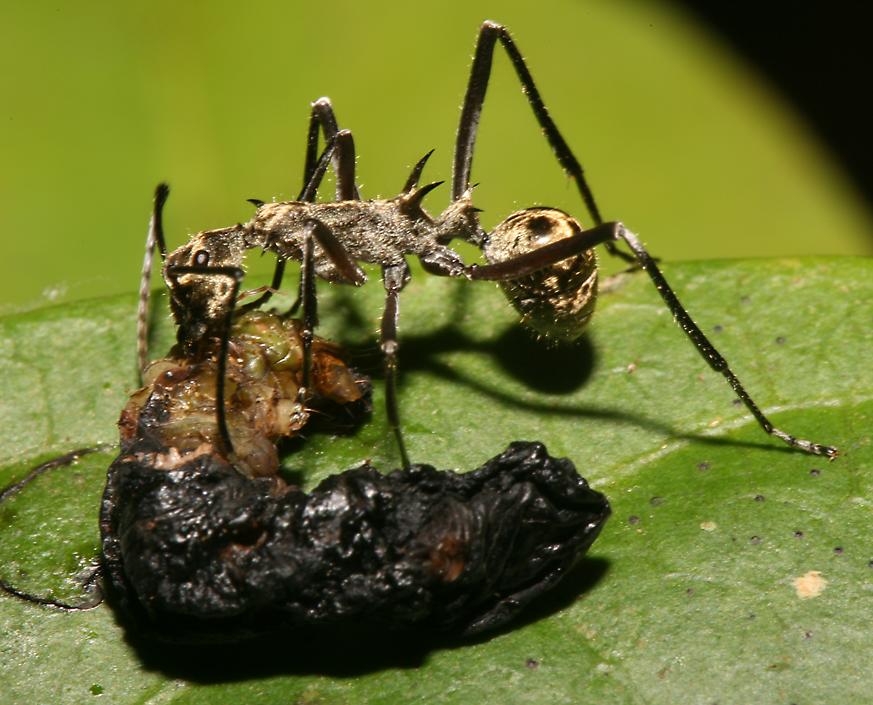
Another spiky ant, and a golden one at that! That nasty looking sack-shaped thing it's eating is a dead caterpillar. |
|
|
The caterpillar must have tasted pretty good, in fact it must have been finger-lickin' good! Interestingly, a year or two later I came across a jumping spider in Thailand which seemed to be mimicking gold-colored ants like this one. |
 |
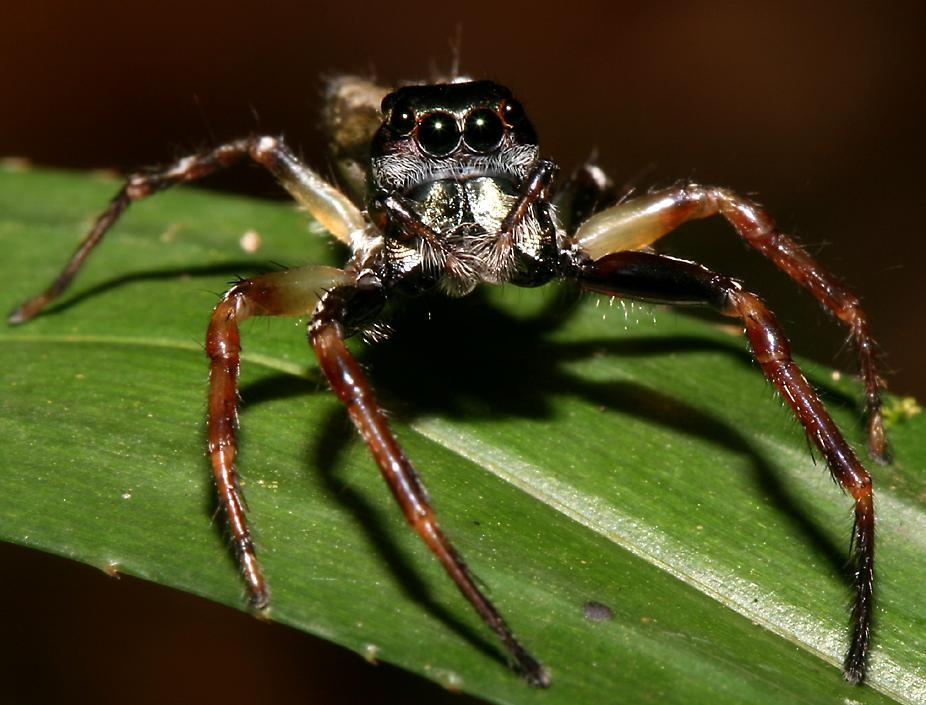


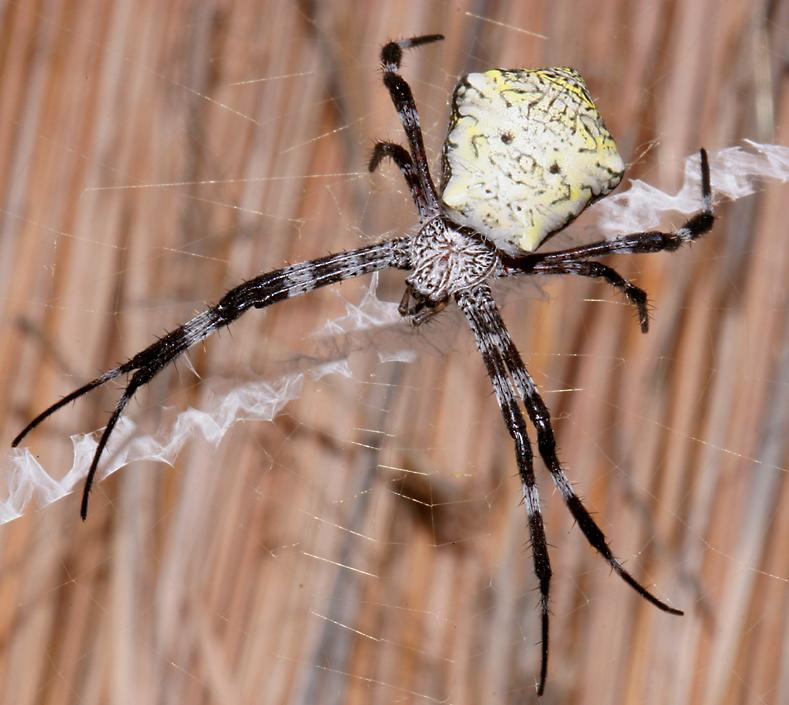
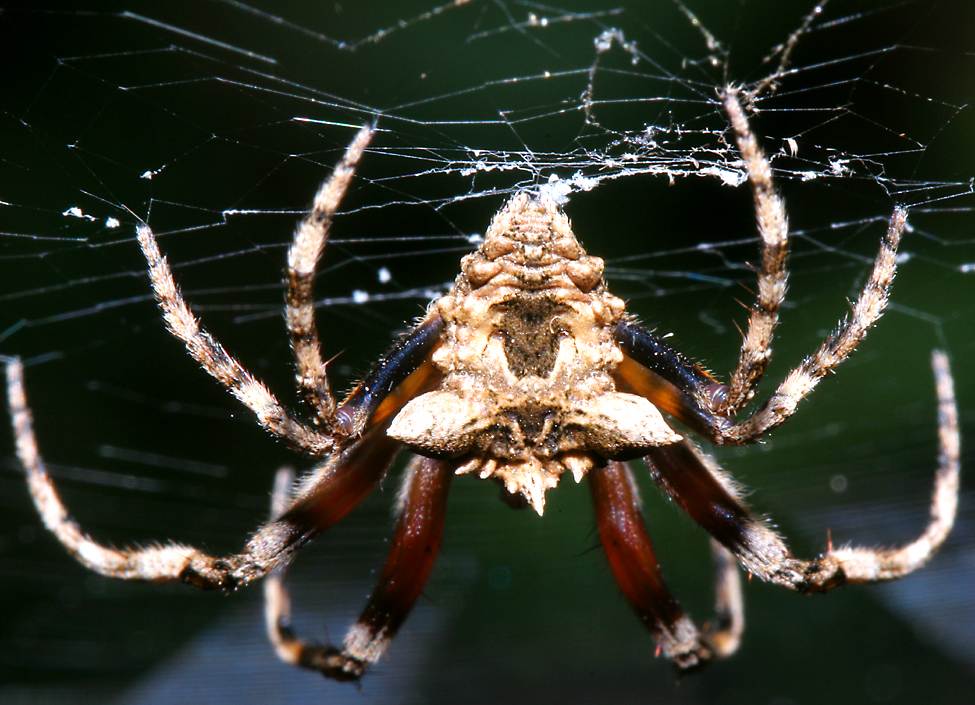
| I don't know what this weirdly shaped spider is called, or even what family it belongs to, but there were certainly plenty of them around. |
 |
|
A colorful orchard spider hanging in its web in the grasses. Orchard spiders have a distinctively shaped abdomen, and they often have quite attractive markings. |
 |
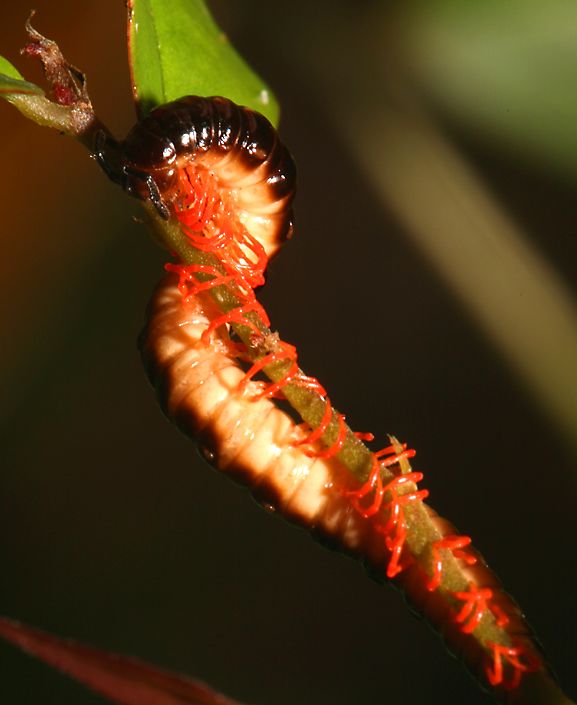
A somewhat less attractive critter as far as most people are concerned. The bright orange legs on this very small millipede clearly show the feature which distinguishes millipedes from centipedes; it's not the number of legs the animal has, but rather that millipedes have two pairs of legs for each body segment, and centipedes have only one pair. |
|
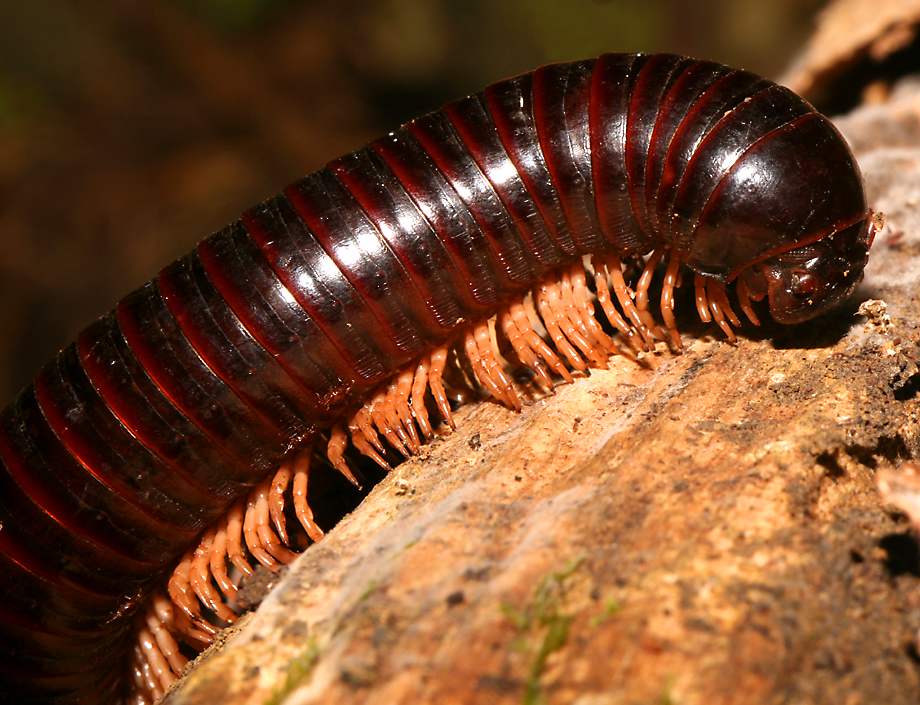
Another millipede, the largest I've seen anywhere, measuring about 20 centimeters from head to tail. |
 |
|
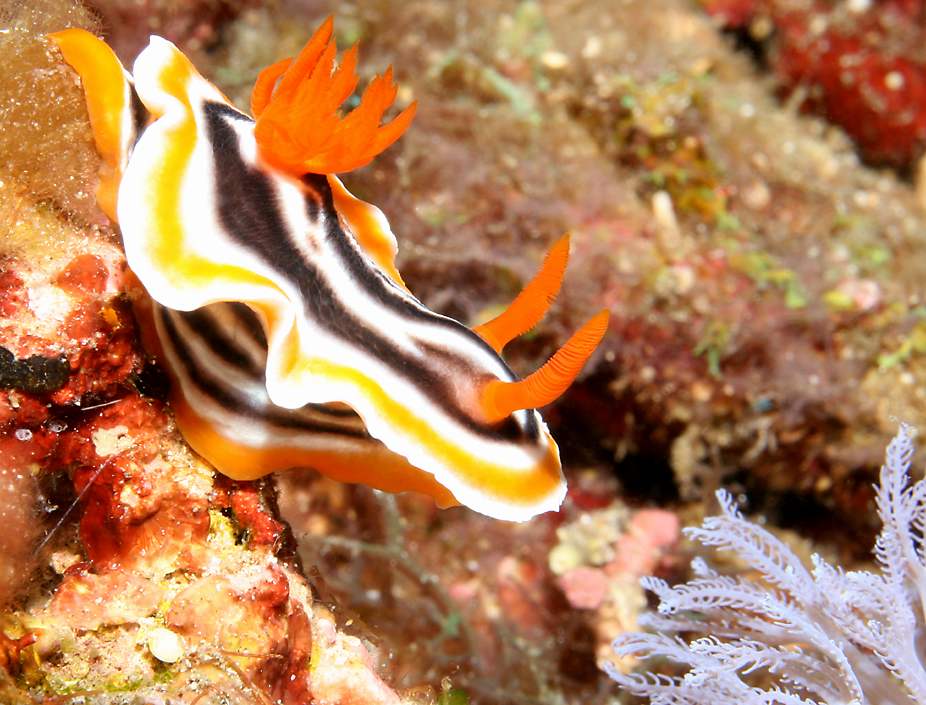
And here's a rather colorful slug. If something about this photo doesn't quite seem right, perhaps that's because it was taken underwater. This is a sea slug called Chromodoris magnifica photographed while I was diving off the island of Bohol. Sea slugs are a favorite subject for underwater photographers, so much so that I've put together an entire page of nudibranchs of the Philippines. |
|

|
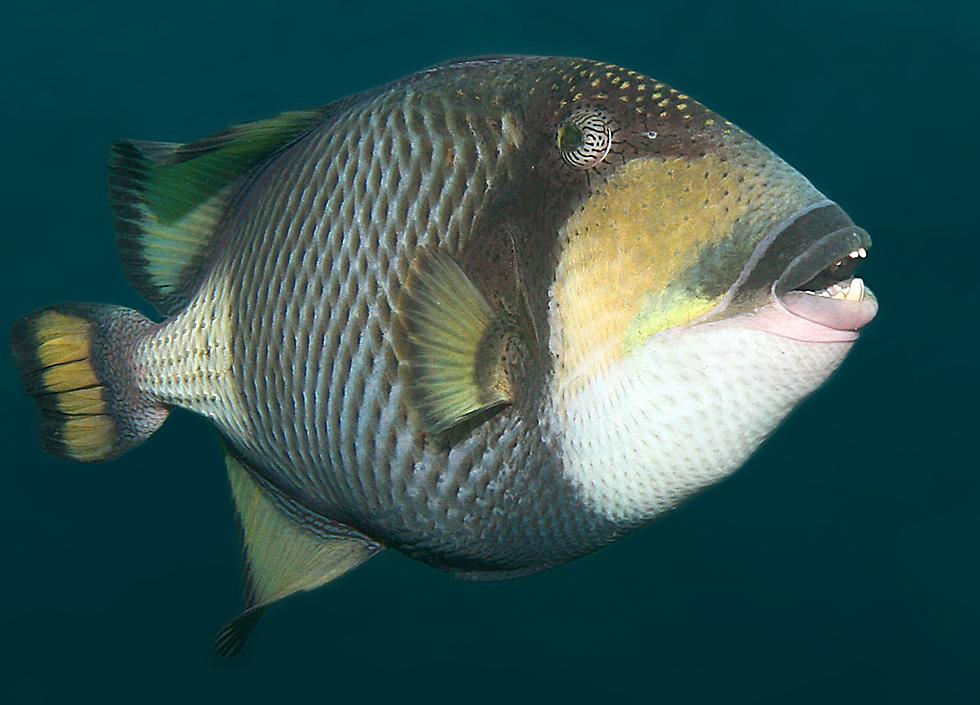
There are plenty of attractive critters underwater, and a few scary ones too. This is a titan triggerfish, something of a nemesis for divers because of their habit of sinking those large teeth right through a wetsuit while defending their nest. Any hapless person who comes within 50 feet of the nest had better watch their behind! About the only way you'll even see one relaxed is when they're being worked on by some cleaner wrasses. |
|
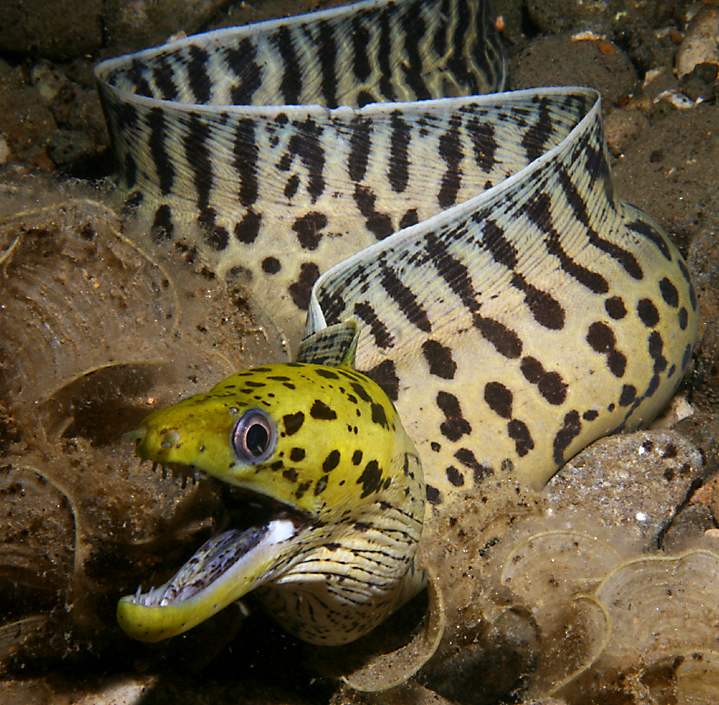
More sharp teeth, this time belonging to a fimbriated moray eel. The word "fimbriated" is a ridiculously fancy word for "fringed", perhaps referring to the full-length dorsal fin you see here. This photo was taken at night off the shore of the town of Anilao, south-east of Manila. The dive site is called "basura", which is Spanish for "trash dump" and aptly describes the scene, with little or no coral, just a rocky or dirt bottom with discarded metal drums and tires. This sort of diving is called "muck diving" and although it sounds very unappealing, it's actually an excellent way of seeing weird and wonderful animals which you wouldn't normally encounter in a more conventional dive location. |
|
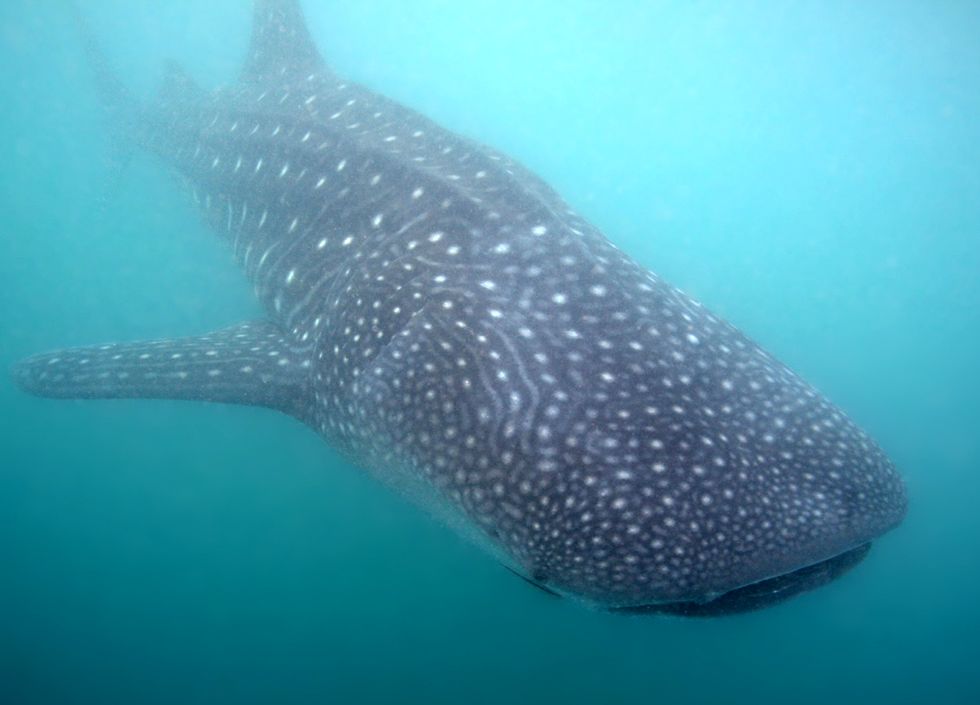
The reason I came to the Philippines rather than some other tropical locale was the opportunity to free-dive with whale sharks. A few years ago it was discovered that a population of whale sharks lives permanently off the coast of Luzon, about a kilometer from the town of Donsol. Despite its isolation, Donsol is now a mecca for tourists, who go out on the distinctive Filipino boats called bangkas for a couple of hours, with the near certainty of finding and viewing these huge but harmless creatures, the largest of all fish, and one of the underwater highlights of the Philippines. |
 |