| Highlights
of the 2007 Riverside Airshow |
The Riverside airshow is a one-day event held each year at Riverside airport
near the eastern end of the Los Angeles basin.
It's a very friendly community-oriented show which includes a large display
of classic automobiles as well as a very large selection of aircraft, both
static and flying.
Parking costs $5 but entry into the show itself is free, which means that
upwards of 70,000 people attend each year, spread across a large enough
area that it doesn't feel crowded.
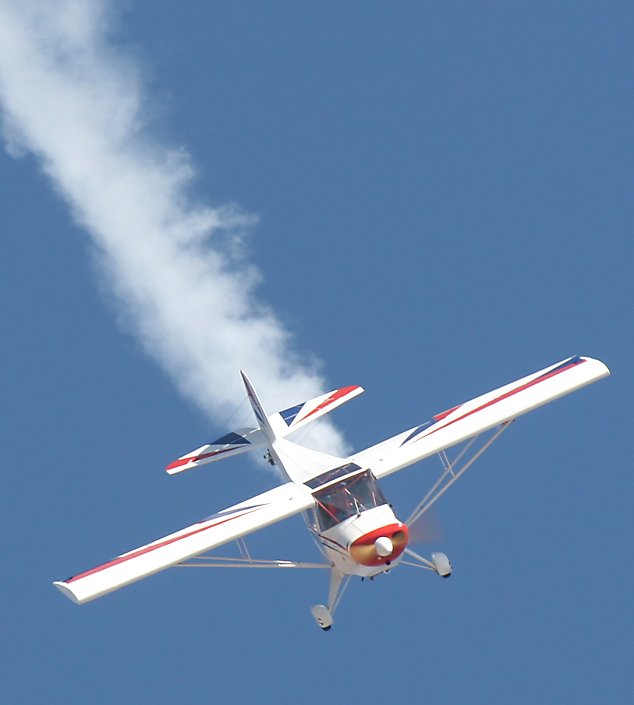
The show always has a number of aerobatic performers, including "Dr D's
Old-Time Aerobatics", which sees local legend Dr. Frank Donnelly flying
his 1946 Taylorcraft "T-cart", both with the engine on and turned off for
his trademark "dead-stick" landings. |
| Dr
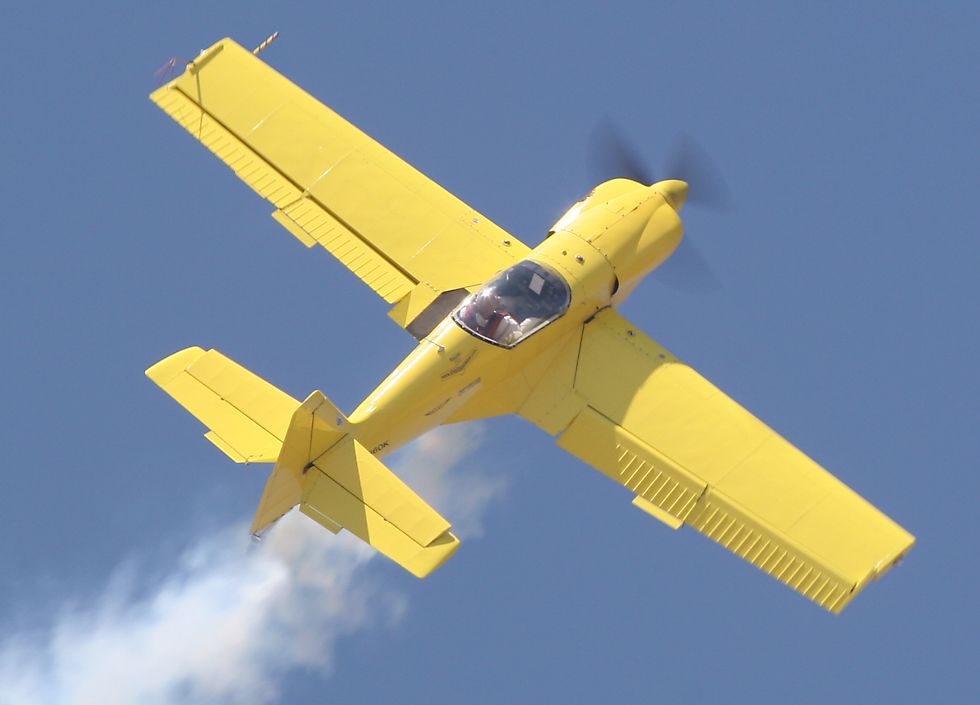
D is based at Cable airport, just a hop and a skip across Los Angeles from
Riverside, as is this second performer, Rob Harrison "The Tumbling Bear".
He's flying a Czech-designed Zlin 50 which has a much more powerful engine
than the T-cart and was also built from the ground up as an aerobatic plane.
Look closely and you'll see that Rob has taped to the dashboard the piece
of paper with the schematic representation of the maneuvers he's going
to perform. |
 |
| Southern
California has one of the most active warbird fraternities in the entire
world, which makes Riverside a great place for enthusiasts to see world
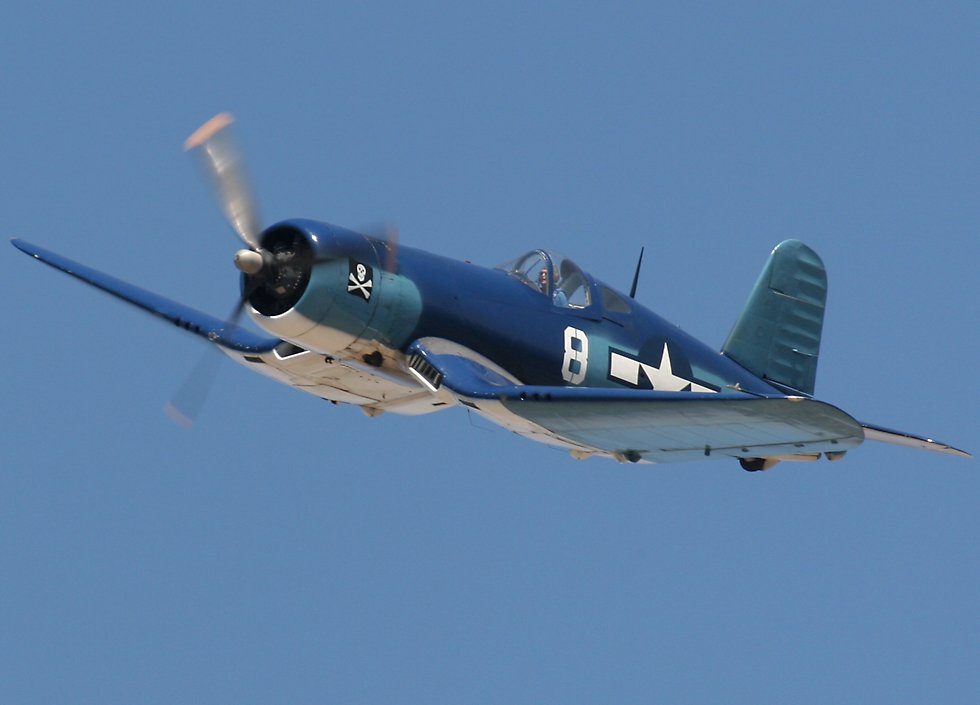
war two military aircraft like this F4U Corsair. This particular
aircraft is owned by Chuck Wentworth, and at one time it flew as part of
the air force of El Salvador, which used its Corsairs in 1969 in the so-called
"Soccer War" against Honduras. Technically, this isn't an F4U,
instead it's an FG-1D Corsair built by the Goodyear company. |
 |
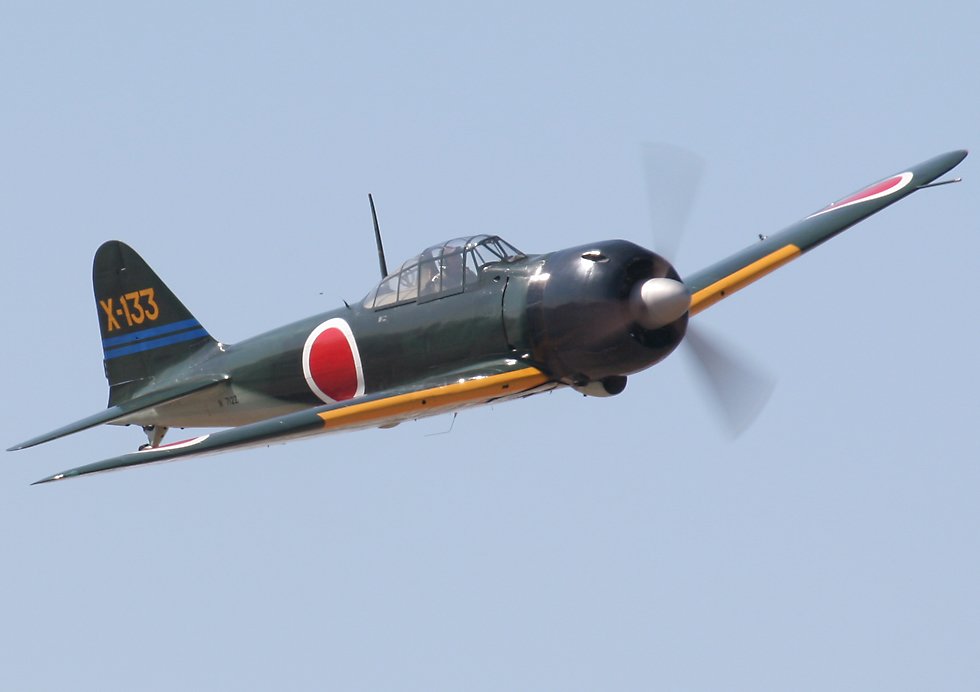
| This
A6M3 Mitsubishi Zero fighter belongs to the Confederate Air Force wing
based at Camarillo, authentic except for its American engine. |
 |
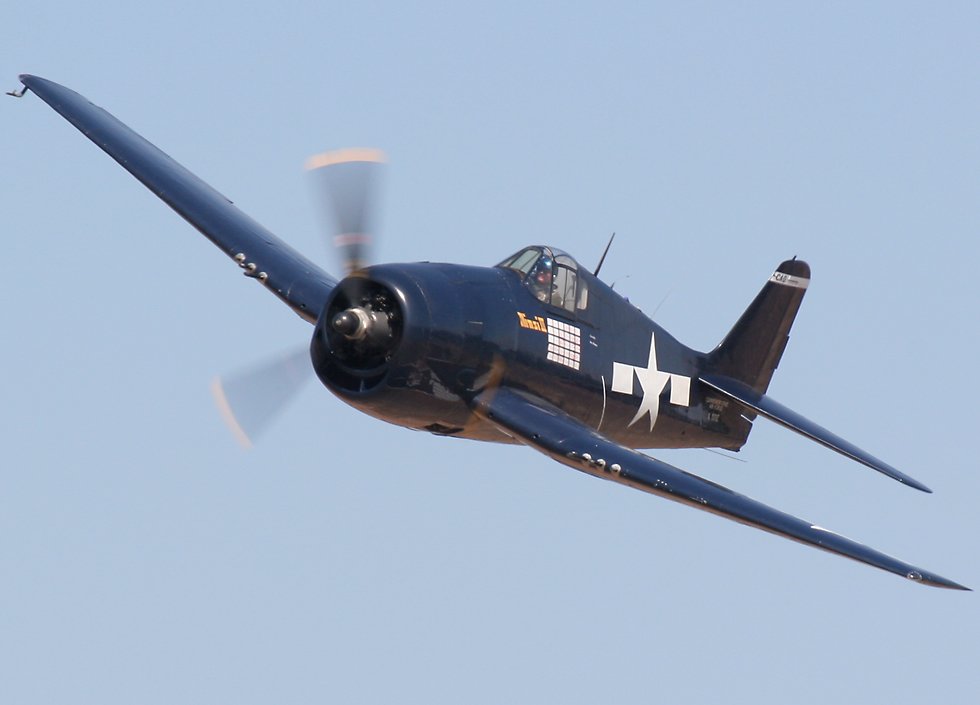
| Minsi
III is an F6F Hellcat, also owned by the Camarillo CAF. The
Hellcat was known as the "ace maker" because of its success against the
Japanese during world war two, eventually being credited with over 6000
enemy destroyed, a full three-quarters of all the navy's air-to-air kills.
For such an historic aircraft there are surprisingly few still flying,
only 7 out of a production run of 12,275. |
 |
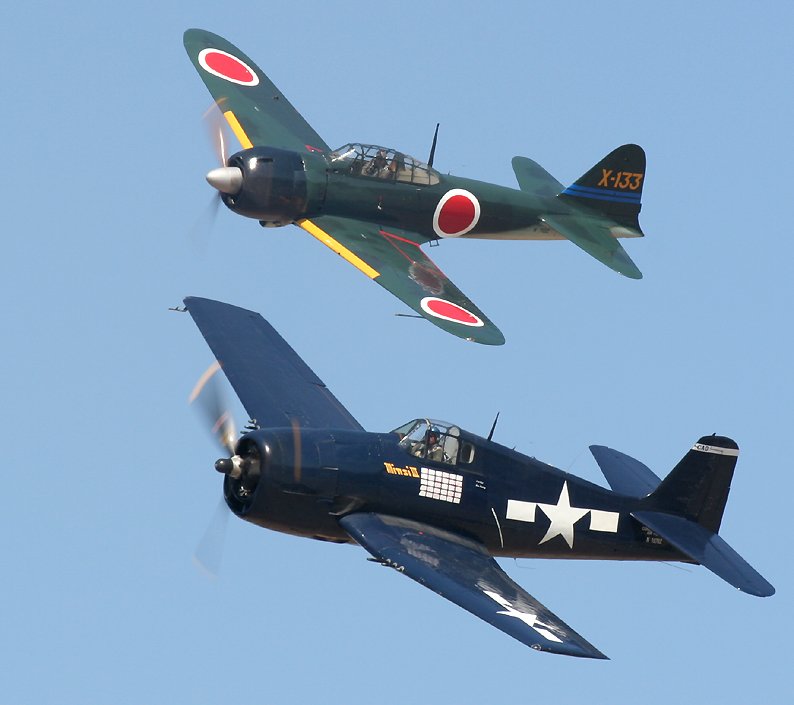
| The
Camarillo CAF is the only organization in the world that can put together
a formation like this, featuring the top wartime fighter aircraft of the
Japanese and American forces. |
 |
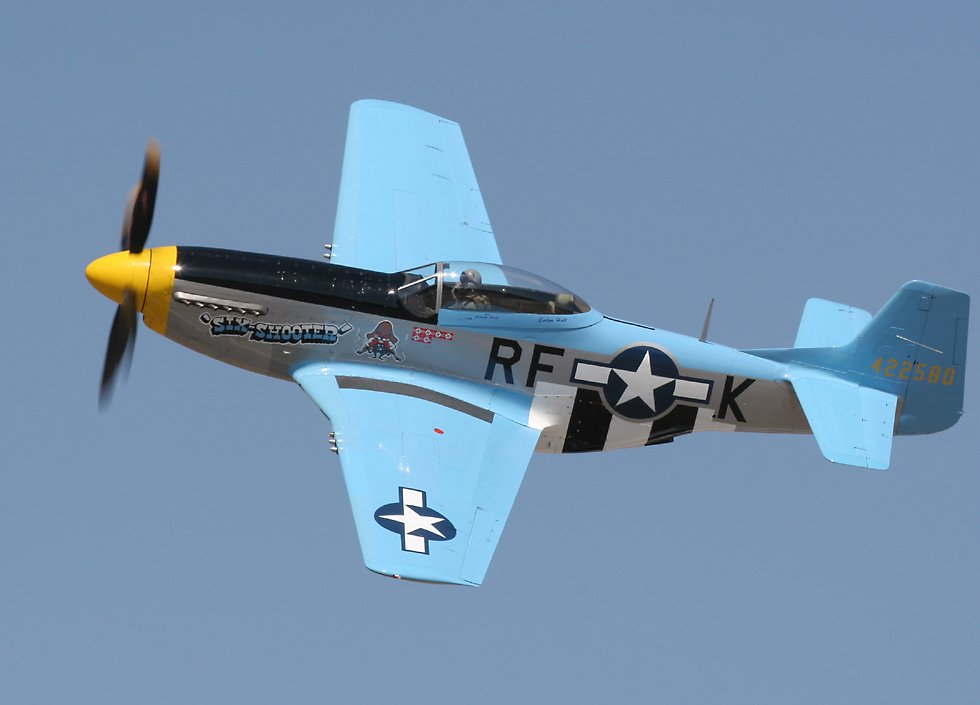
| Chuck
Hall owns and flies this immaculate P-51D Mustang called Six Shooter, which
saw service with the Bolivian air force. He bought his first
Mustang in 1965 for $9000 and taught himself to fly it. |
 |
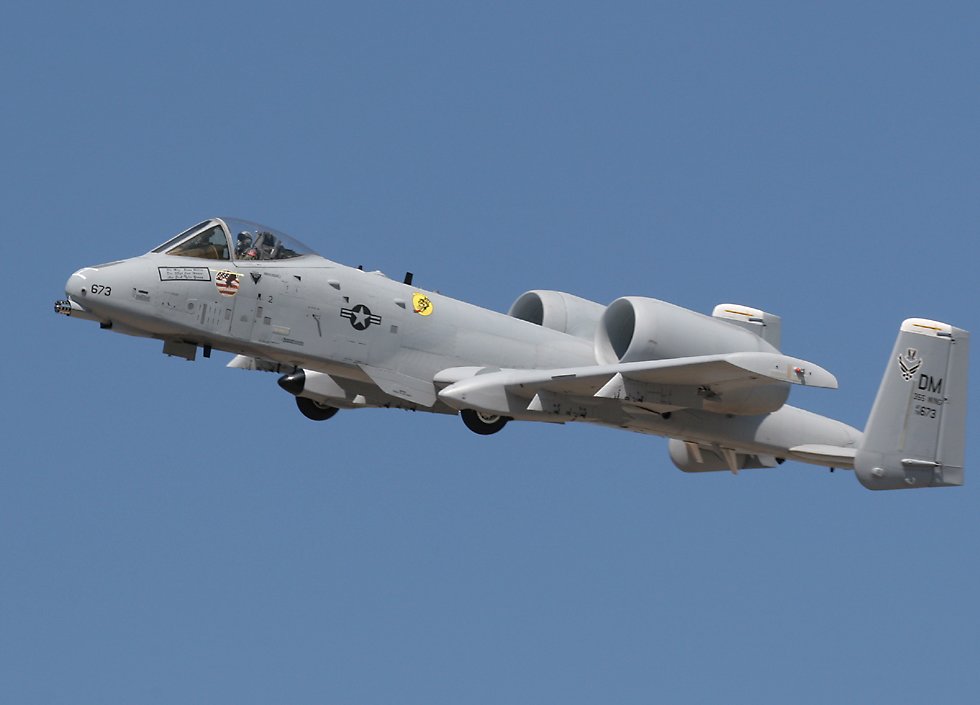
| Chuck
is now one of the few pilots qualified to fly as part of the air force's
Heritage Flight program, here with an A-10 Thunderbolt II.
Both pilots have to train annually, learning what the other aircraft type
is and isn't capable of. |
 |
| Two
Thunderbolts are assigned to demonstration duty during the airshow season,
one on the east coast and one on the west coast. They have
a nicely chromed cannon that you won't see on regular operational aircraft. |
 |

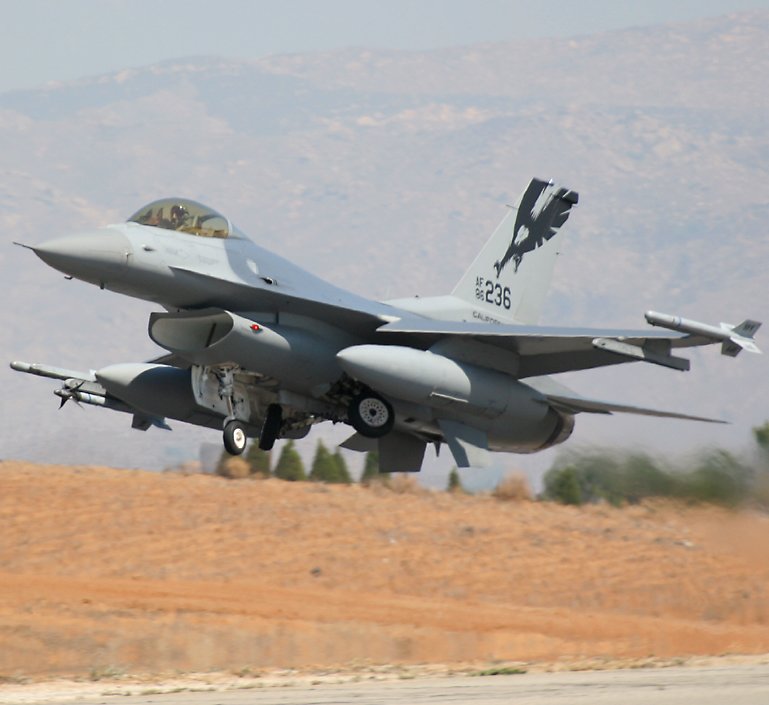
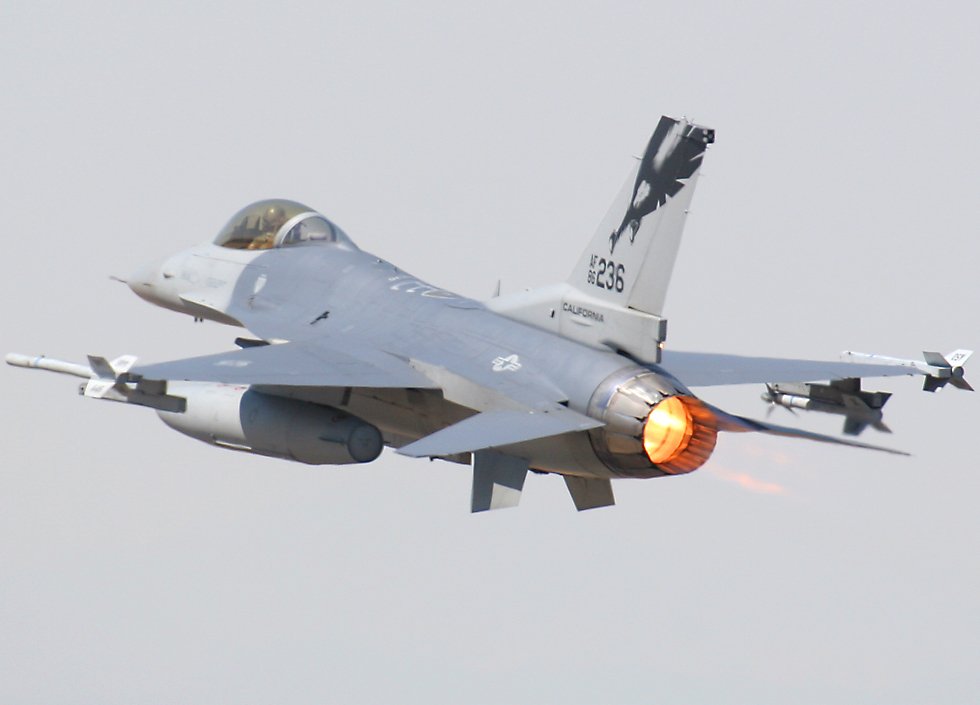
The California Air National Guard also strutted their stuff at the show,
flying two F-16 Fighting Falcons.
Their demonstration consisted of two passes, the first time in formation
and the second time individually while each did a "touch and go" on the
runway, before pulling up with full afterburner. |
| It's
very rare to see military aircraft loaded with even dummy munitions, so
it was nice to see these ones equipped in this way. |
 |
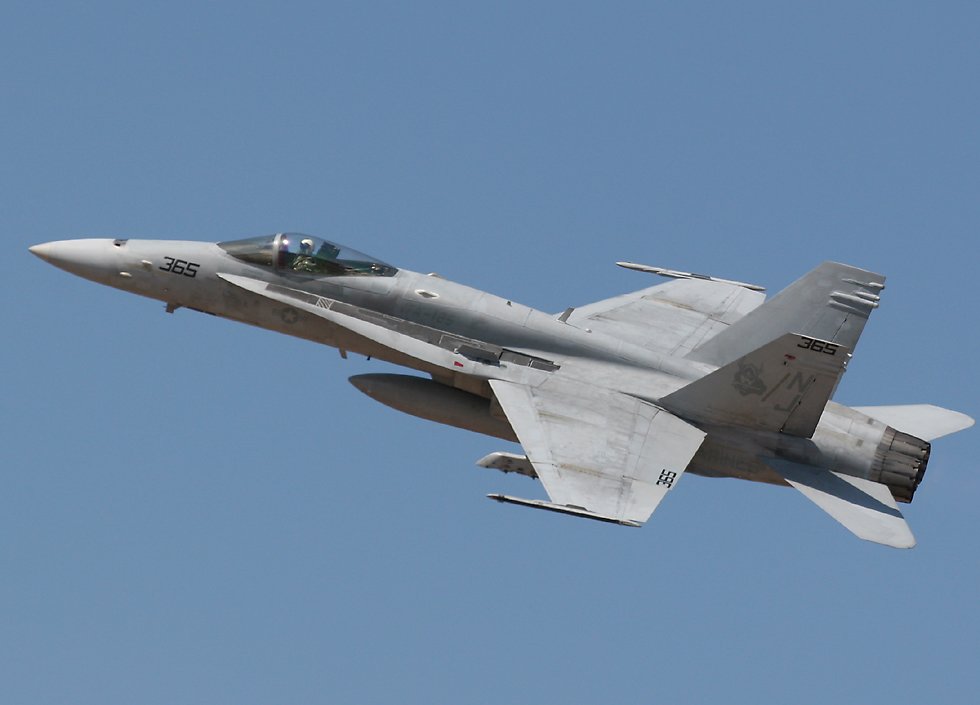
| Not
wanting the air force to have everything its own way, the marines also
showed off the paces of their F-18C Hornet fighter. As a carrier
aircraft, the Hornet has much better takeoff and landing performance than
the Fighting Falcon, so the Hornet both took off and landed during its
display. |
 |
| Due
to be retired in 2008, this was one of the last chances to see the F-117
Nighthawk "stealth fighter" in action. It's only in the last
12 or 18 months that they've even banked at airshows, for the last few
years before that all we saw was high flat passes. |
 |

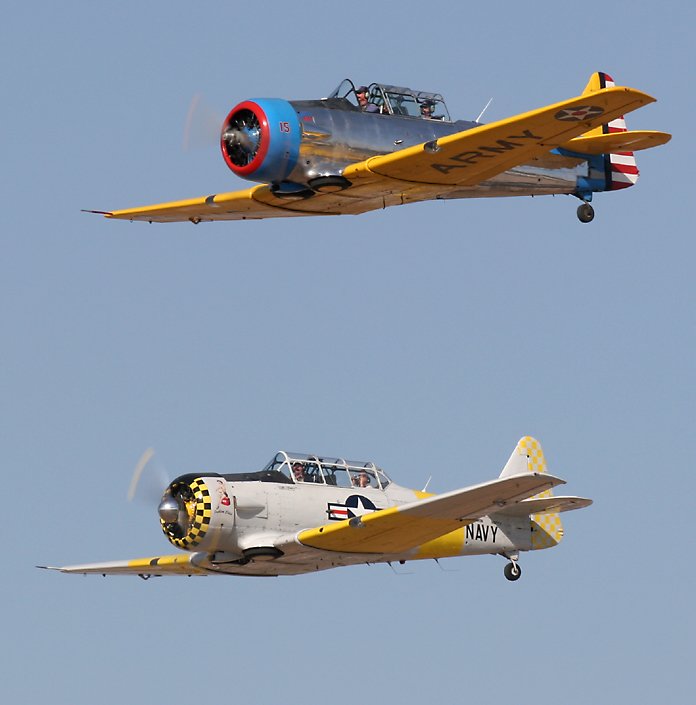
The show also had quite a few non-combatant warbirds flying, such as these
world-war two era trainers. If you're thinking that this is
a pair of T-6s then you'd be wrong, the top one is indeed a T-6 Texan,
but the bottom one is in navy colors and is therefore an SNJ - the S standing
for "scout", the N for "trainer" and the J for the "North American" company,
which designed and manufactured the plane, and was later responsible for
the P-51 Mustang.
Regardless of the designation, these are some of the most important aircraft
of the war, earning the nickname "the pilot maker" because of the number
of wartime pilots who learned to fly in them before moving on to fighters
or bombers.
In total over 17,000 were built, being used not only with the US army air
force and navy, but also with air forces of the British Empire, in whose
service the plane was known as the "Harvard".
Aircraft
such as these are cheaper to buy and to operate than fighters, allowing
people an easier "entry level" into this type of flying, but it still costs
a pretty penny to break in to this field! |
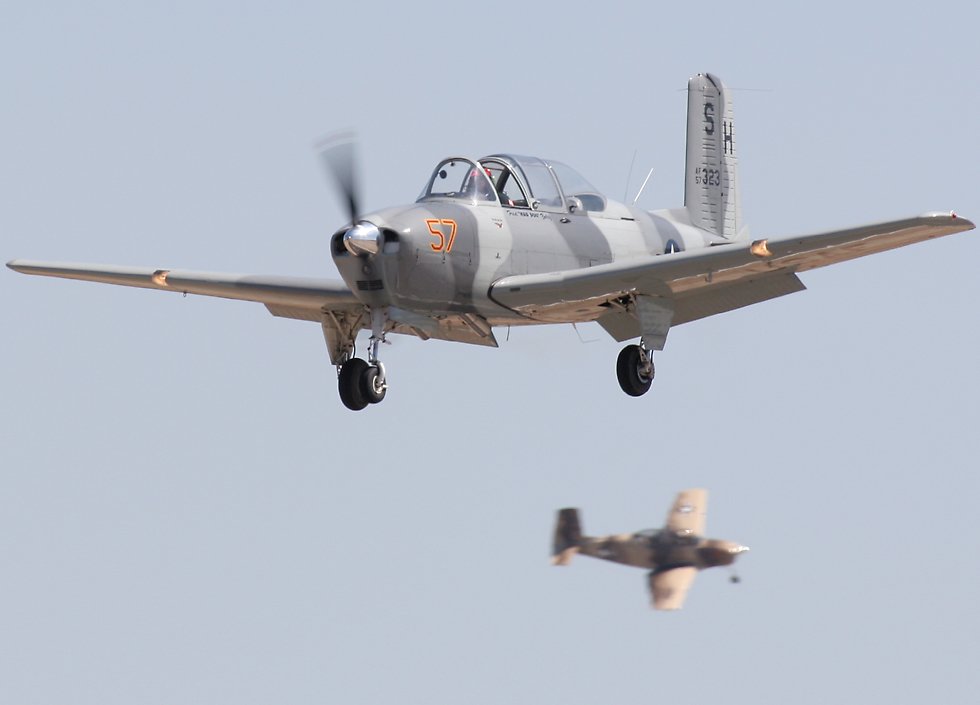
| These
T-34 Mentors were developed shortly after world war two, to give trainee
US air force pilots familiarity with tricycle landing gear aircraft. |
 |
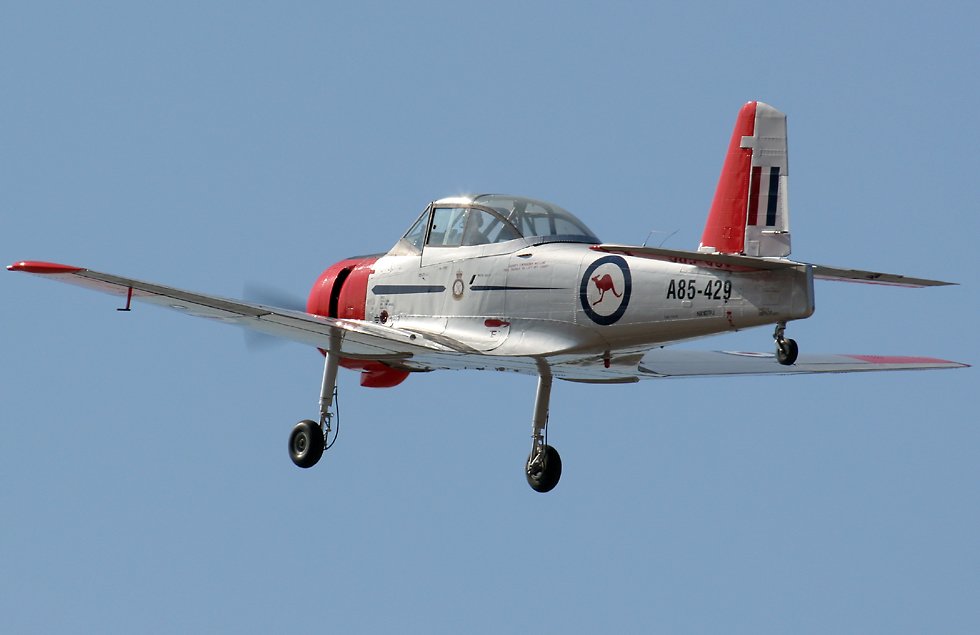
| Here's
a trainer which very few people are familiar with - a "Winjeel" manufactured
in the early 1950s by the Commonwealth Aircraft Corporation in Australia.
The name Winjeel means "young eagle" in one of the aboriginal languages,
and the Australian air force was the only operator for this type, using
it mostly as a trainer but also as a forward air controller.
It was apparently a very pleasant aircraft to fly, a bit too pleasant in
fact, since they had to modify it to make it spin more easily - an essential
part of military pilot training. Unlike all of the other trainers
on this page, it has side-by-side seating. It was still in
military service in the 1990s and although only 62 were built, around half
of them are still flying. |
 |
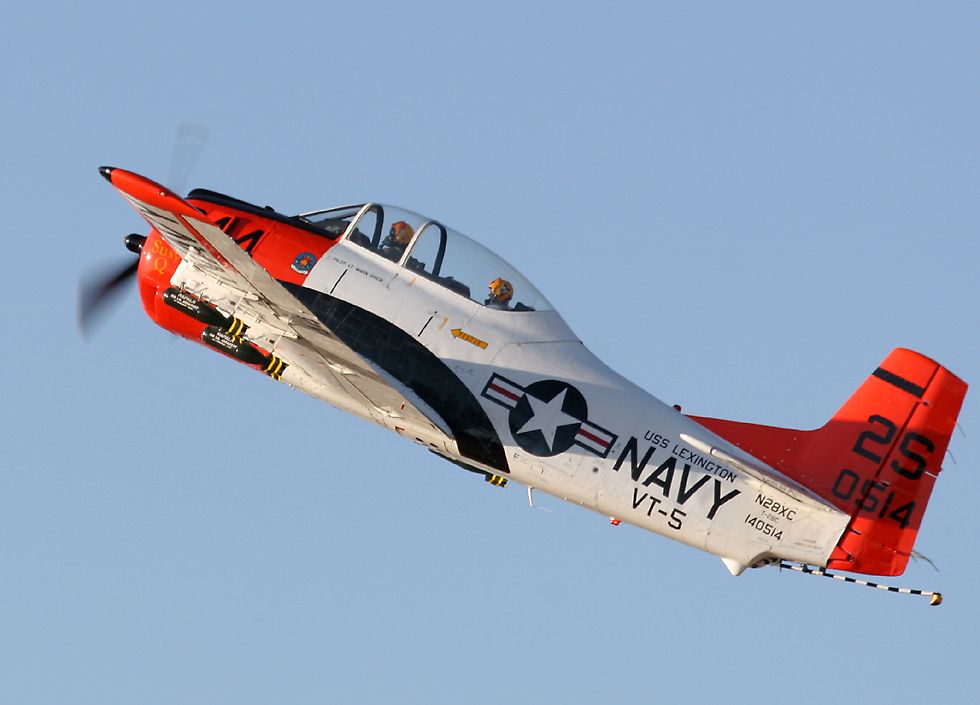
| Coming
not long after the Mentor, the North American T-28 Trojan was a much more
sophisticated aircraft. Although originally designed for the
air force, the navy and marines liked it so much that they ordered them
as well, which is why this one has navy markings and a tailhook.
The Trojan was such a stable platform that it was fitted with hard-points
under the wings, and used on counter-insurgency missions in Indo-China,
which is why this particular aircraft "Suzy Q" is fitted with napalm bombs.
The French used a modified version called the Fennec in the same role in
North Africa. |
 |
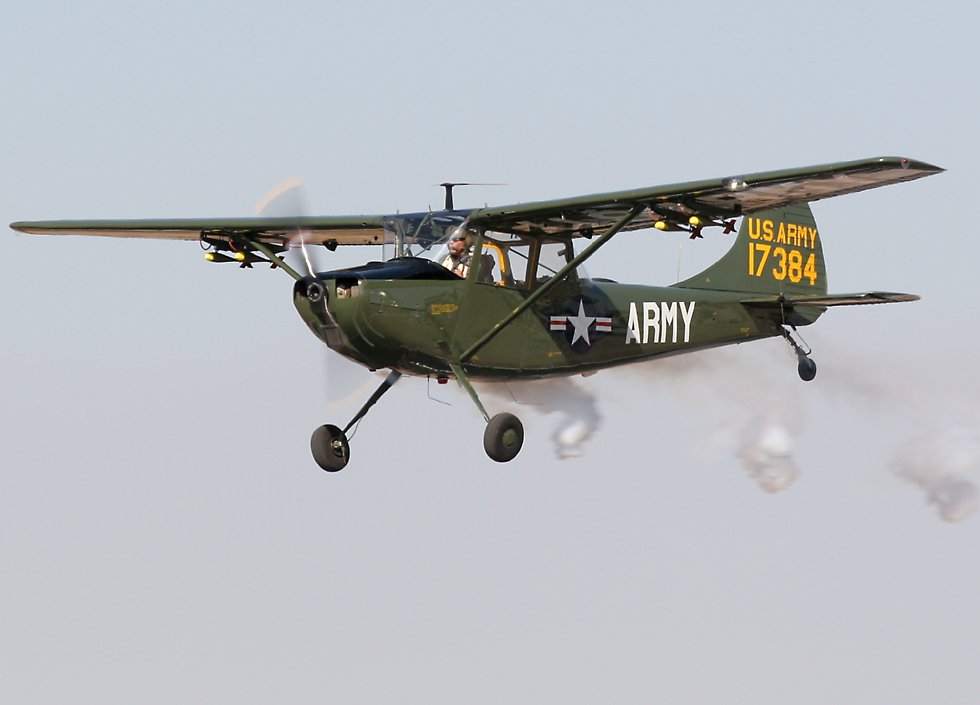
| This
O-1 Bird Dog was also used in Vietnam and neighboring countries, mostly
as a forward air controller. Although an improvement on world
war two "Grasshopper" aircraft, the Bird Dog was still a frightening plane
in which to go to war, with no armor for the pilot and only a single engine,
which would force the pilot to crash land in the jungle if it failed or
was damaged by enemy fire. Worse yet, Bird Dog pilots were
required to fly low and deliberately draw fire so the ground attack aircraft
they operated with could see where the enemy was. |
 |
| Another
trainer, but this time a jet and one from the other side of the fence,
too - an L-29 Delfin, which was the standard Soviet military jet trainer
during the 1960s and 1970s. It was designed by the Aero company
in Czechoslovakia and, surprisingly, made its first flight using a British
manufactured Bristol Siddeley Viper jet engine, which is about as ironic
as the German Bf109 fighter's history of first flying with a Rolls-Royce
Kestrel engine. |
 |
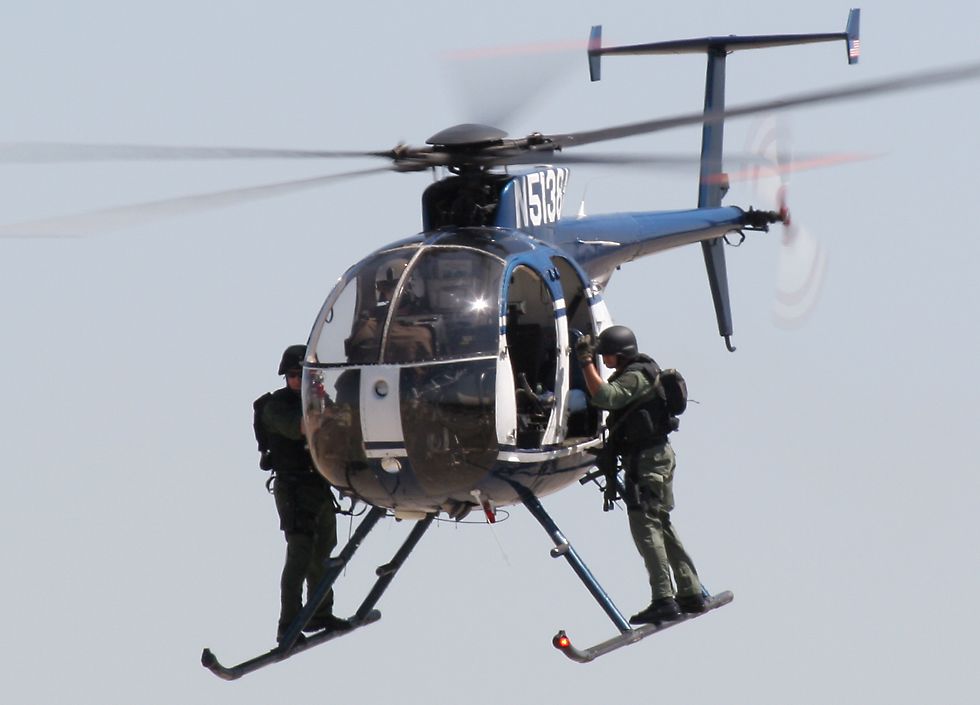
| The
show included a good collection of helicopters, though the only flying
during the show was by this Riverside police helicopter which did a spirited
display, including carrying a SWAT team in to back up a K9 unit which chased
a bad guy's car around the airfield. |
 |
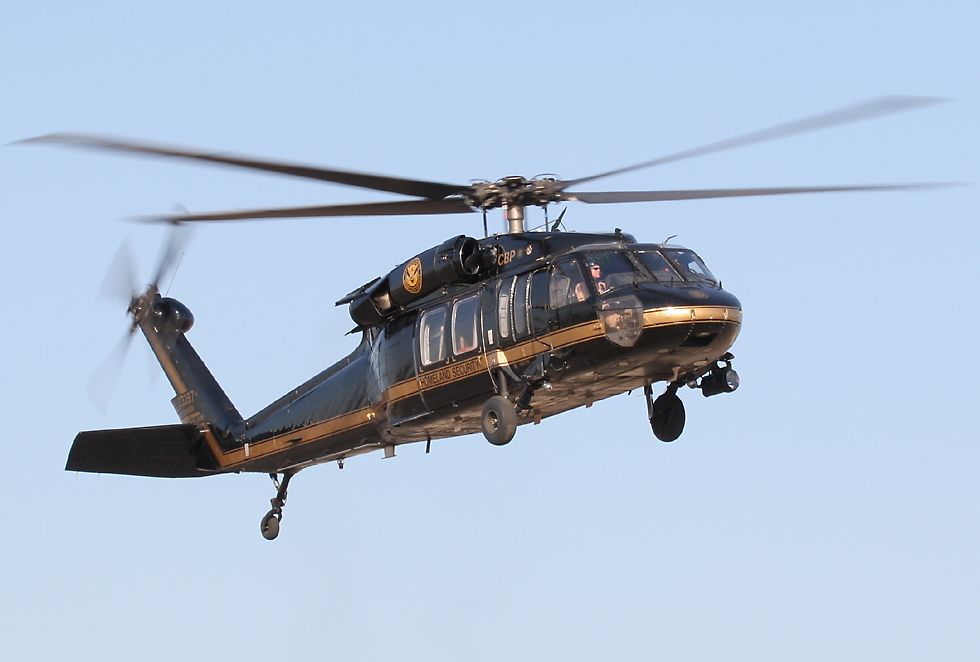
| After
the show we were treated to several other helicopters, including this blackhawk
painted in a natty black and gold Homeland Security color scheme. |
 |
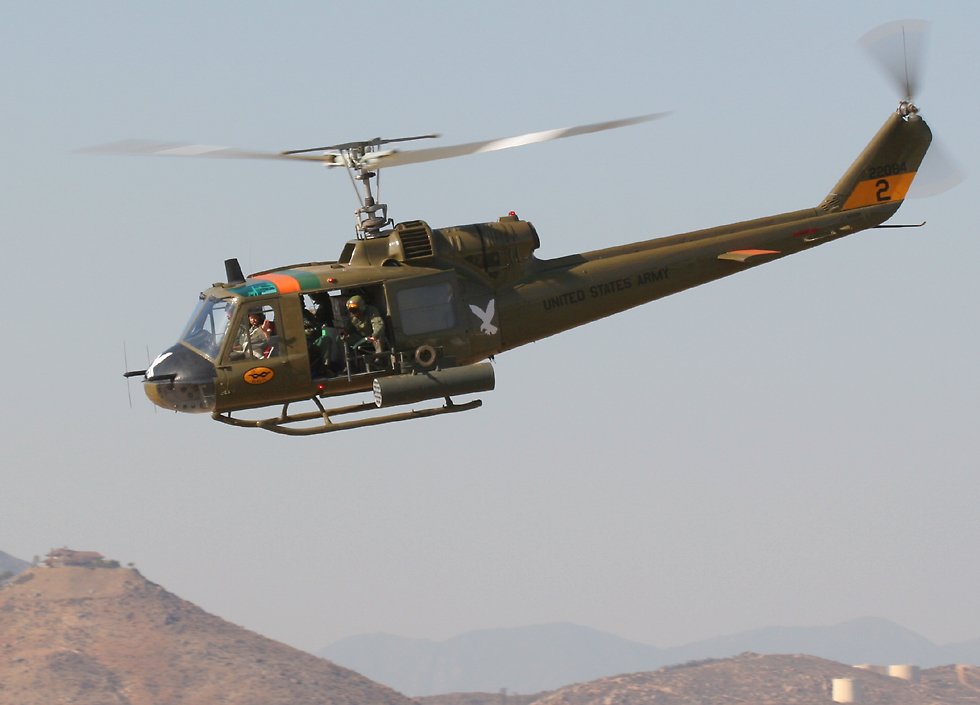
| It
sure would have been nice to see this UH-1 "Huey" with rocket pods flying
during the show, but it was only on static display and so we had to wait
for its departure at the end of the show in order to see it in the air. |
 |
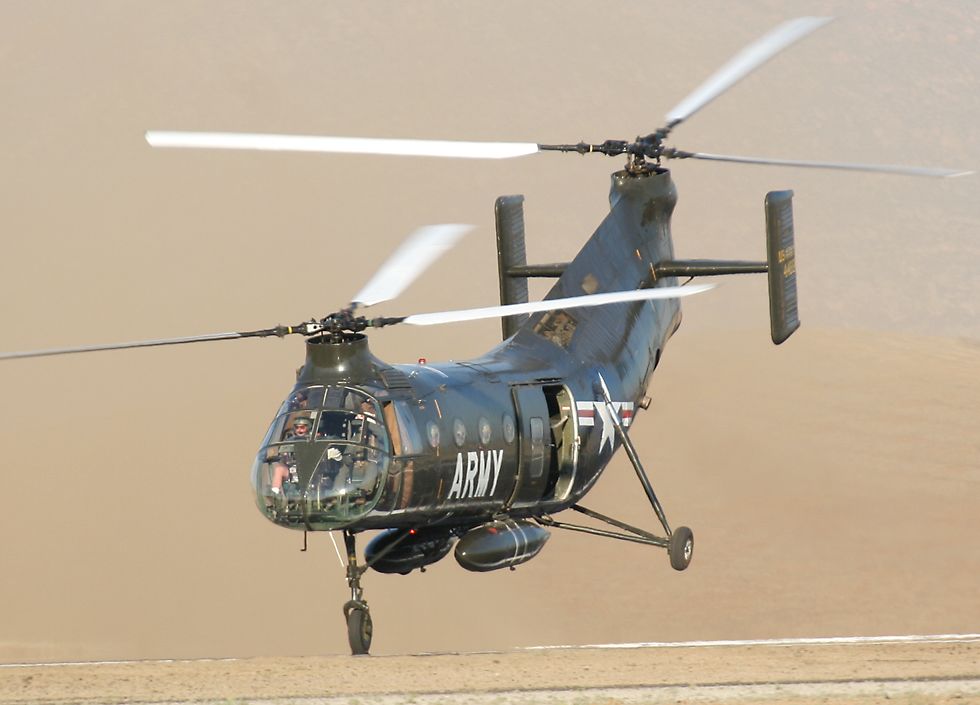
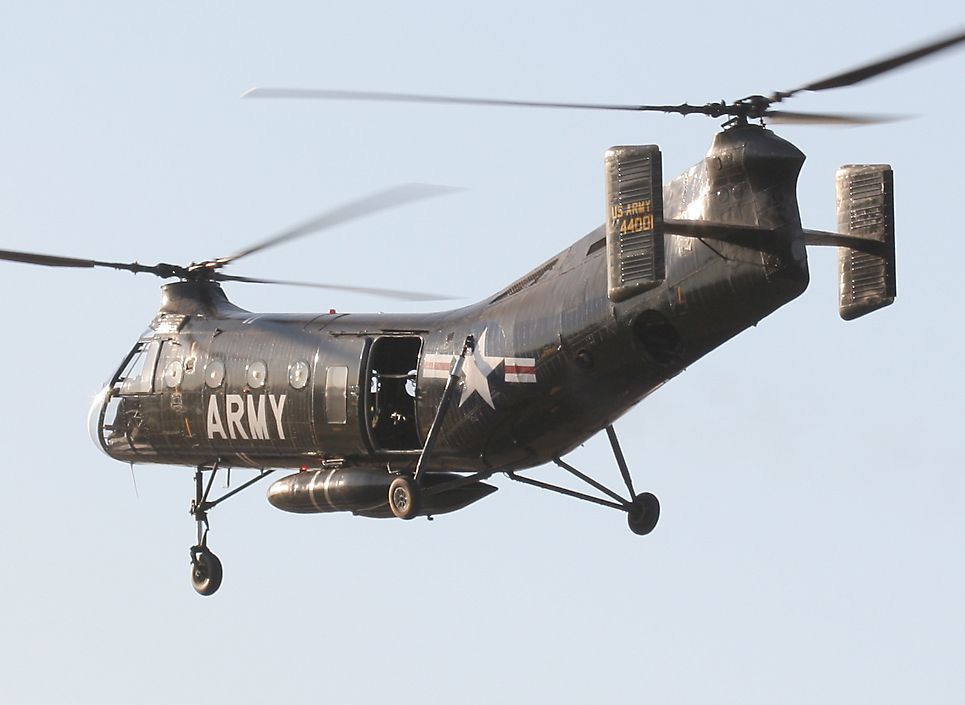
| My
favorite American helicopter on the airshow circuit is this Piasecki H-21
"Shawnee", the only one of its kind in the world which is still flying.
With this type of helicopter it's easier to do a rolling takeoff than a
vertical takeoff, and when it's gained a bit of speed the pilot lifts the
rear undercarriage to bring the fuselage into a level attitude, before
finally taking the last bit of weight off the nosewheel and climbing skywards. |
 |
| Because
of its bent shape the Shawnee's crews gave it the name "flying banana".
Unlike all of the other helicopters on this page it's powered by a single
radial piston engine rather than by a jet, the engine is housed up in the
tail in front of the large hole you can see near the bottom of the fuselage.
In spite of this outmoded powerplant and its archaic appearance, the Shawnee
was used in Vietnam until about 1967, at which time it had been supplanted
by jet-powered helicopters like the Huey and the tandem rotor Chinook. |
 |
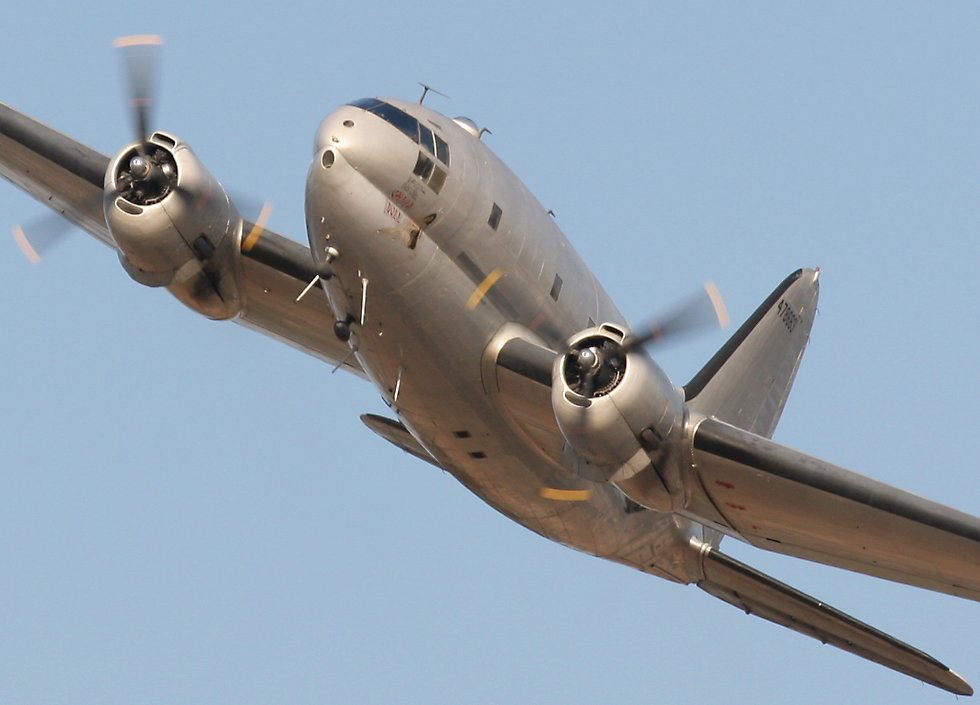
| Helicopters
don't get to fly at many American airshows, and that's often true also
of classic transports like this C-46 Commando. It's an American
cargo plane of world war two vintage, and although almost completely overshadowed
in the public's imagination by the DC-3 Dakota (known in military service
as the C-47 Dakota), the Commando was actually the largest twin-engine
transport of the war, and moved the majority of cargo over the infamously
difficult "Hump" route over the Himalayas from India to China. |
 |
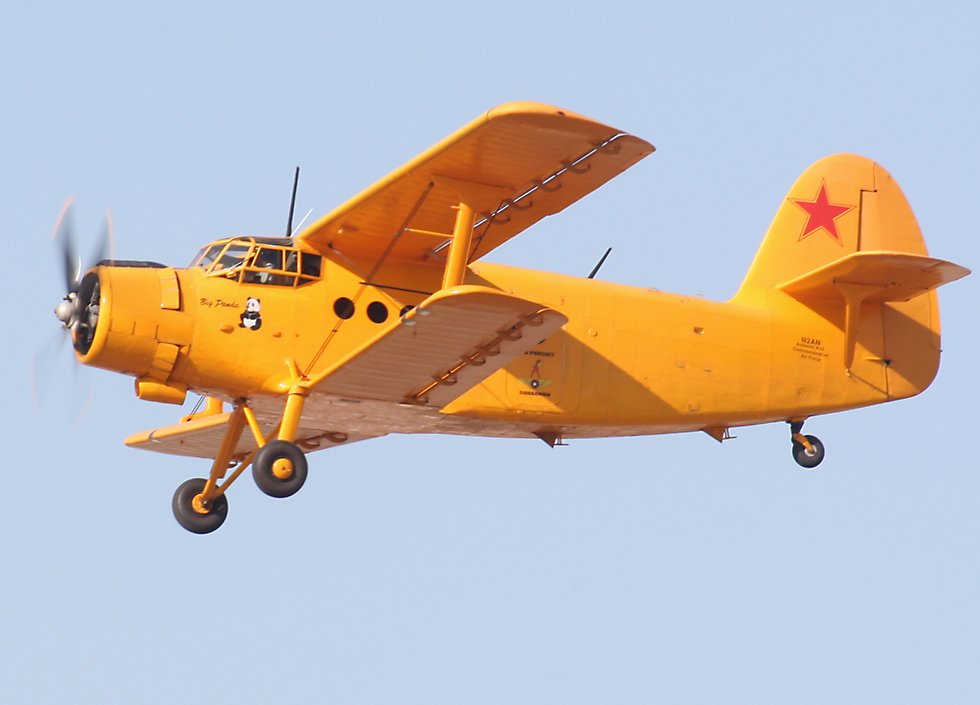
| It
might not seem like it, but this Antonov An-2 "Colt" was first flown seven
years after the Commando, in 1947. It's the world's largest
single engined biplane, and stayed in production in Poland until 1991.
Its rugged construction and excellent lift made it very suitable for work
in the vast countryside of the Soviet Union, operating out of short, rough
airstrips on agricultural and forestry land. It's said that
if the engine quits when the pilot is in fog or darkness and can't see
the ground, the approved recovery technique is to pull back hard on the
control column, allow the leading edge slats on the wings to deploy at
40 mph, and then let the plane sink down like a parachute at about 25 mph!
This is only possible because the wings provide so much lift that the plane
has no real stalling speed, it's fully controllable when flying at only
30 mph, and it's relatively easy to fly backwards, if you face the plane
into any wind of more than this speed. Such slow speed has
disadvantages, and it's said that a Vietnamese Colt which attacked an American
radar site in Laos was later shot down by a handheld machine gun fired
from a Huey helicopter which chased the Colt after the attack. |
 |
| It's
not often that cargo planes get to be the highlight of an airshow, though
the
Italian air force G222 and C-27
Spartan can certainly make that sort of claim. The US air
force pilots at nearby March Field can't pull the neat tricks of the Italians,
but they put on a very impressive performance nevertheless, starting with
this undercarriage-down pass from a KC-135 Stratotanker aerial refueller,
which is really as steeply banked as it looks. |
 |
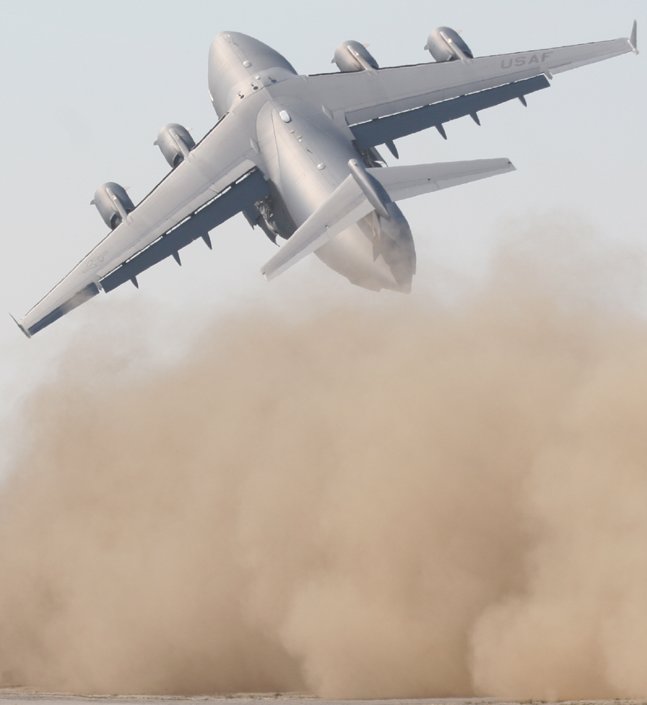
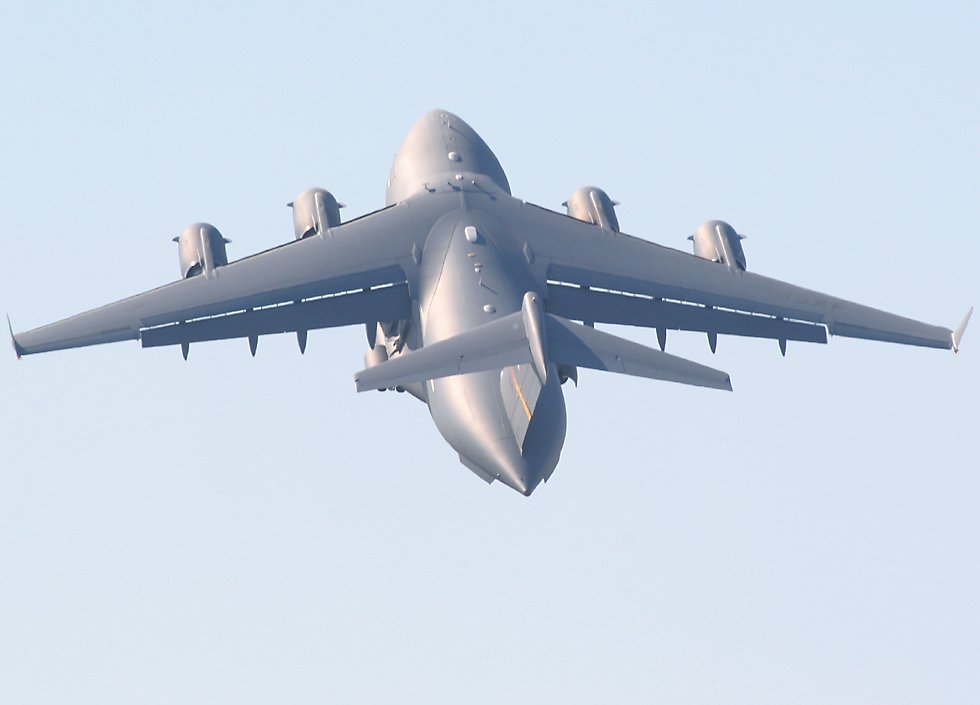
The real show-stopper, though was the performance by this C-17 Globemaster
III transport, which like the Colt is designed to operate out of short,
unsealed runways.
The runway at Riverside is sealed, but it's definitely short and with a
very definite downwards slope, which is why the F-16s and KC-135 didn't
land during the show. After landing the C-17 had to back up
the length of the runway, and with its wings hanging far over the bare
dirt on either side, it sucked a lot of dirt and grit into its engines.
The unexpected treat, though, was this spectacular takeoff, when not only
did the pilot throw up an enormous cloud of dust, but he also banked quite
steeply just after takeoff. Photos of this takeoff appeared
shortly afterwards in various aviation magazines, a tribute to how impressive
a sight it was.
Impressive or not, shortly after the takeoff 30 or 40 photographers including
myself were frantically rushing around to shield their expensive camera
gear from the dust cloud which now descended over the entire audience. |
| The
C-17 did two takeoffs, the second one with the banked takeoff and the first
one shown here, with a very steep climbout. They were both
very impressive demonstrations of the aircraft's abilities. |
 |
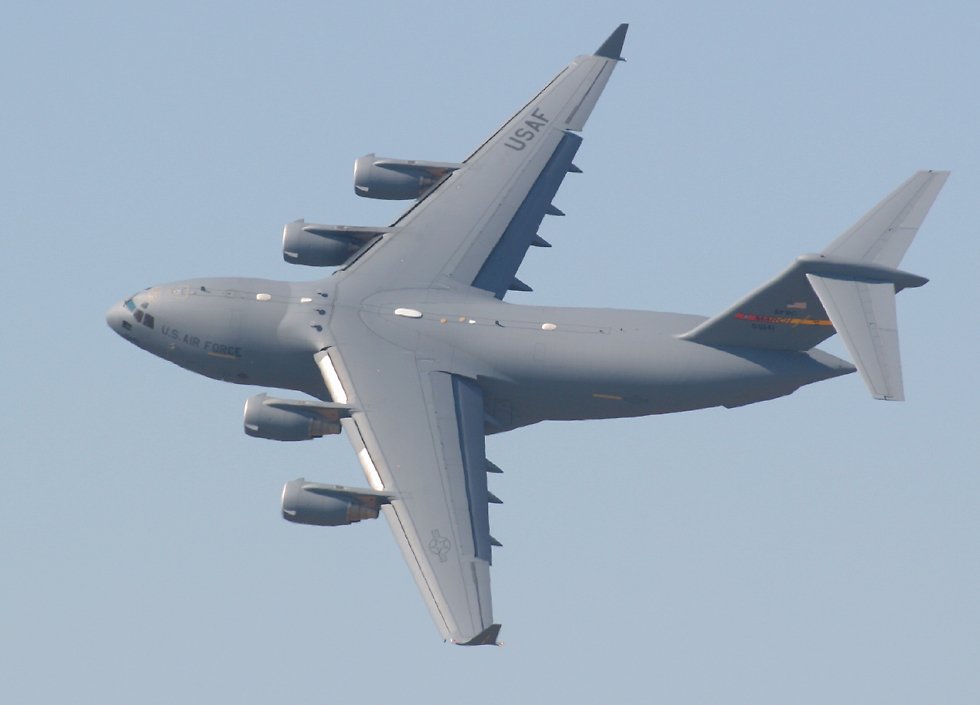
| The
C-17 also did multiple passes, gear up and gear down, flat and banking,
though it must be said that the passes after the second takeoff were rather
obscured by the huge cloud of dust still in the air! |
 |
Check
out the Highlights
of the 2005 Riverside Air Show.
 |