| Prescott
Air Fair (Arizona SkyFest) 2006 Highlights |
| The
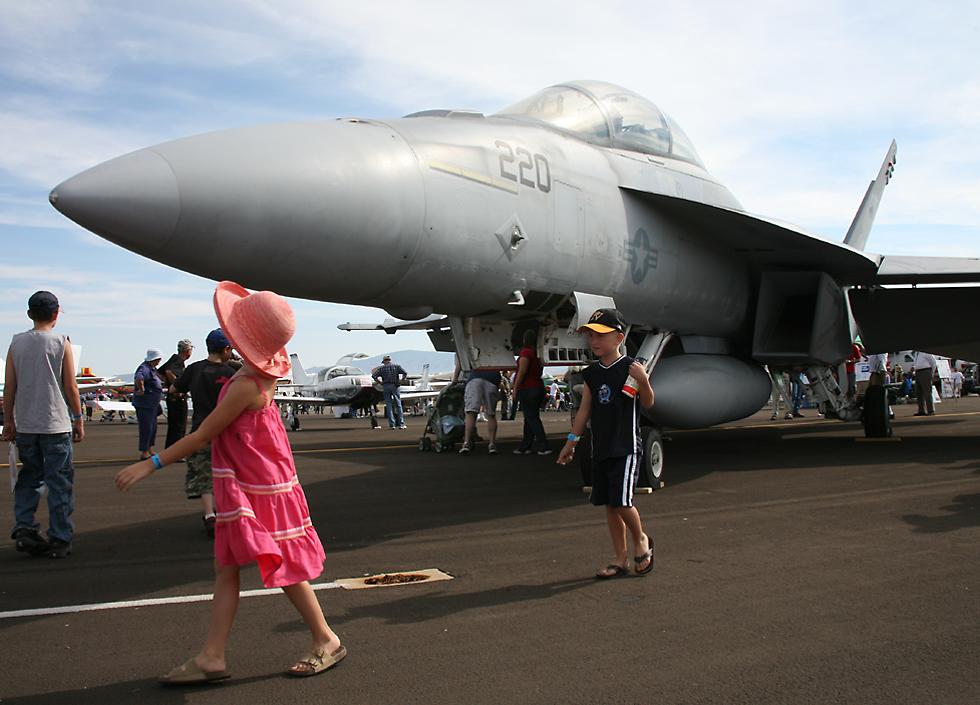
Arizona Skyfest is an excellent one-day airshow held near the town of Prescott,
a nice and cool spot 5000 feet up in the mountains an hour or so north
of Phoenix. The airshow is very community oriented and has
a very friendly vibe. |
 |
| Prescott
has a lot of aviation talent nearby, the Embry-Riddle aeronautical university
has one of its main campuses here, and many private pilots base themselves
and their aircraft in the area. |
 |
| Throughout
the show it's possible to take very reasonably price rides over the surrounding
farmland in one of two Robinson R44 helicopters. |
 |
| Frank
Donnelly is based in California rather than Arizona, he performs a deliberately
graceful low power routine called "Doc D's old-time aerobatics" - and it
doesn't get any more low power than this dead-stick landing, with the 1946
Taylorcraft's engine turned off! |
 |
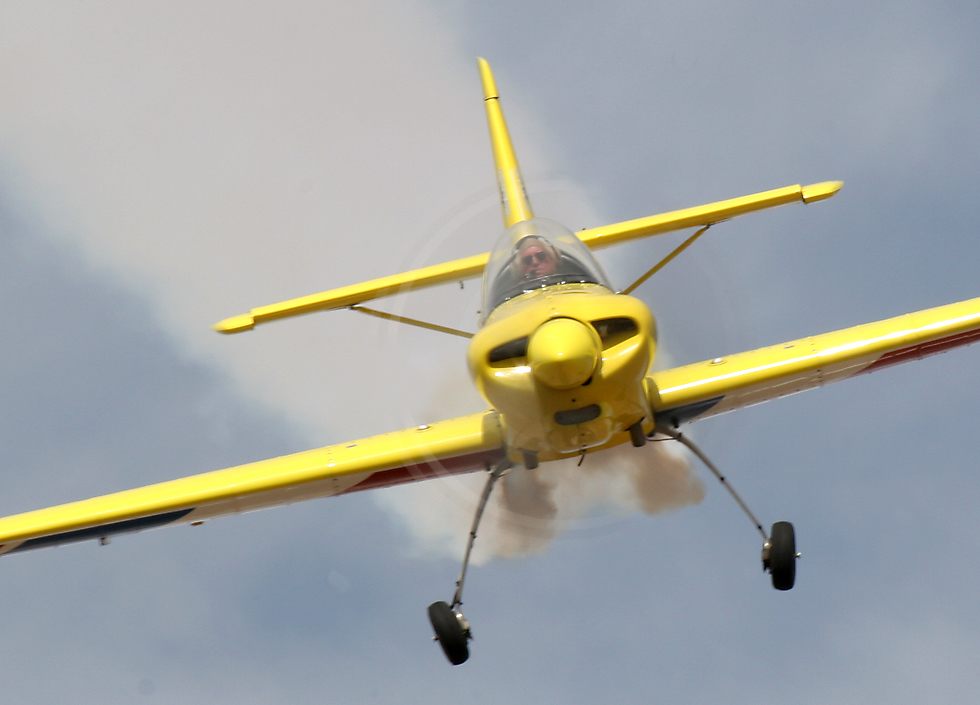
| Rob
Harrison "The Tumbling Bear" is based at the same small airfield as Dr
Donnelly in Upland, California, but his aerobatics routine is definitely
more high energy! |
 |
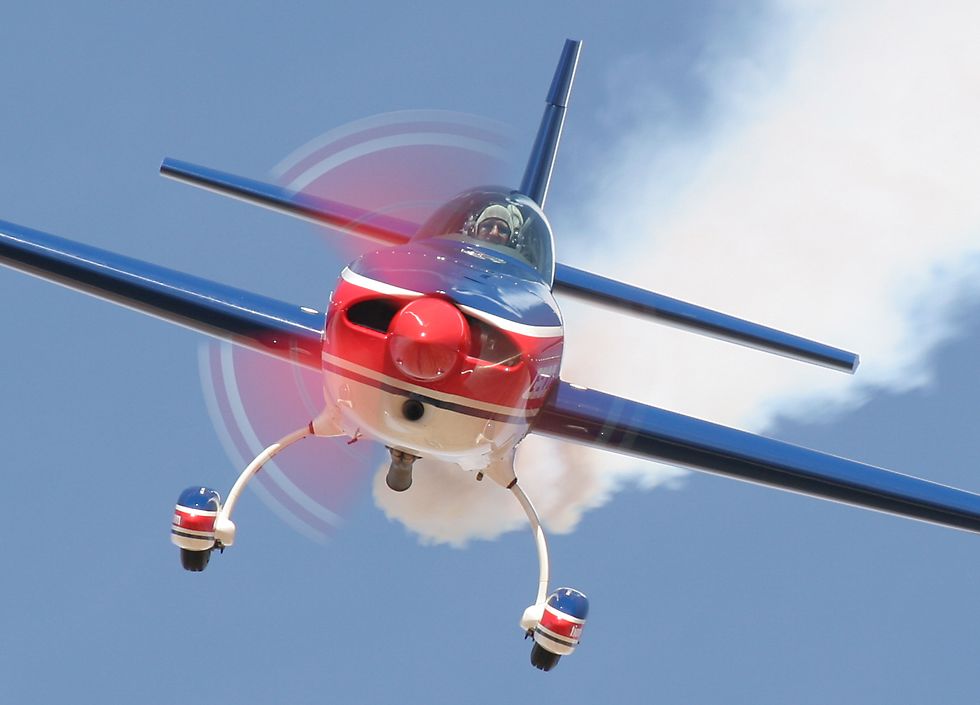
| Tim
Weber originally hails from Arizona, but now he takes his aerobatics routine
all around the United States, throwing his plane around with forces of
up to 10 positive Gs and -6 negative Gs. |
 |
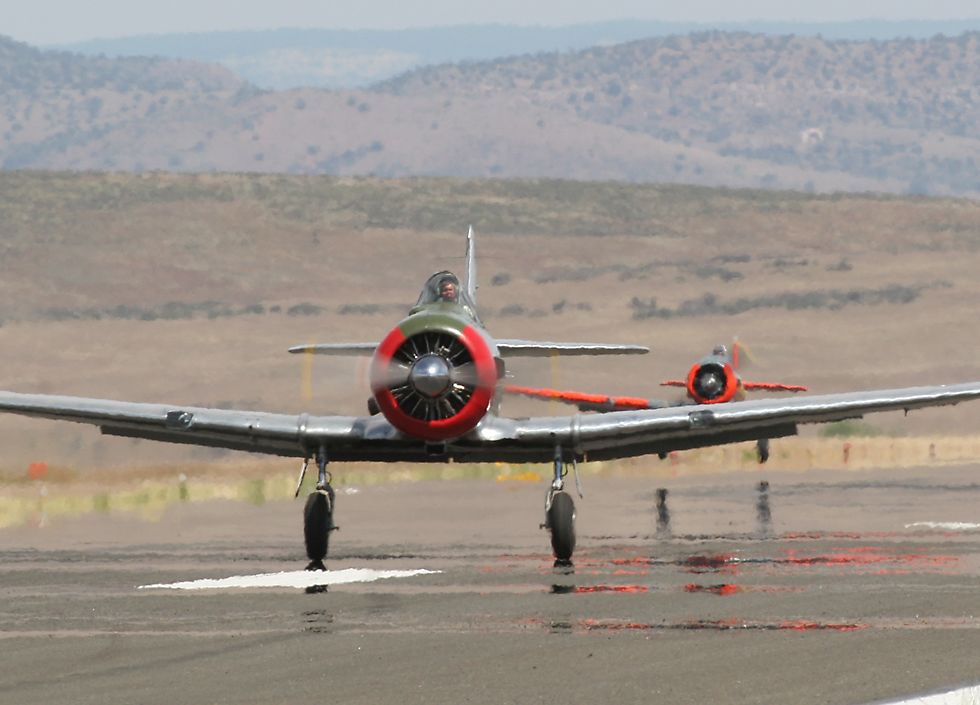
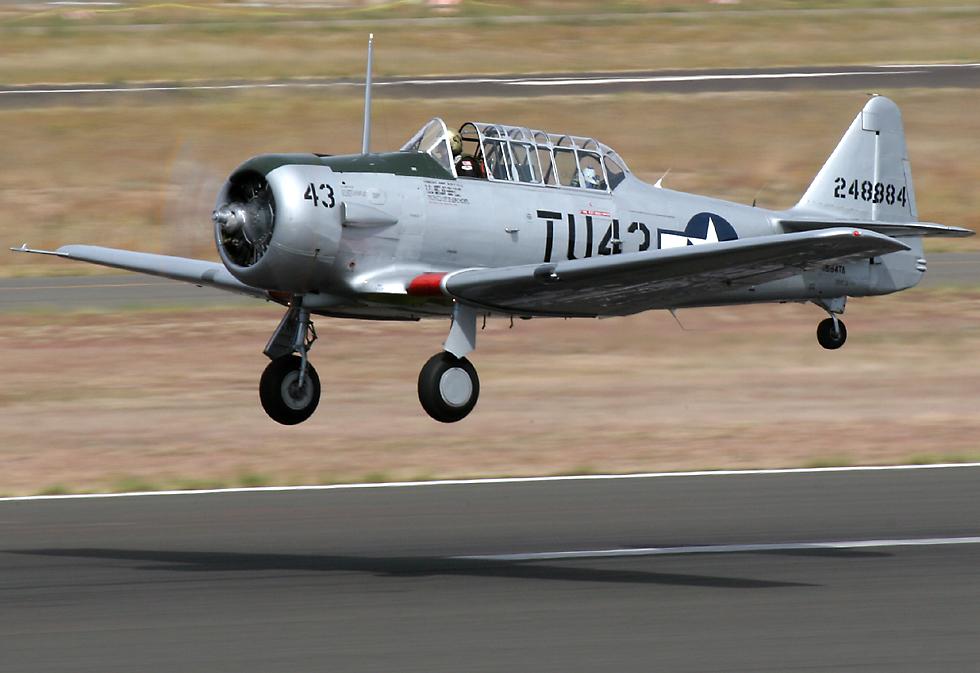
| The
Arizona Skyfest is also a great event for warbird enthusiasts, with aircraft
such as these world war two AT-6 Texan advanced trainers, which were used
to train the majority of American and other allied fighter pilots. |
 |
| The
Texan is sometimes called the "poor man's warbird" because it's relatively
cheap to buy and operate, and it has the advantage of being a two
seater, which means that it's possible to include a spouse, children and
friends in your hobby. However I must be something less than
poor, because I can't even afford one of these warbirds! |
 |
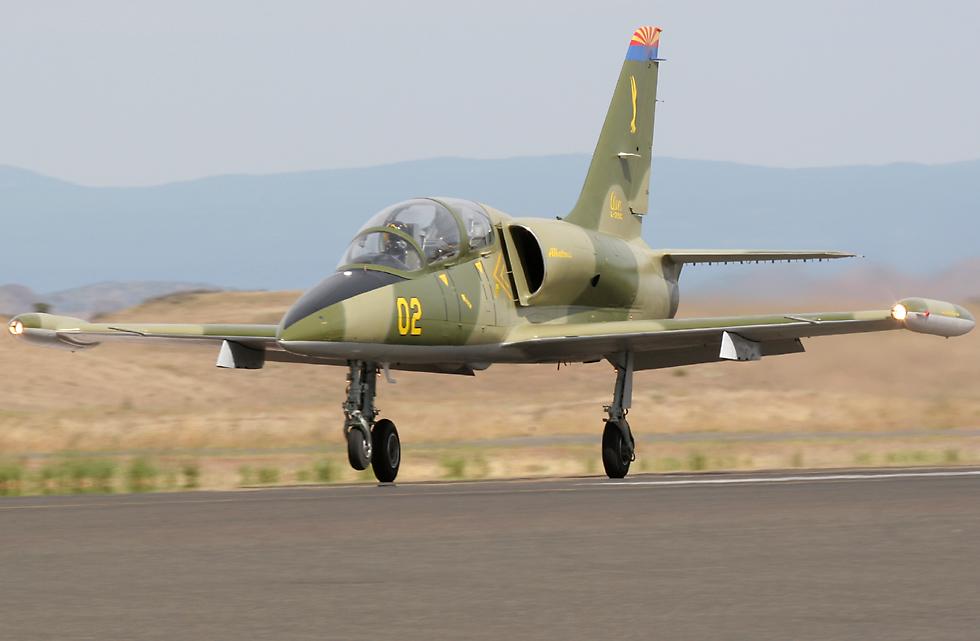
| The
L-39 Albatross is a big step up the scale for amateur warbird enthusiasts,
it's become very popular in the United States, with many of these aircraft
displaying at airshows. The Albatross is a trainer like the
Texan, but that's where the similarity ends. Quite apart from
being a jet, the Albatross was also developed on the wrong side of the
fence, being designed in Czechoslovakia as the Soviet bloc's main military
jet trainer, the successor to the same company's L-29 Dolphin. |
 |
| It's
not just Soviet trainers that are turning up in civilian hands!
This is a MiG-17 "Fresco", successor to the MiG-15 "Fagot" of Korean war
fame. Both the MiG-15 and MiG-17 were more heavily armed than
their American counterparts, the P-80 Shooting Star and F-86 Sabre.
Whereas the Shooting Star and Sabre each had six 50 caliber machine guns,
the Russians installed three heavy caliber cannon on their fighters; the
massive 37mm is visible on the starboard side of the front landing gear. |
 |
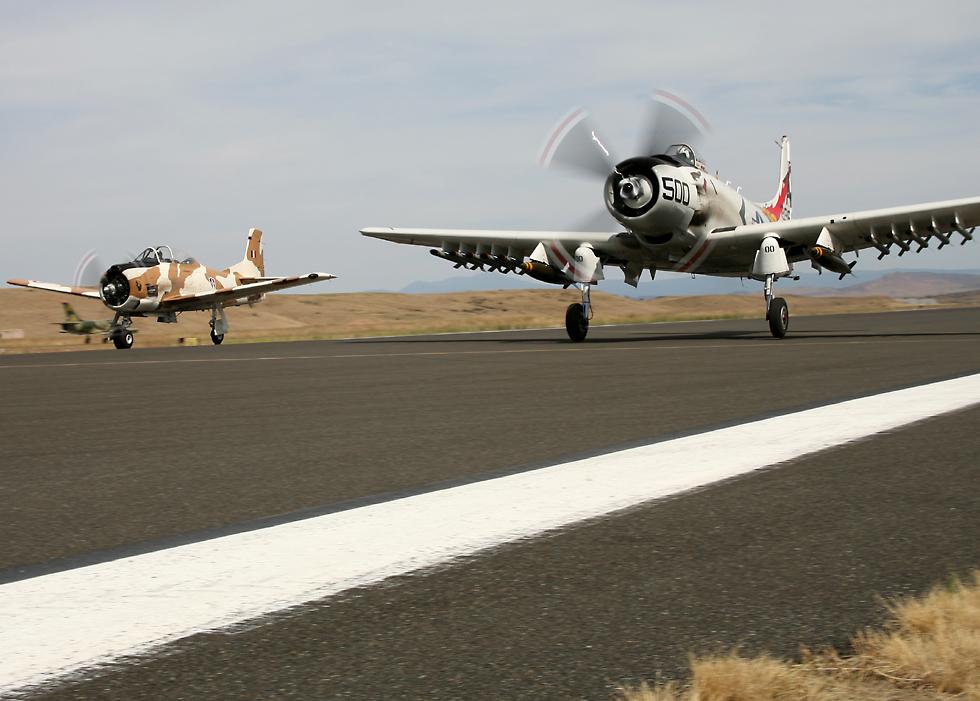
| The
L-39 was taxying in the background as Bob Grondzik and his daughter Dana
took off for their routine, the only father/daughter flying display in
the country. Dana was flying Bob's Fennec, the French version
of the T-28 Trojan which was used in Algeria and named after a desert fox. |
 |
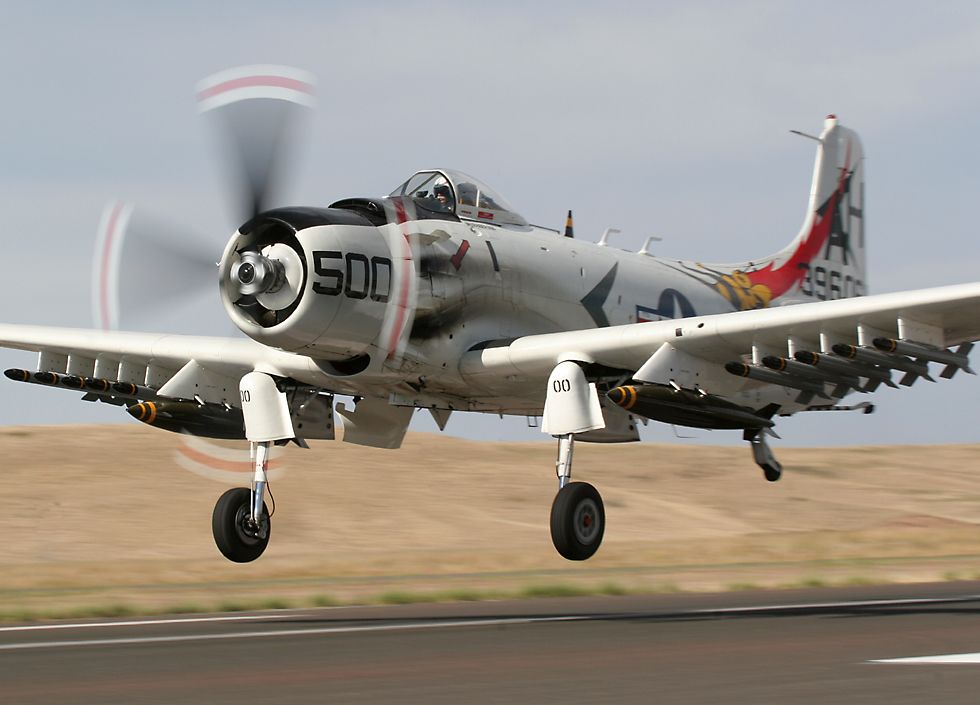
| Bob
was a naval aviator, flying the Panther fighter and later the F-8 Crusader,
before becoming a commercial airliner pilot. |
 |
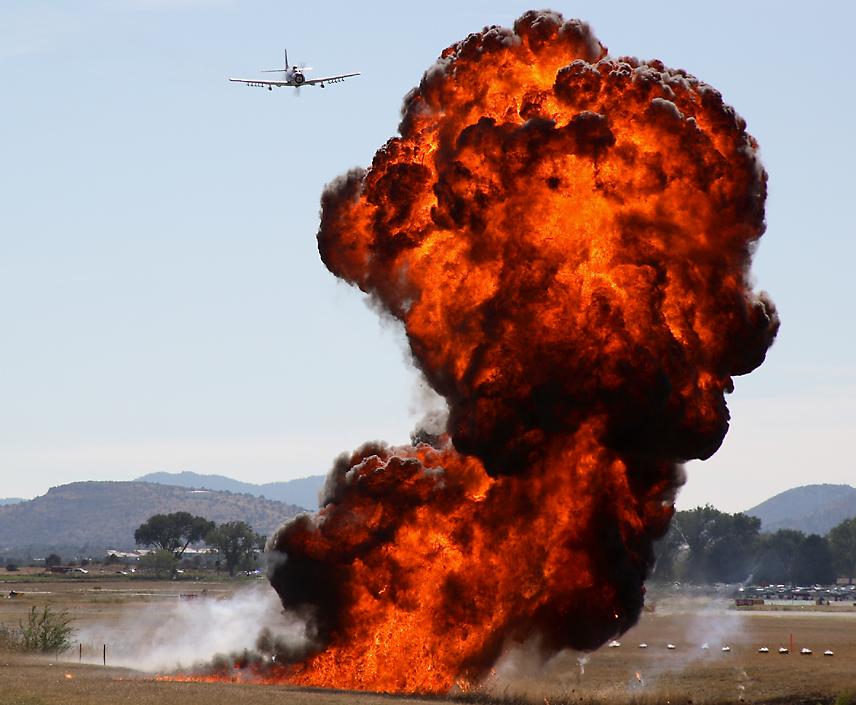
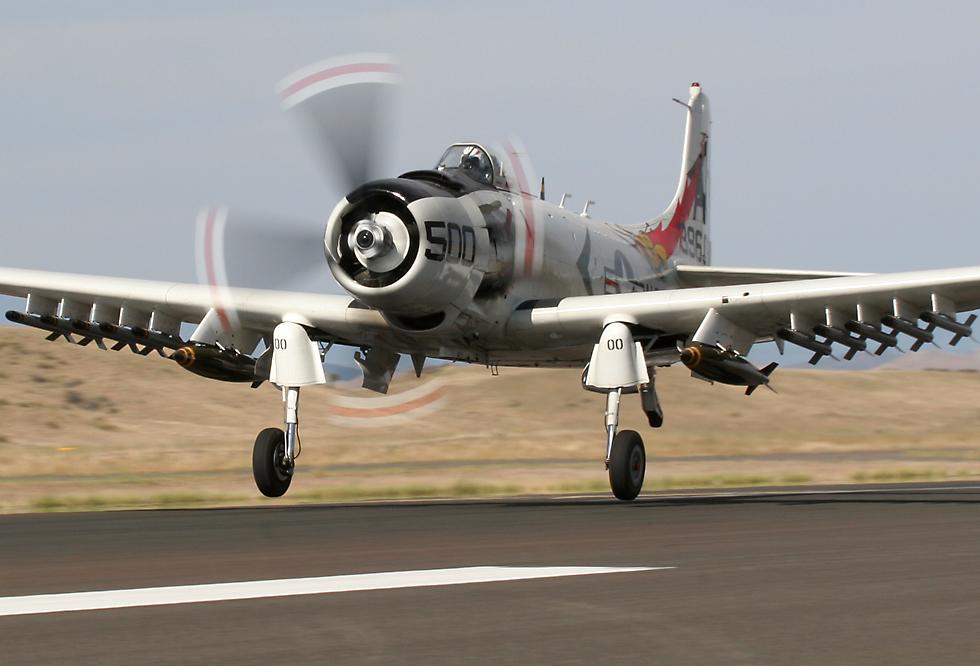
| The
Skyraider had an incredible capacity to carry and deliver ordnance, so
it's fitting that "Skyraider Bob" did many of the pyrotechnic runs at the
show. Although it entered service just after the end of world
war two, this single seat plane could haul up to 8000 pounds of weapons,
twice the load of the ten-man B-17E Flying Fortress which was America's
main heavy bomber at the start of the war. |
 |
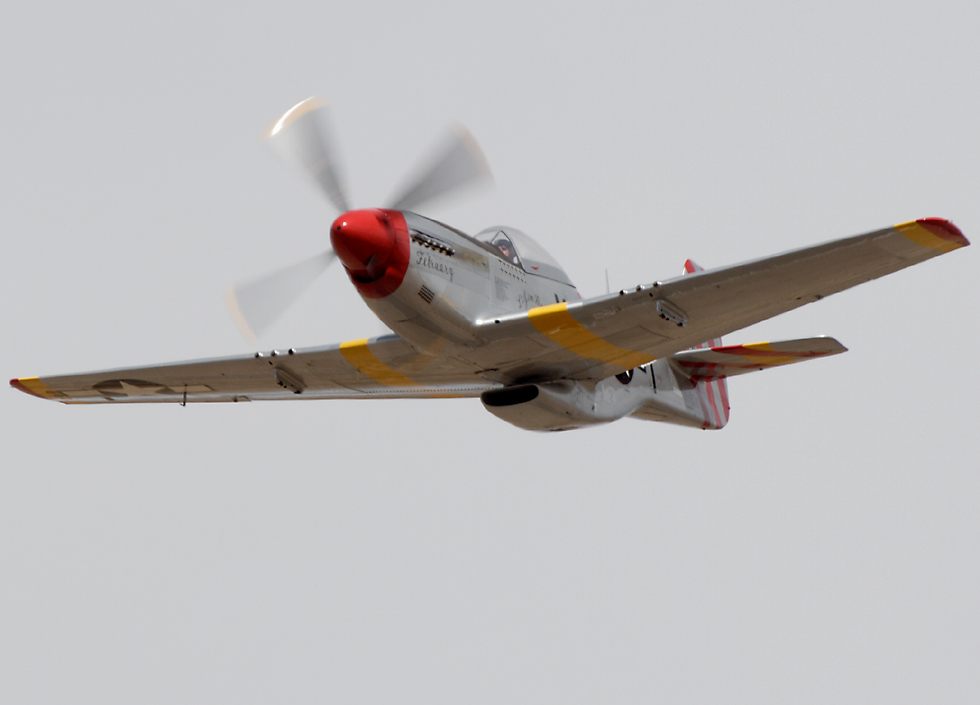
| The
show had an excellent selection of world war two aircraft, including two
P-51 Mustang fighters, one of which is called "February" and is based in
the area. |
 |
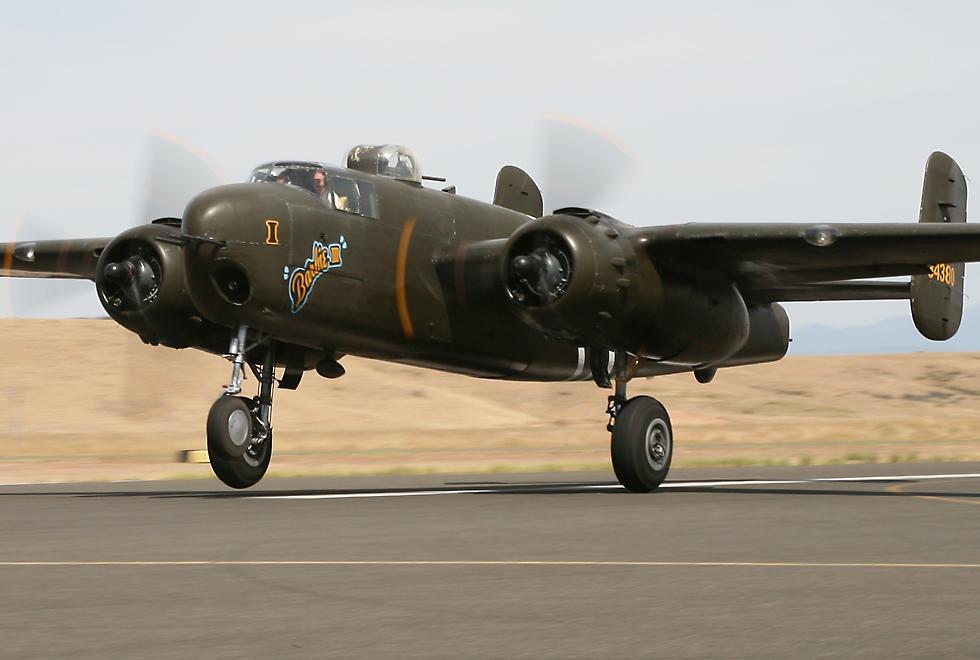
| Mustangs
are one of the most common world war two fighters still flying, and B-25
Mitchells are one of the most common bombers, but Barbie III is unique
amongst airworthy Mitchells, a "solid nose" B-25H model with four 50 caliber
machine guns for strafing and even a 75mm cannon, which was used to great
effect against ground targets and shipping. Barbie III was
the second of about a thousand cannon-equipped Mitchells to come off the
assembly line. |
 |
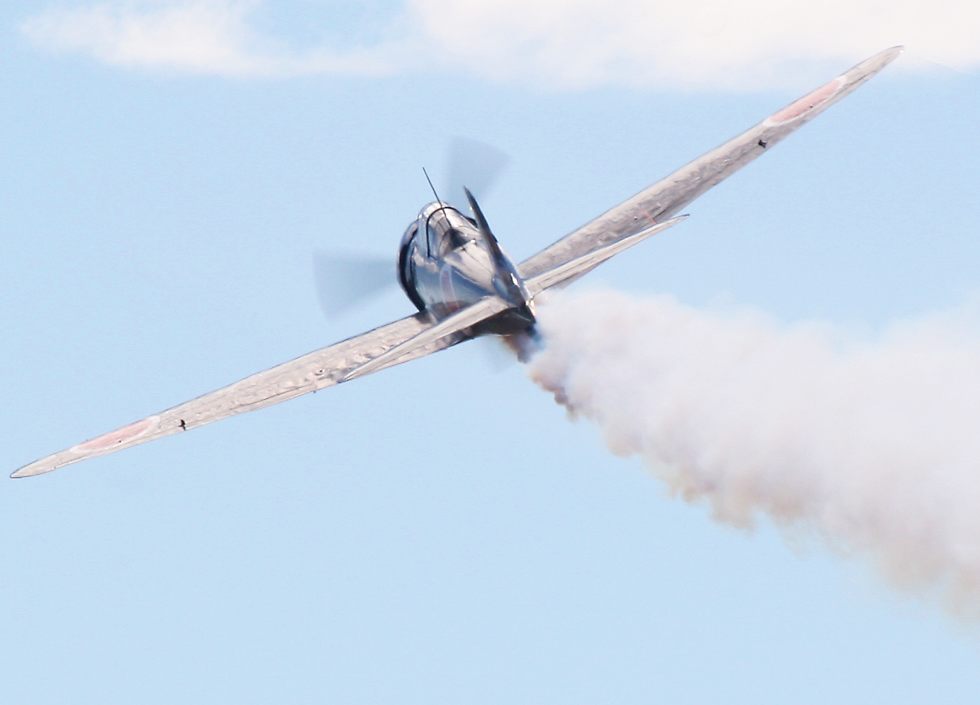
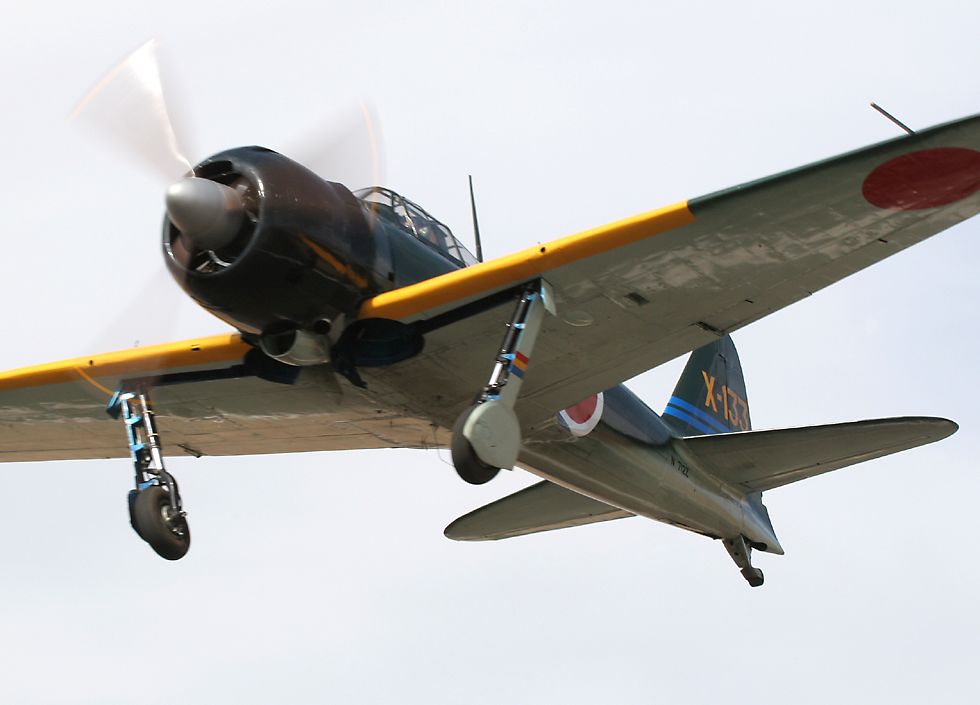
| It's
not always that an airshow has a genuine Axis aircraft on display, but
Prescott was graced by the presence of Camarillo's restored Mitsubishi
Zero, one of only three still flying, though with a Pratt and Whitney engine
rather than the Japanese original. In the background of this
shot you can also see the Zero's one-time enemy, the P-40 Warhawk. |
 |
| This
particular aircraft is based on an airframe recovered in 1991 from a Japanese
airfield in Indonesia. |
 |
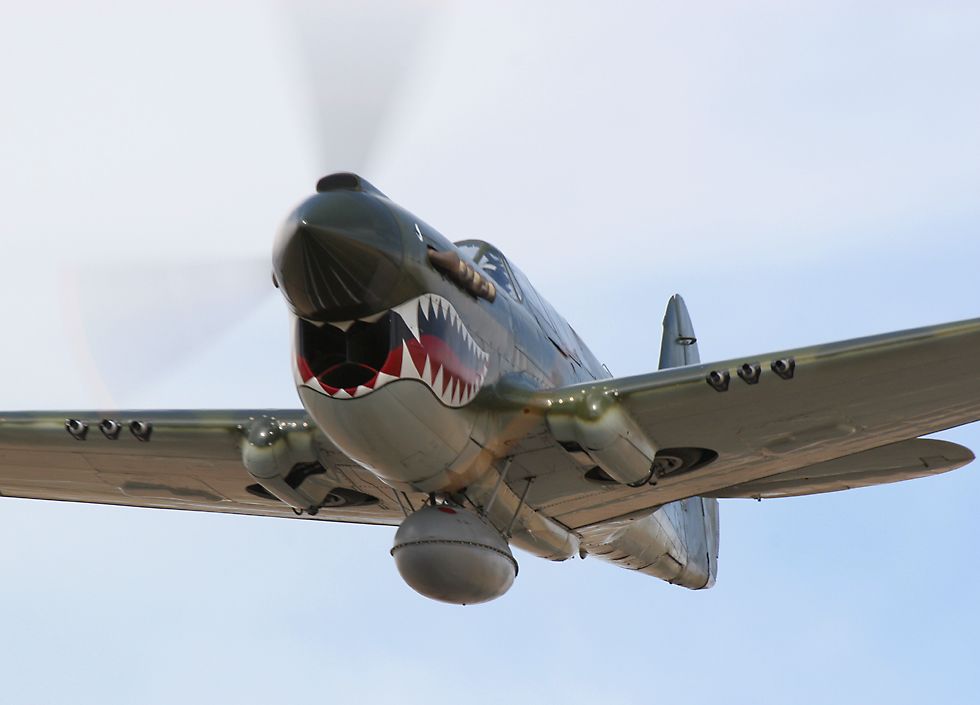
| The
P-40 Warhawk is much more rarely seen than its successor the P-51 Mustang.
Although it was an adequate aircraft when introduced, it was outclassed
by the time the war started and was soon relegated to second-line duties. |
 |
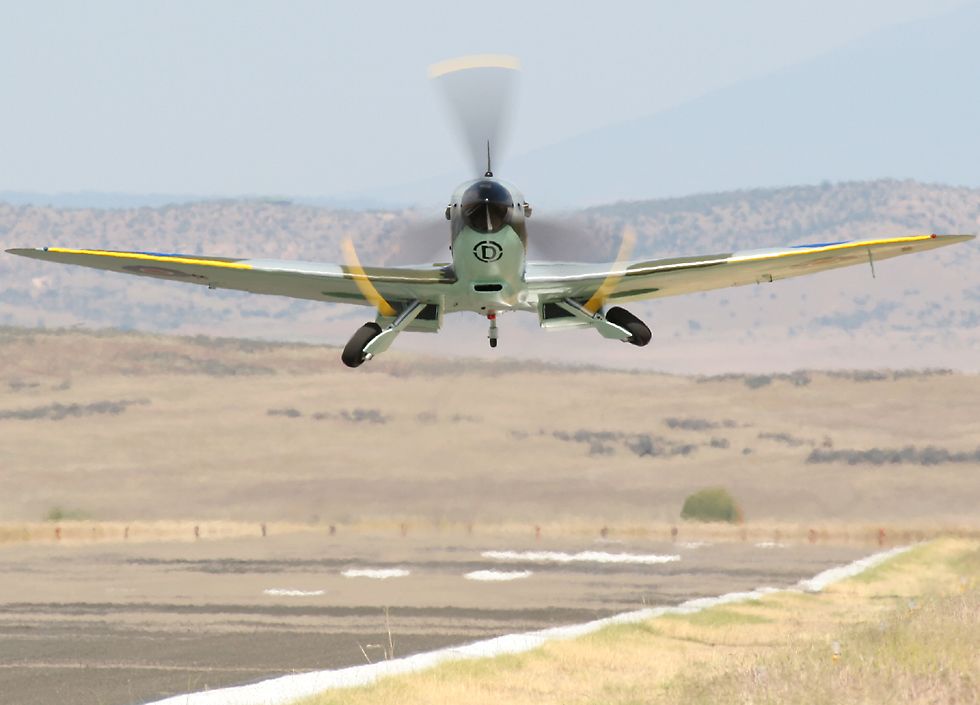
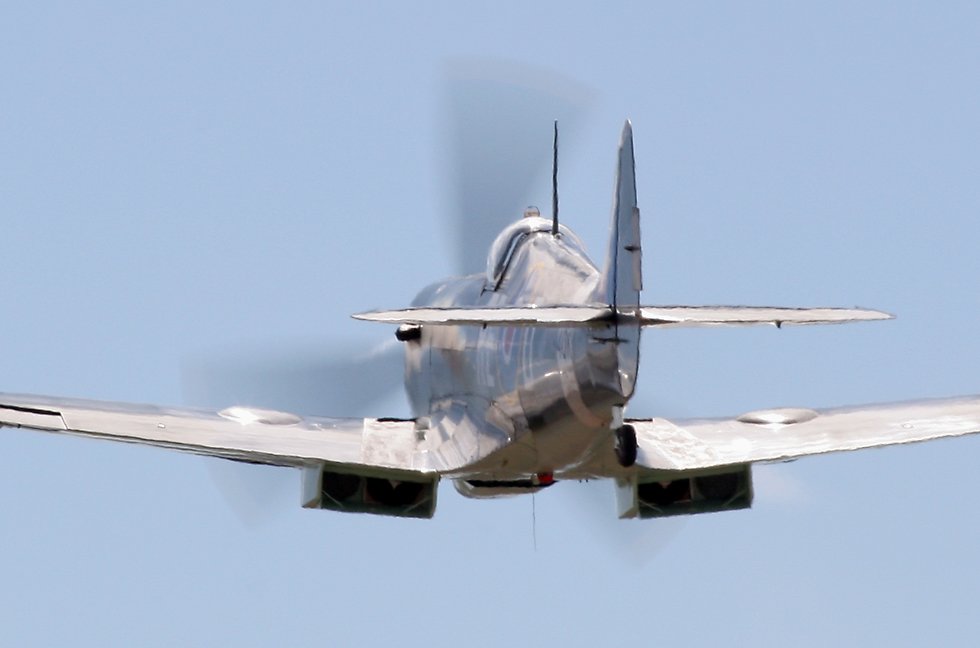
| This
Supermarine Spitfire Mk IX is actually a replica, based right here in Prescott. |
 |
| The
Spitfire took off at an angle to the runway, and soon passed directly overhead,
a little reminiscent of a famous bit of footage in which the famous British
airshow pilot Ray Hanna passed just over the top of a terrified presenter's
head as he was narrating the start of a documentary. Thankfully,
in this case pilot Bob DeFord was a good 20 or 30 feet above me when he
passed! |
 |
| It
might not be entirely authentic, but this aircraft looks beautiful and
puts on a very good performance. |
 |
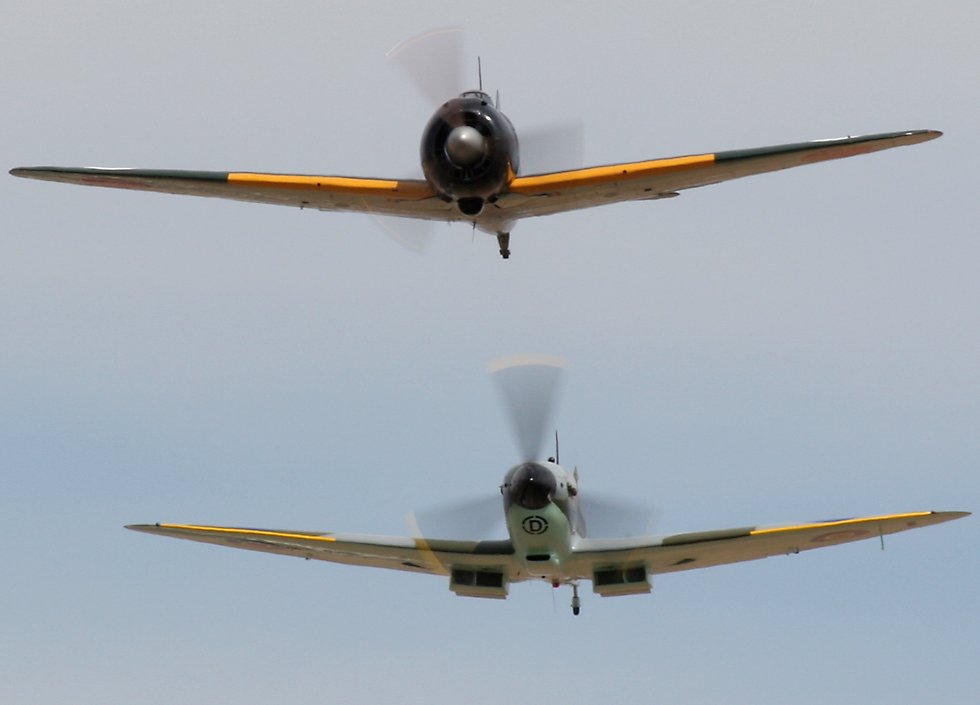
| After
takeoff the Spitfire did a spirited dogfight reenactment with the Zero. |
 |
 This
photo is somewhat inaccurate, in the Pacific theater the British removed
the red from the roundels on their aircraft, so they wouldn't be mistaken
for the "hinomaru" or "sun disk" on the Japanese aircraft, better known
to the Allies as the "meatball".
It wasn't a good
idea to be mistaken for a Japanese aircraft when you were flying near your
own military forces! |
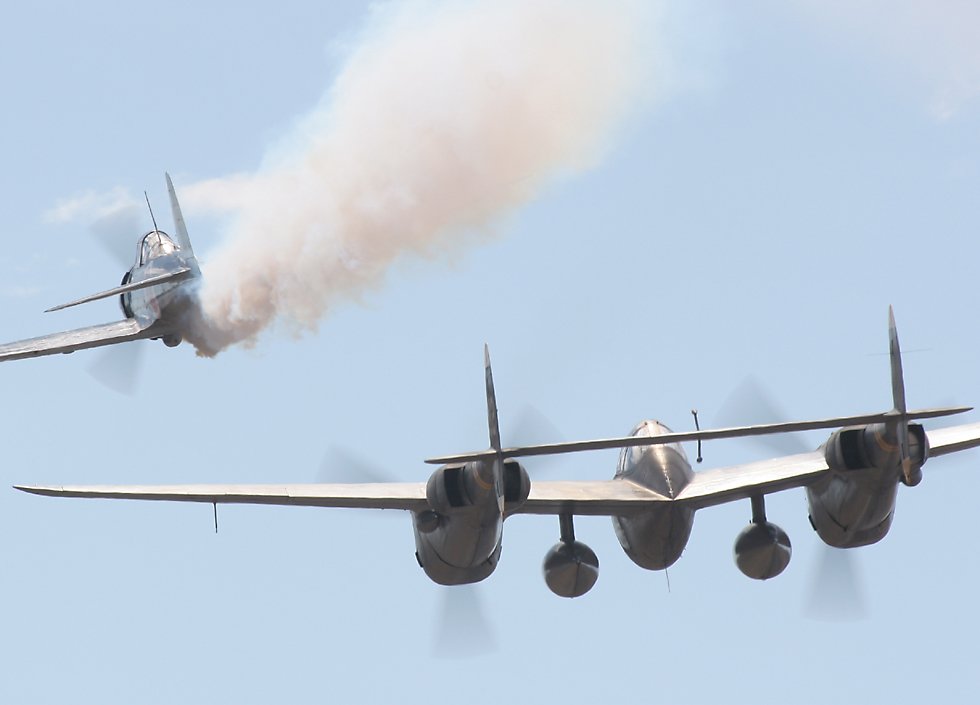
| This
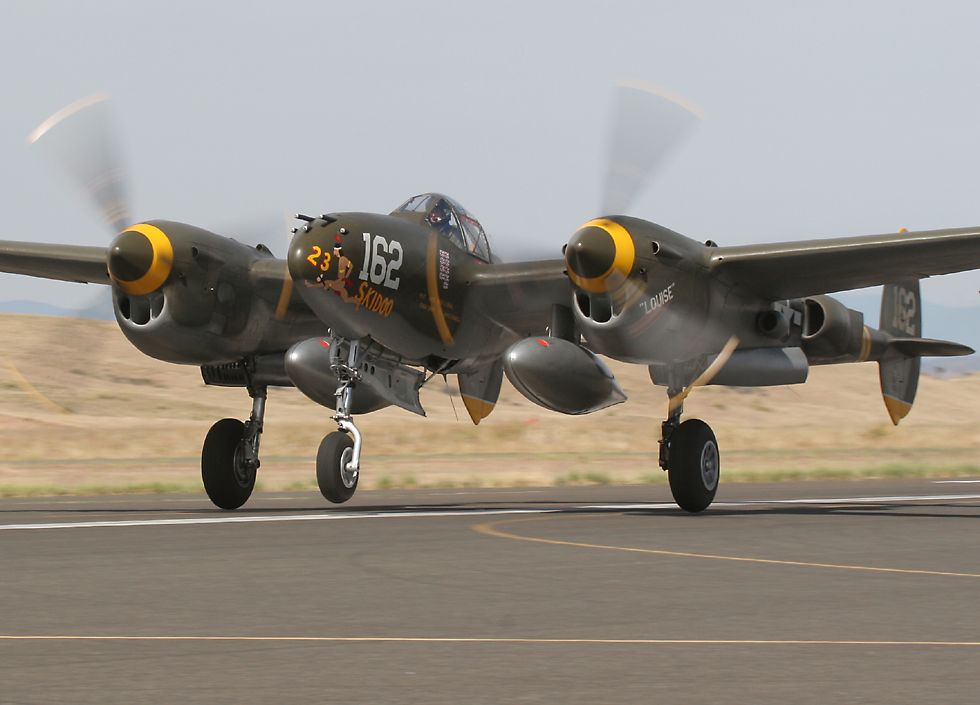
beautiful P-38 Lightning is even less common than the P-40 Warhawk.
This particular aircraft is the newly repainted "23 Skidoo", based at the
Planes of Fame air museum in Chino, California. |
 |
| The
Lightning didn't have the performance of the Mustang, but it fought effectively
in both Europe and the Pacific, and America's top ace, Richard Bong, achieved
all 40 of his victories in this type. |
 |
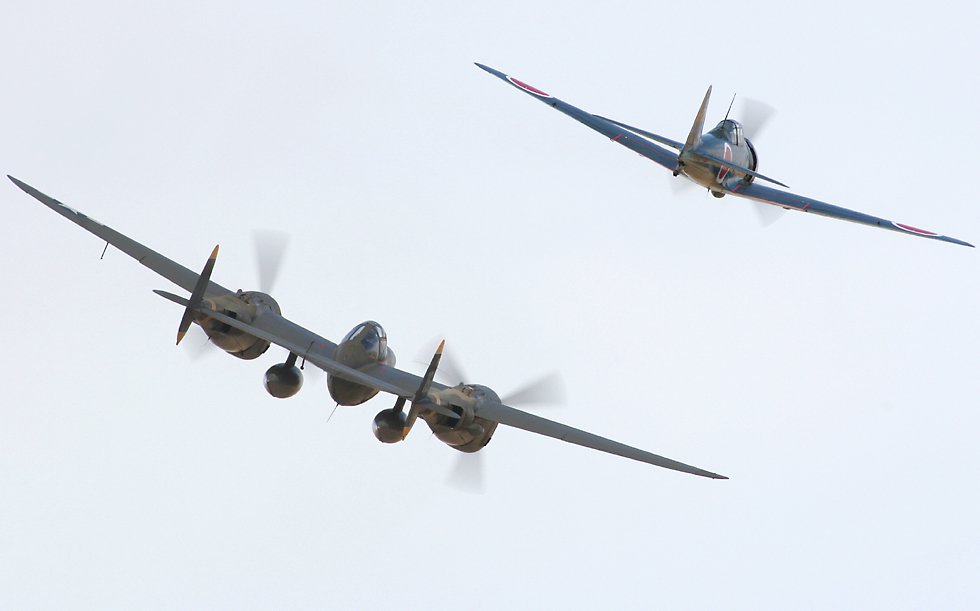
| The
poor old Zero gets to be chased again! In America, the outcome
is inevitable... |
 |
| Ouch! |
 |
| Into
the sunset... |
 |
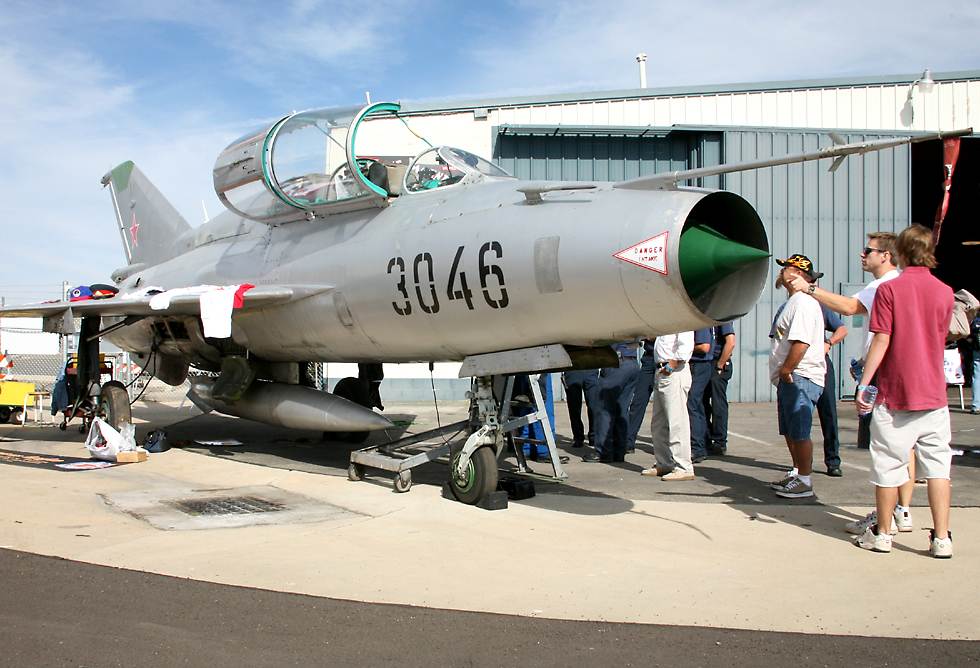
| The
airshow went without a hitch, but a very tragic accident occurred a few
weeks later. This two-seat MiG-21 trainer was due to fly during
the show but remained grounded because of hydraulic problems.
The day after the show I was meant to fly with Warren Parkes, Billy Friedman
and Josh Vaughan to do an air-to-air shoot of the MiG, just as we'd done
the previous year with the Collings Foundation F-4 Phantom II, however,
the hydraulics were still playing up. When it finally came
time to do the shoot I was back in California, so Donald Morris and Andy
Boquet went up with Warren and Josh, with Billy flying the photo plane.
During the shoot their plane crash and all five men were killed.
I didn't know Donald or Andy, but Warren, Billy and Josh were all great
guys. Although airshows are always a team effort, Warren was
the main powerhouse behind the event, an incredibly enthusiastic and inventive
guy constantly coming up with new ideas and finding ways to make things
happen. He's also one of the most generous people I've ever
met, even lending me his own car during the show so I could get around.
They'll all be greatly missed. |
 |
See
the
2005 Prescott airshow and the
2004 Prescott airshow.
 |