Butterflyfishes of Egypt
|
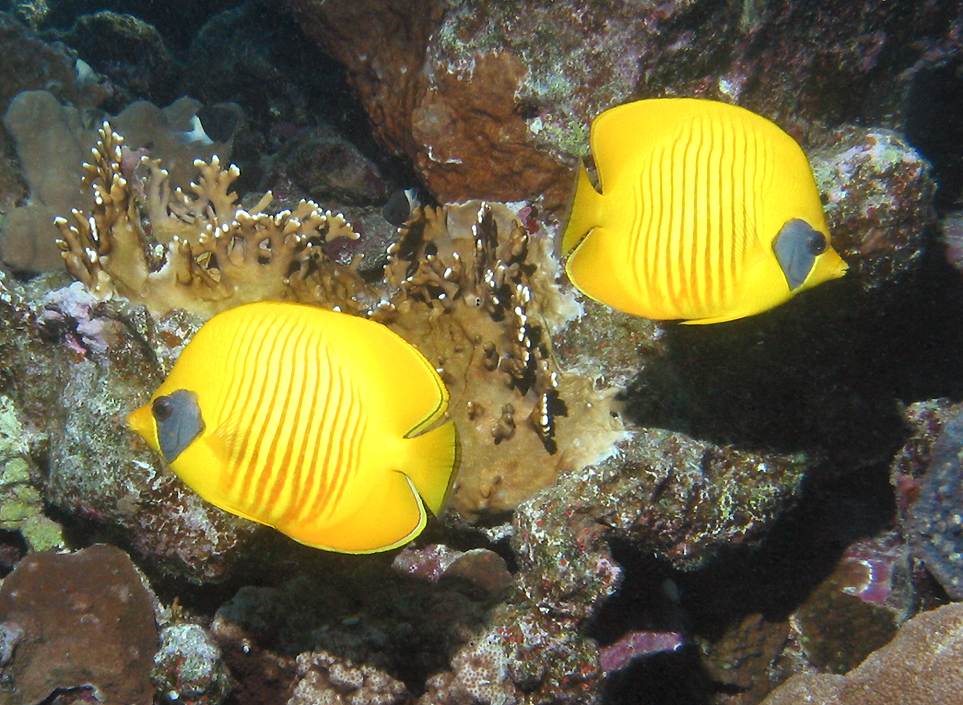
The Red Sea is a good place to look for butterflyfishes, since there are several species which are found here but are very uncommon elsewhere. For instance, these masked butterflyfishes are found only in the Red Sea and in the Gulf of Aden to the south-west. |
|
|
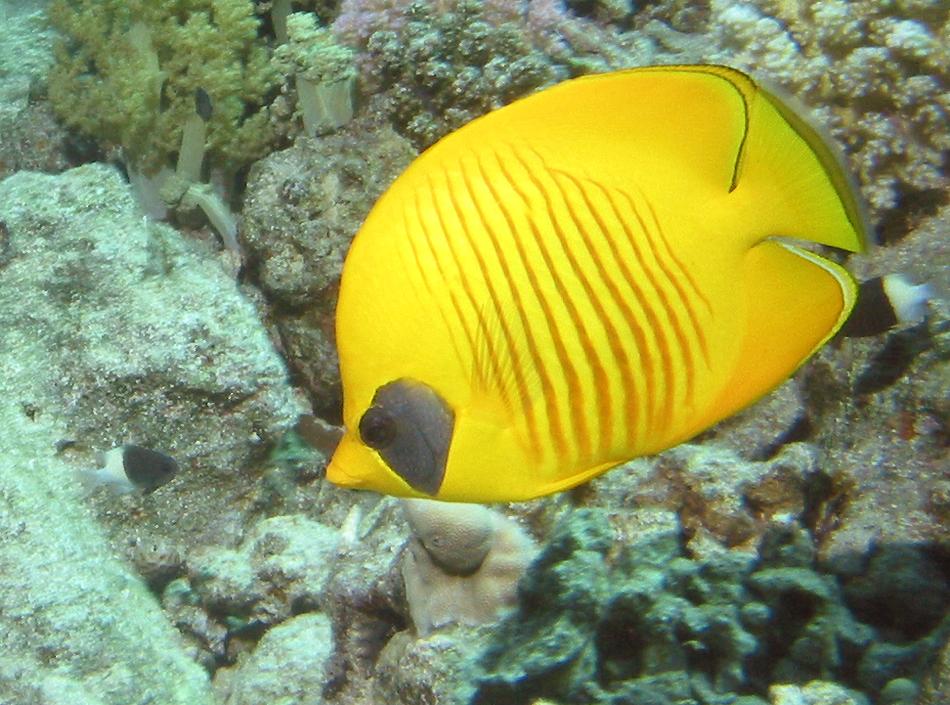
The standard name for these is bluecheek butterflyfishes, but I prefer masked. Many of the varieties on this page have several common names, which is why it's important to also know the Latin name, which you can see by hovering your cursor over the photo. |
|
|
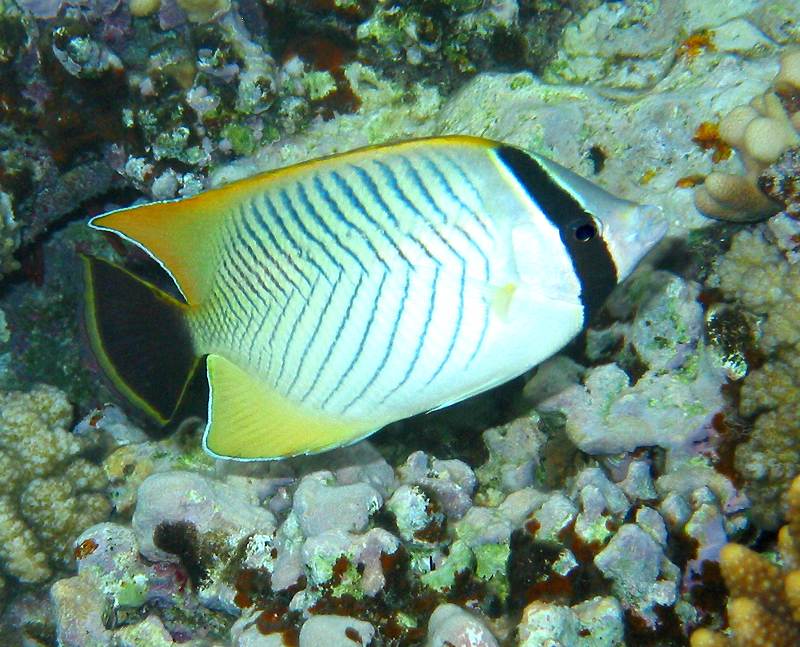
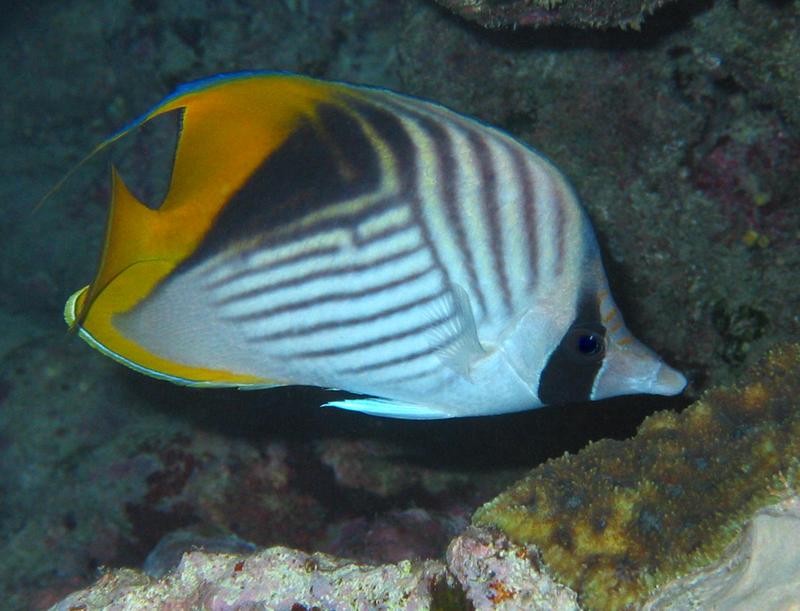
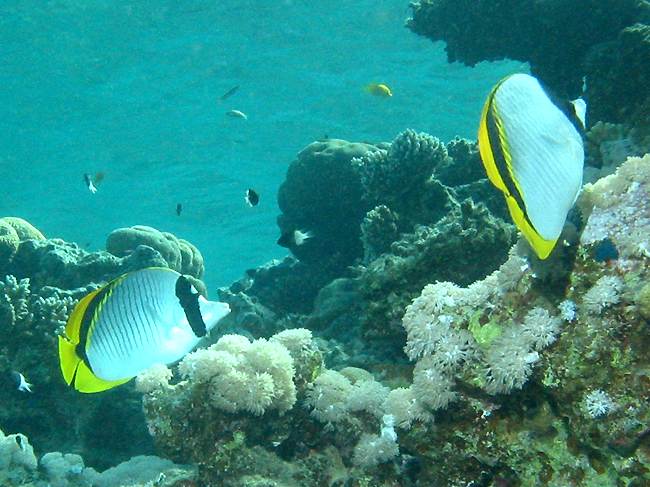
Unlike the blue-cheek butterflyfishes, the threadfin shown here is very widely spread, from South Africa all the way up to the Red Sea and right across the Pacific to Hawaii. I didn't get any really good photos of it while I was in Egypt, but I got a slightly better photo from Australia. |
 |
|
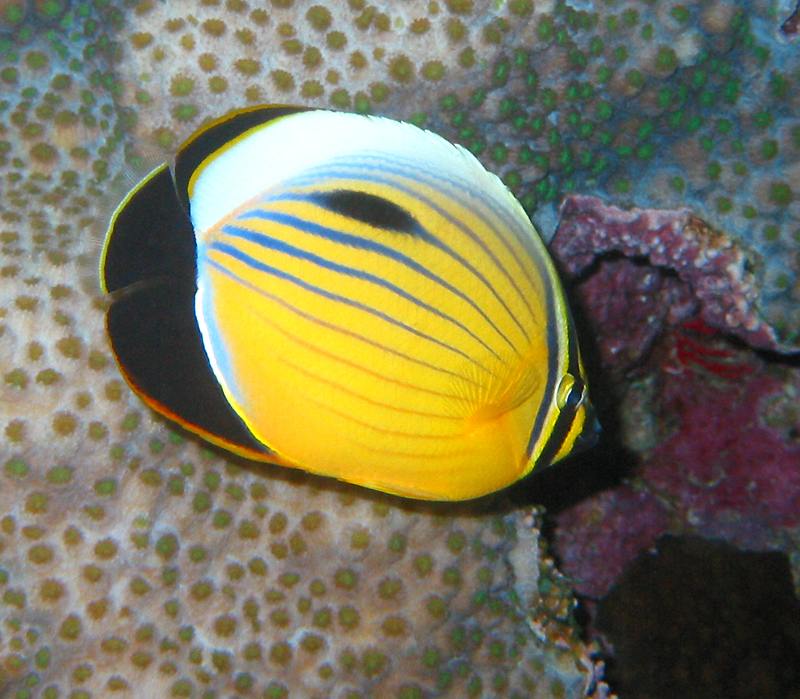
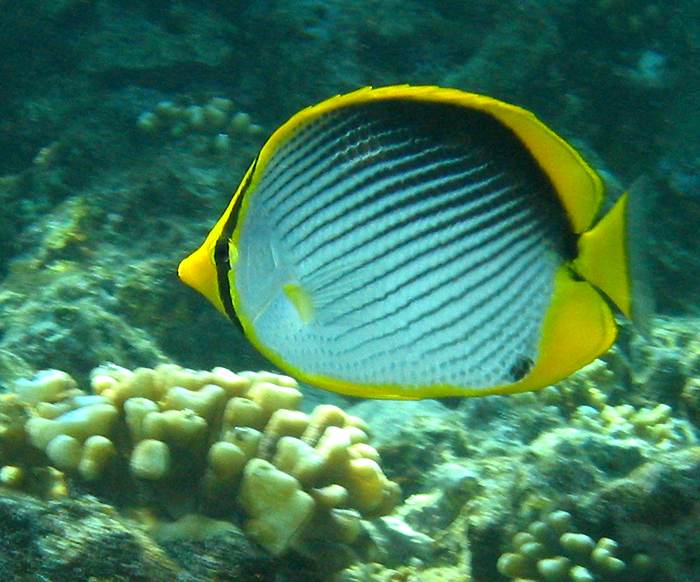
I was a bit luckier with this black-backed butterflyfish, but again this was the only photo I managed to get. I have a really nice photo of a pair of these on the Great Barrier Reef. When they're frightened their back is supposed to become entirely black, except for two white spots, but I've never seen this. As you can see, this one's dorsal spines are flat, which means it isn't too worried. They use the dorsal fins to signal danger to each other, a behaviour which is very commonly seen amongst butterflyfishes, which often pair up for life. |
 |
|
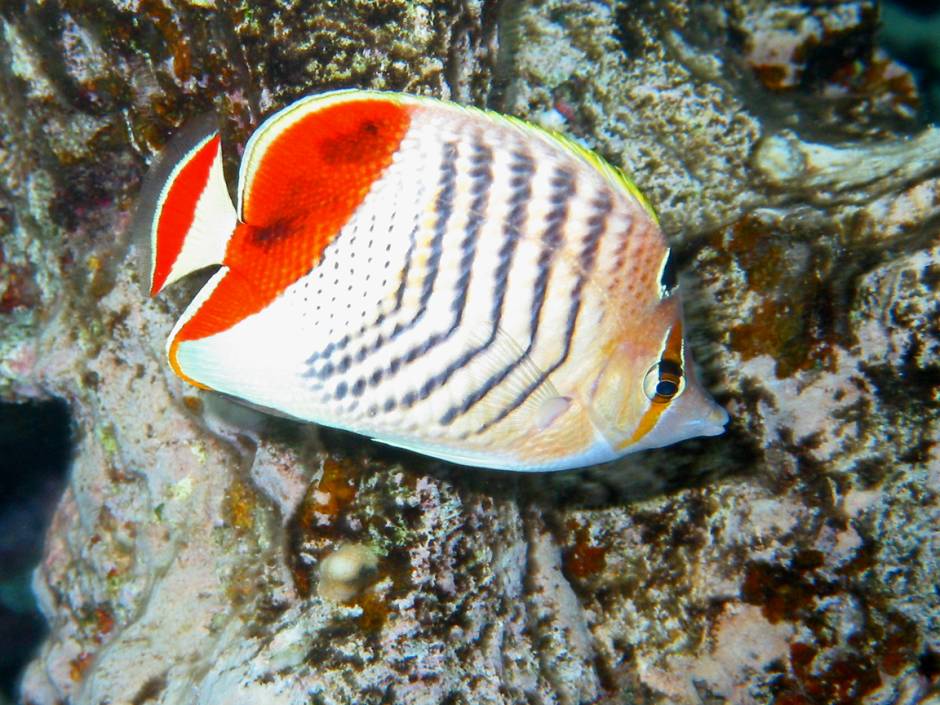
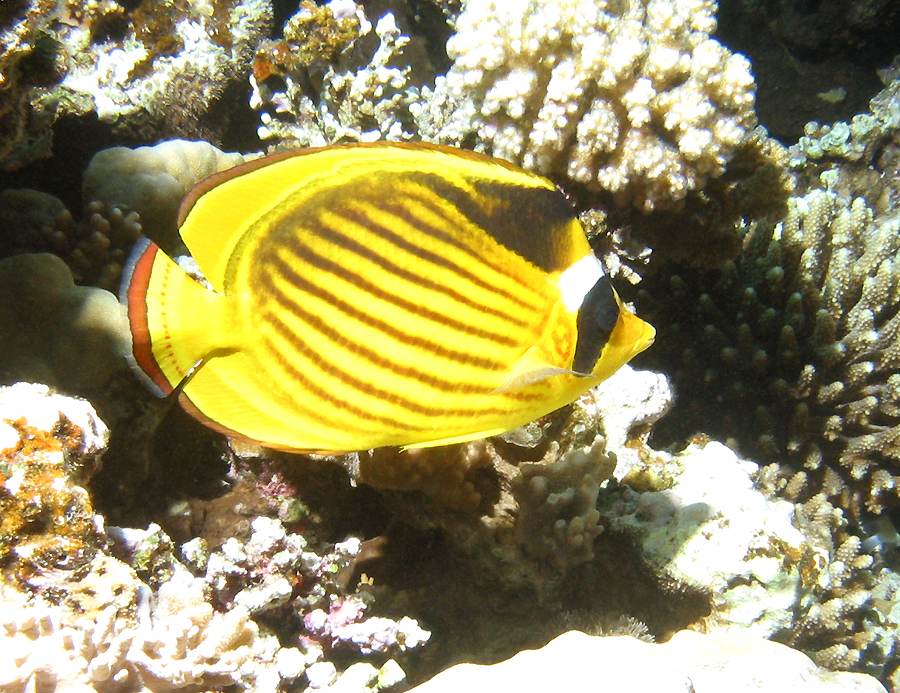
I thought at first that these two photos must be of the same fish, because of what looks like a scar curving across its side. However, after looking at various people's photos, it seems that this mark is another characteristic of the species. The fish in the previous photo also has a dark mark extended out from the second stripe from the right, which this fish lacks. |
|
|
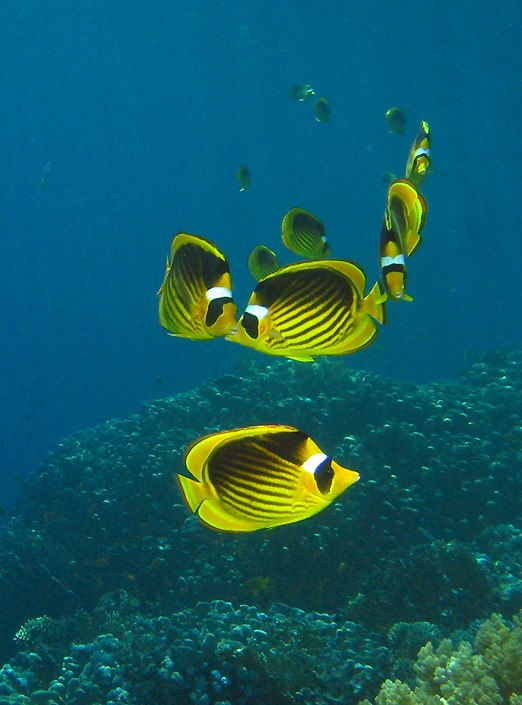
The research I did said that this species is mostly seen alone or in pairs, but in fact this is the only variety which I saw in the Red Sea in groups, as you can plainly see here, with over a dozen all together in one spot, with another just to the left of the frame. You can see the whole group together in a computer wallpaper sized photo by clicking on this photo - the wallpaper photo will open in a new page. |
|