
Tower Bridge
|
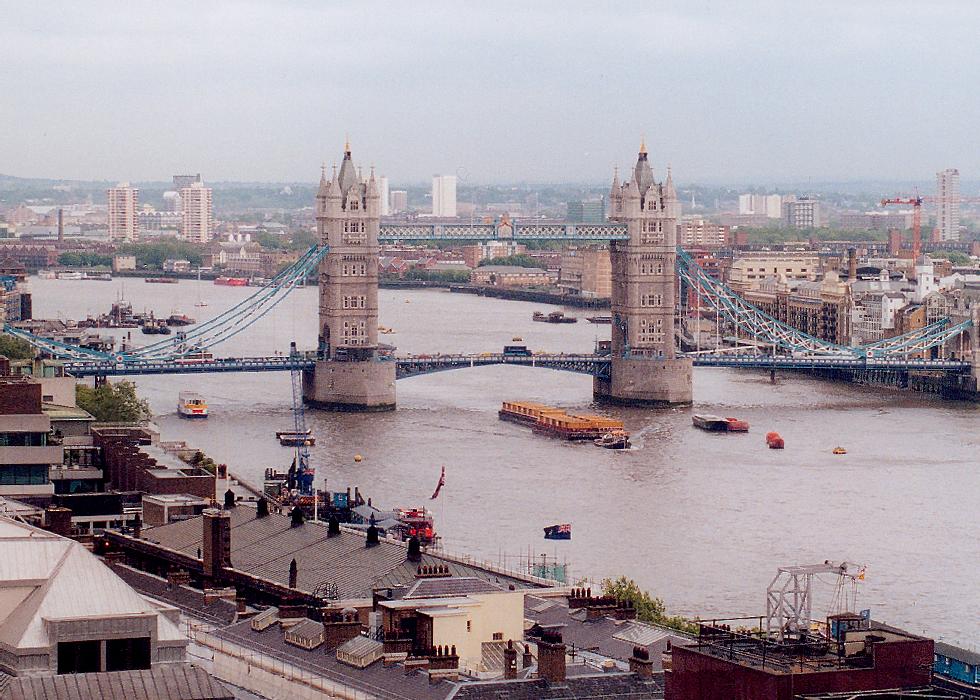
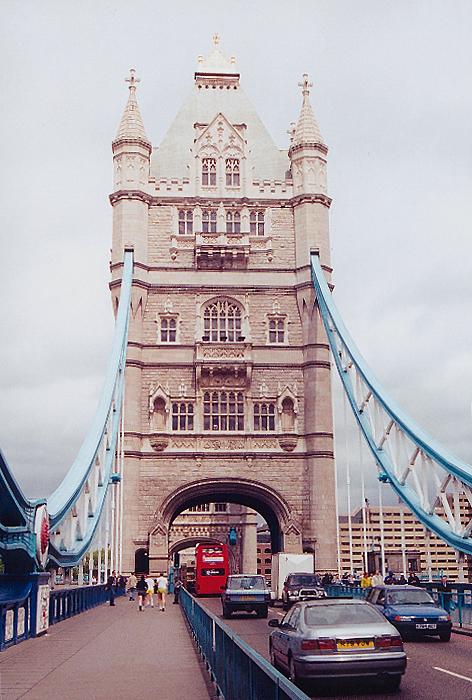
Tower Bridge must be London's most misidentified landmark; as we flew into the city from Chicago, the pilot of our 747 suggested we look out the window at London Bridge! Well, bad news, buddy, but London Bridge is the next bridge upstream from Tower Bridge, and it's remarkably uninteresting in appearance - it's only claim to fame is that it is at the location of the first bridge across the Thames River, built by the Romans in 43AD. |
 |
|
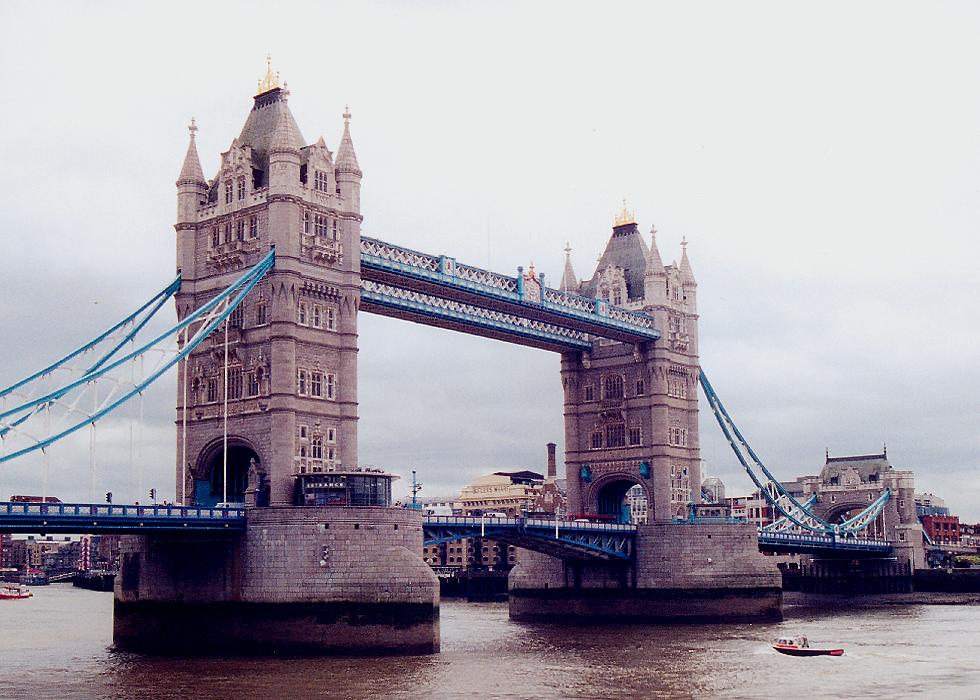
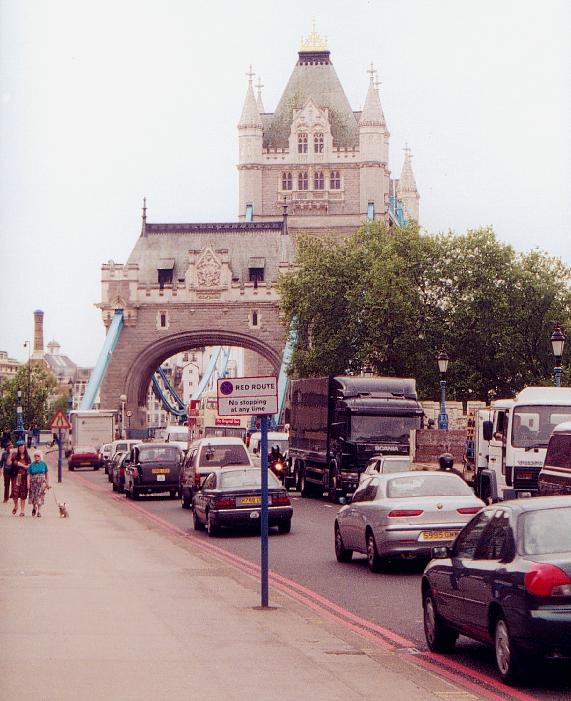
Tower Bridge doesn't get its name because it's the only bridge on the Thames with towers, rather it was named after the Tower of London, which I was standing outside when I took this photo. |
 |
|
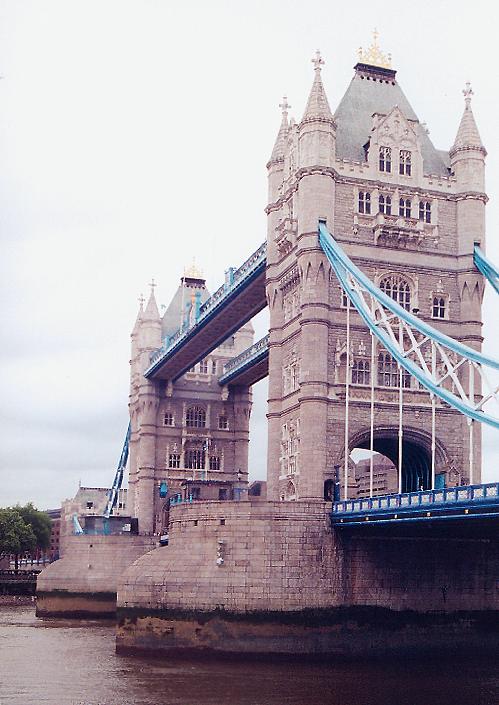
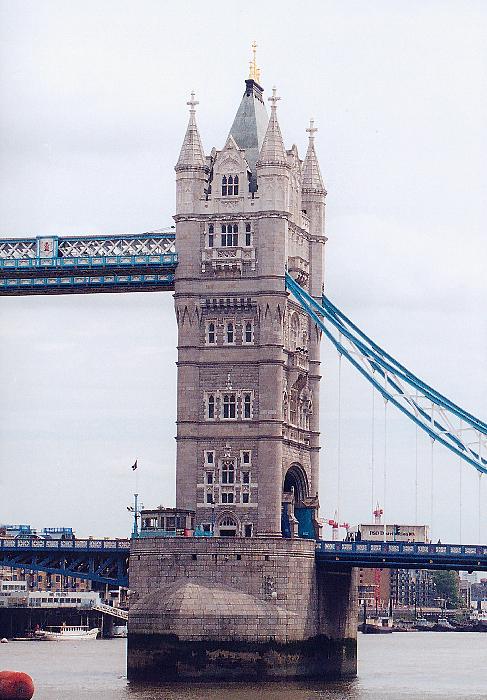
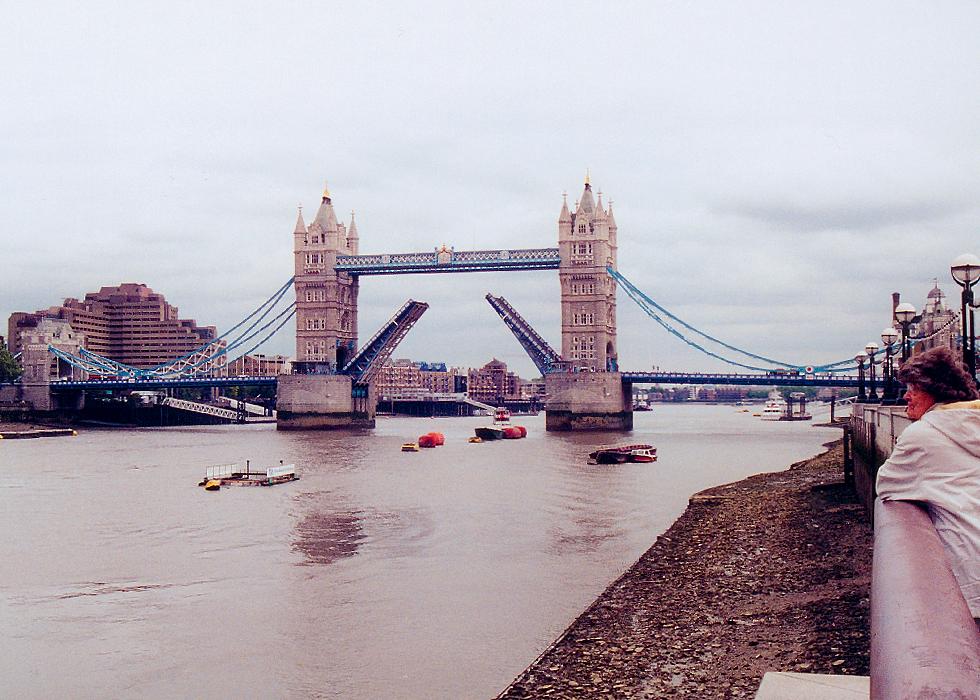
Here's a view from the opposite bank of the river. Despite what many tourists think, Tower Bridge isn't hundreds and hundreds of years old, built in the time of castles and knights. It was completed in 1894 - the giveaway is the steel works which support the bridge, a 19th century innovation. |
 |
 |
Not everyone was enthusiastic about the new bridge. The June 1894 issue of The Builder called Tower Bridge "the most monstrous and preposterous architectural sham we have ever known" and said they would just be wasting photographic plates if they published photos of it. |
|
The magazine editors were displeased by the deliberately archaic and fanciful style of the bridge, but it continues to delight locals and the estimated 500,000 tourists who visit it each year. |
 |
|
The bridge was needed to deal with increased traffic in the city, but whatever was built had to allow ships to get past to the wharves upstream. After about 50 alternative designs had been considered, it was decided to build a bridge with liftable decks. |
 |
|
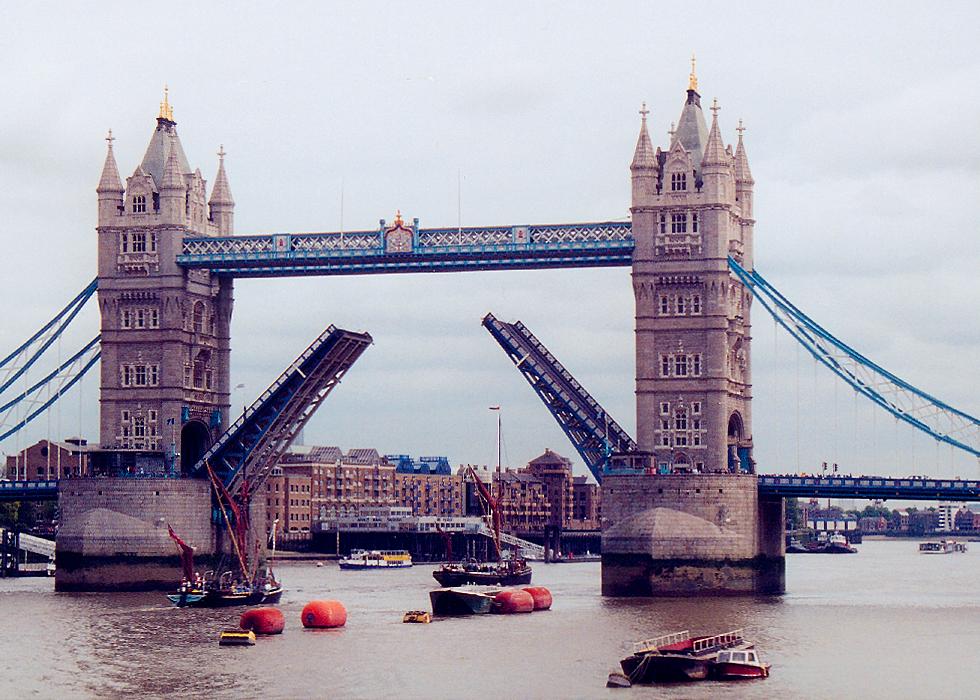
Each piece of moveable roadway weighs over 1000 tons, but they take less than a minute to lift. In the first year of operation they were opened more than 6000 times, but nowadays they're only raised about once a day. The original machinery which raised the decks can be viewed on a tour of the bridge, though since 1976 a modern electrical system has been used. |
|
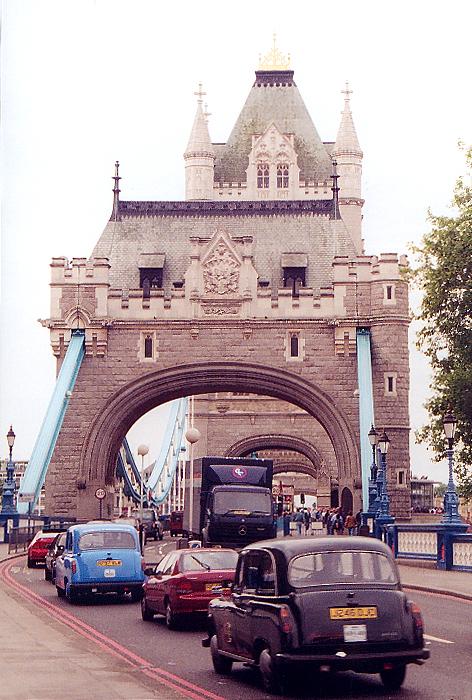 |
It might seem strange that the bridge is only two lanes wide, since even the horse-drawn carts at the time it was built were as wide as modern vehicles, but the reality is that the roads on either side of the bridge are narrow, and there was no easy way to make them wider, so there was no point making the bridge wider. |
|
 |
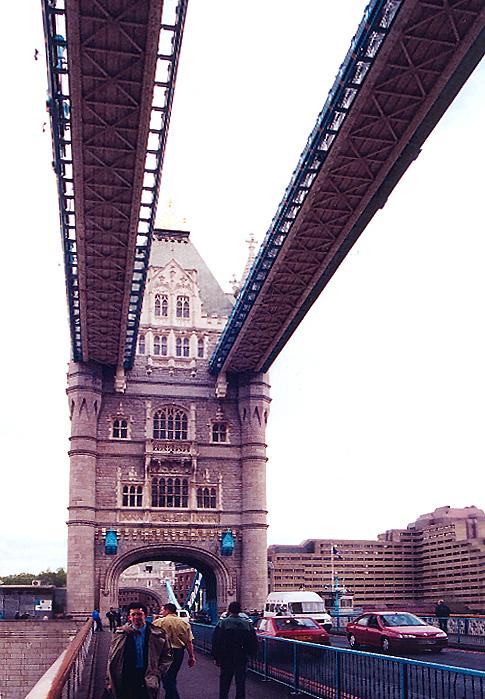 |
The structures between the towers are walkways which you can cross as part of the bridge tour. They were originally built so people could cross the bridge even when the roadway was raised, but they were closed down in 1910 because very few people used them. There are some very good views of the city from up there. |