| Yuma
Airshow 2005 Flying Displays |
The flying display
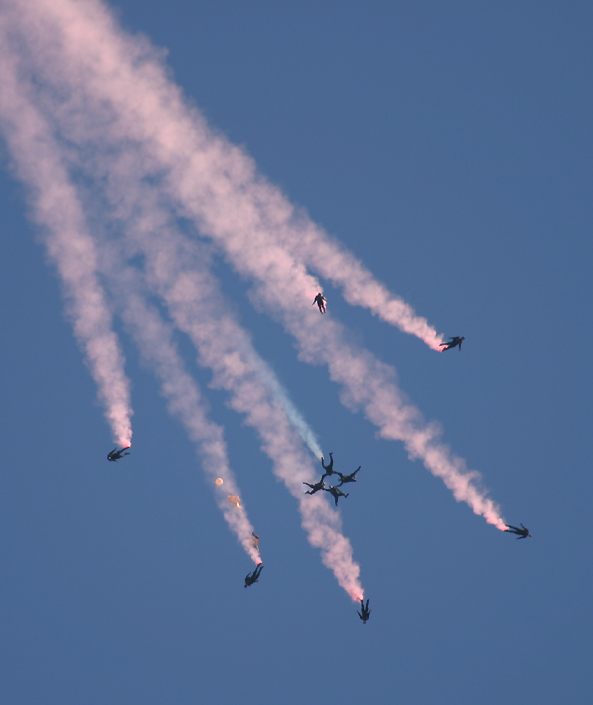
at Yuma actually started with some falling, as the US Army Golden Knights
parachute team jumped out of their aircraft, formed up into a pattern and
then broke apart so they could deploy their parachutes. The
crowd was then treated to a demonstration of each one coming in to land
at the same place at show center. |
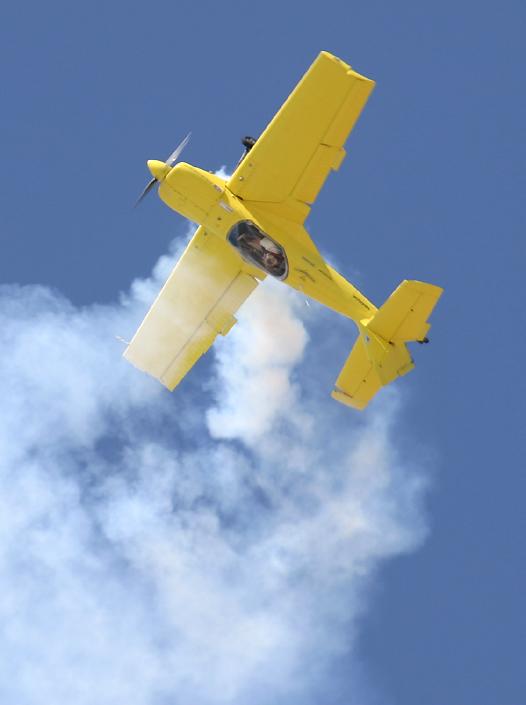
Almost all American
airshows, even the military ones, include performances by civilian
aerobatic aircraft. I've often wondered what Joe Public thinks
of these displays, especially if there are three or four of them, but there
are certainly maneuvers which can be appreciated by everyone, even if they
don't know anything about flying. |
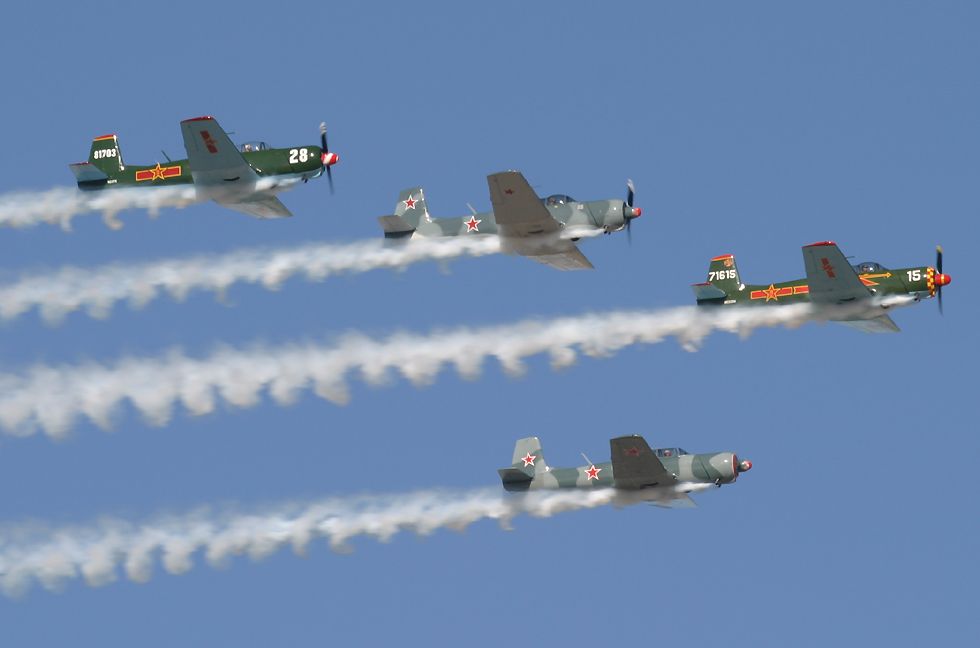
| These
are Chinese built Nanchang CJ-6A military trainers, which is why you're
seeing such a profusion of communist red stars at an American military
airshow! These aircraft have become very popular over here
with warbird enthusiasts, because they're relatively cheap to buy and operate,
and there's even quite a support network in America now. |
 |
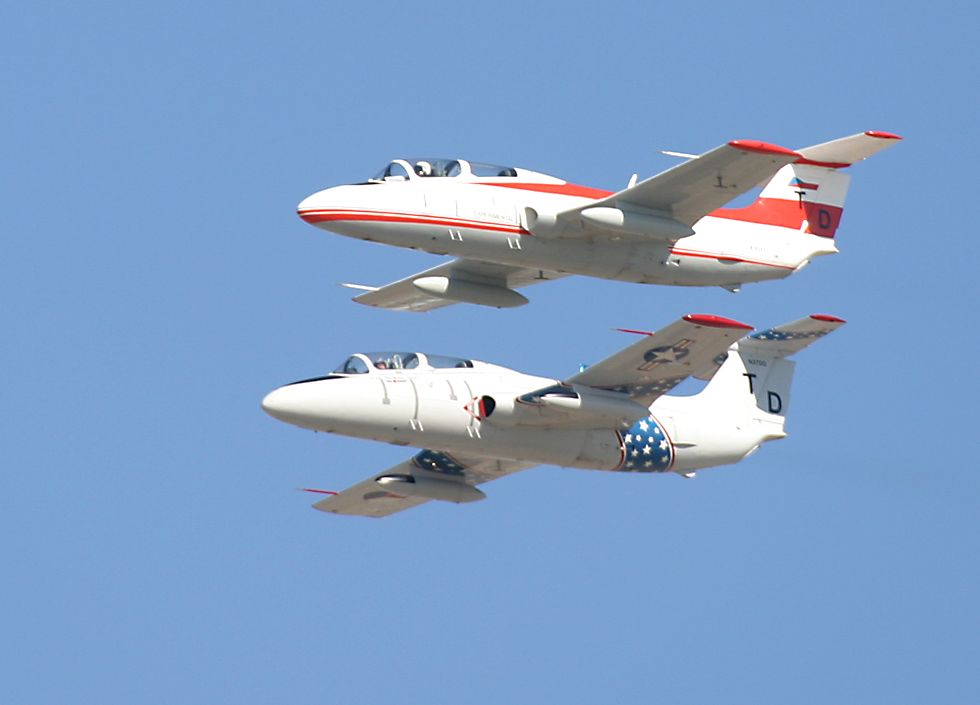
| Another
ex-communist military import, and obviously a step up from the CJ-6As.
These are Czech designed L29 Delfins, which were the main Soviet basic
jet trainer for many years. These two are part of the four-ship
civilian jet display team called the Thunder Delfins, which perform at
many shows in this part of the States. |
 |
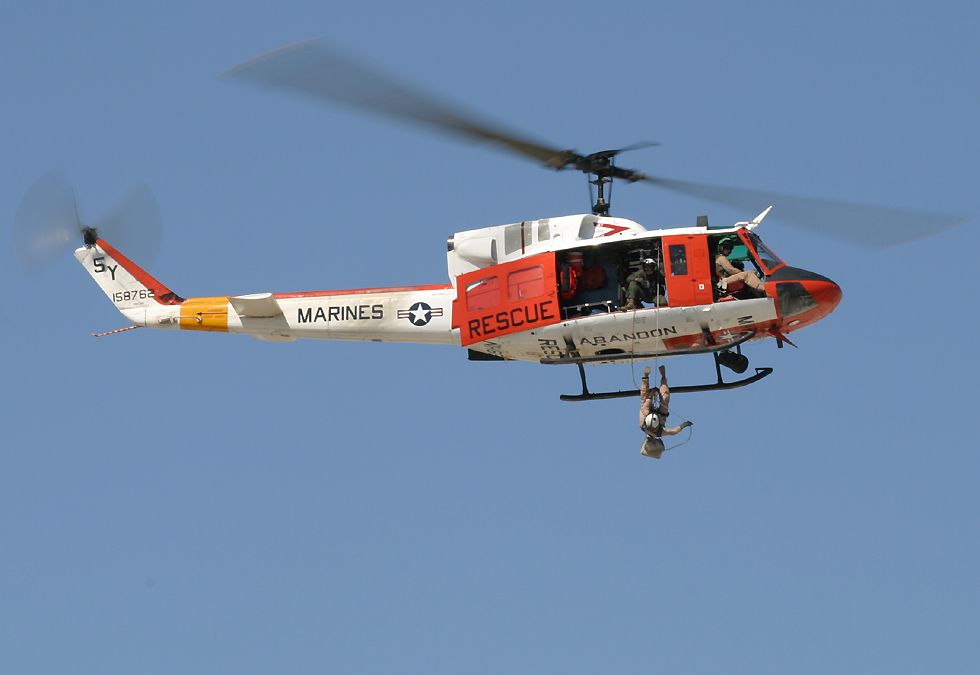
| Here's
a military display put on by the marine corps search and rescue unit based
at Yuma. The helicopter they're using is the venerable UH-1N
Iroquois, better known as the "Huey" of Vietnam fame. The Iroquois
has now been largely replaced by more modern helicopters like the Blackhawk,
so this is one of the few opportunities left to see them still operating.
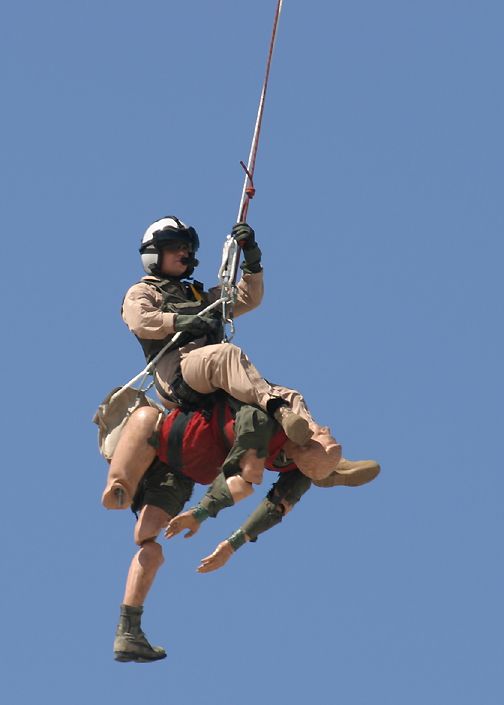
As you can see, one of the crewmen is exiting the helicopter to perform
a rescue of a dummy which they unceremoniously tossed a couple of hundred
feet onto the runway. If you go to this show with young children
then you might want to let them know that this is about to happen, or they
might think they're seeing someone fall to their death! |
 |
I'm sure that most
people who are in need of these guys' services are very grateful to see
them coming, but they might have second thoughts if they knew how they
were about to be treated! Heck, I bet these guys don't even
buy you flowers the next morning! |
| Yuma
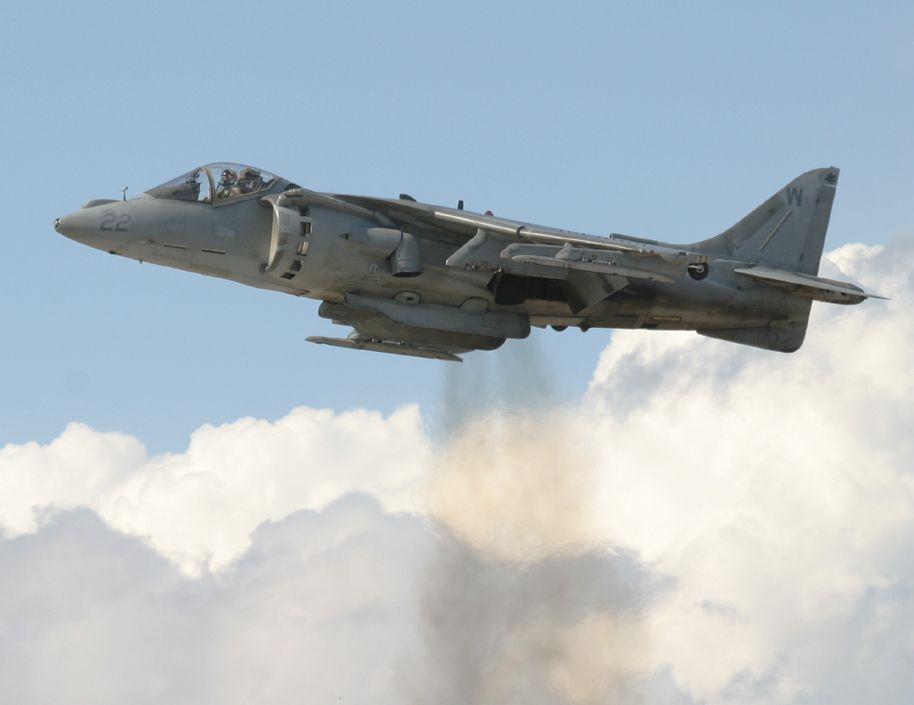
is a marine corps air station, and the highlight for many people is a demonstration
by a marine corps AV-8B Harrier "jump jet". These guys always
put on a good show, and the appearance of nice fluffy white clouds, which
is unusual in this part of the country, adds quite a bit to the scene.
When it's hovering, the Harrier injects water in with the fuel, to provide
extra thrust and cool things down a little. I'm told that this
also knocks the soot off the inside of the engine, resulting in the dark
exhaust you see here. |
 |
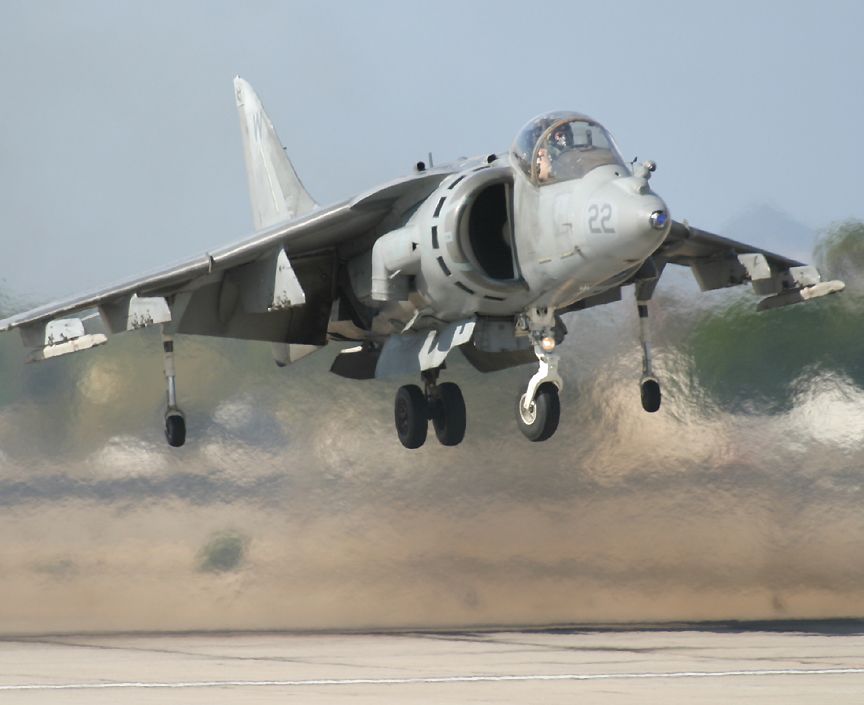
| The
harrier is full of oddly shaped plates and baffles, such as those you can
see under the fuselage in this shot. The sensors on the tip
of the nose and under it give it an almost comical cartoon-character appearance,
and the thing you see on top of the nose is actually a small wind vane,
which allows the pilot to judge which way the wind is coming from when
hovering. It's a sub-sonic ground attack aircraft, so streamlined
efficiency isn't as important as maneuverability. Nevertheless
earlier versions of the harrier acquitted themselves very well in air-to-air
combat against Argentine aircraft during the Falklands war. |
 |
| Of course it's the
harrier's vertical and short takeoff and landing
(VSTOL) ability which makes it so interesting to the public and so attractive
to the marine corps. It allows them to operate it from the
small marine corp amphibious landing carriers which are also used for helicopters.
Once on shore, the harrier can operate from small, poorly-prepared forward
bases which are inaccessible to more conventional aircraft.
It's intended to eventually replace the harriers with the VSTOL version
of the joint strike fighter, which is supposed to be a one-size-fits-all
solution for the air force, navy and marines. |
 |
| In
2004 the Air Force did an A-10 Thunderbolt II ("warthog") demonstration
at the Yuma show, but this year the A-10 stayed on static display.
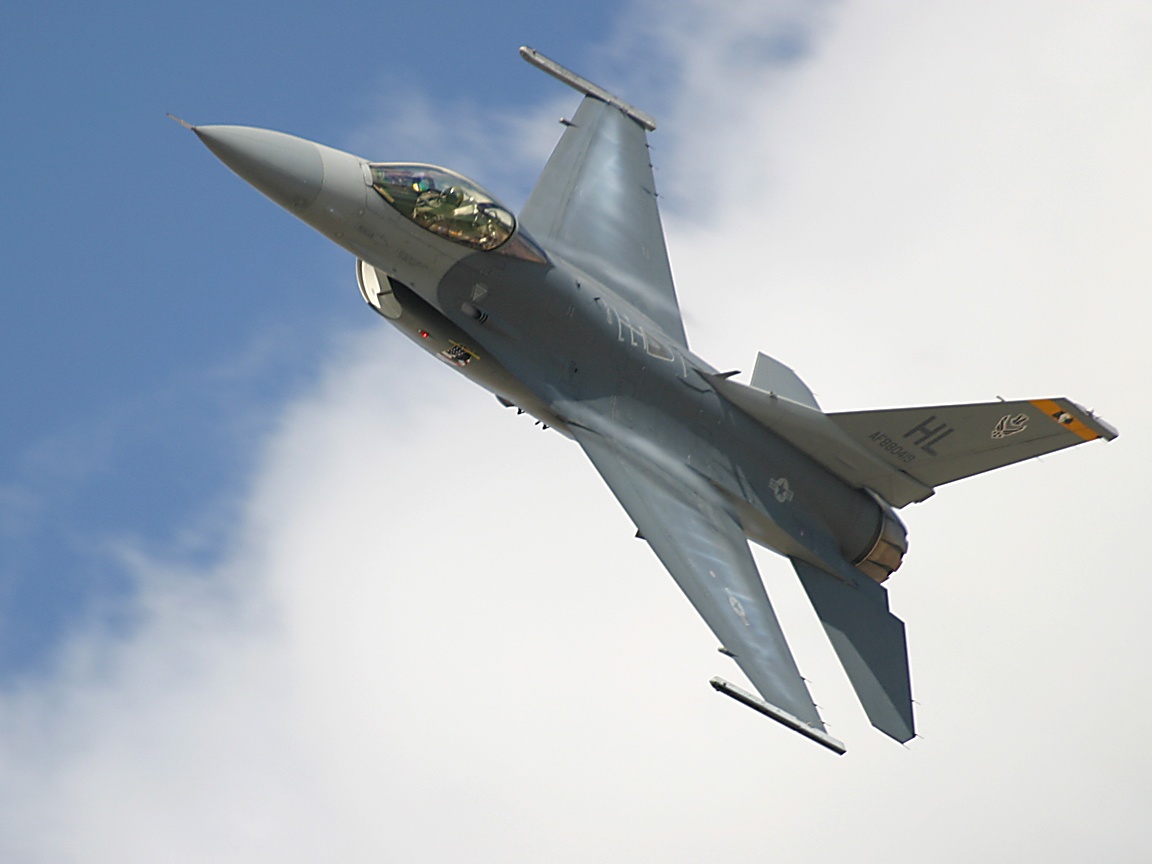
Instead, an F-15 Eagle and this F-16 Fighting Falcon did solo displays.
The F-16 is America's light-weight general purpose fighter/bomber, and
is also used by a multitude of other countries. In this close-in
shot you can see the green "heads-up display" (HUD) in front of the pilot,
and the cannon mounted where the wing meets the fuselage. |
 |
| It
seems that the air force has revamped its display routines, and it certainly
shows! As well as steep diving approaches and a high angle
of attack pass, they also did the spectacular high-speed banking photo
pass that you see here. |
 |
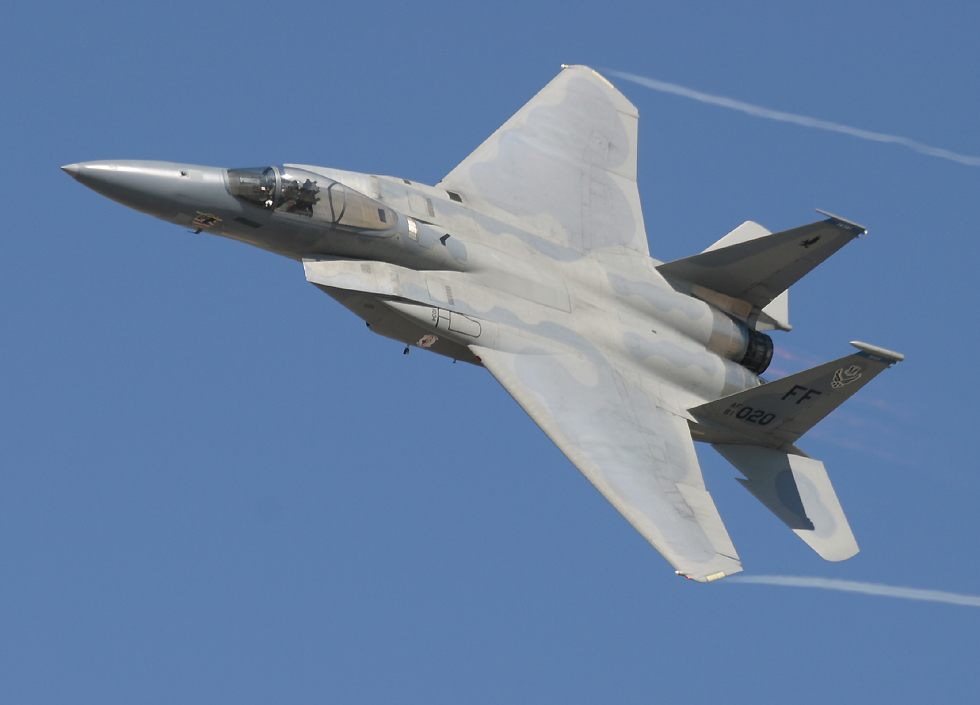
| The
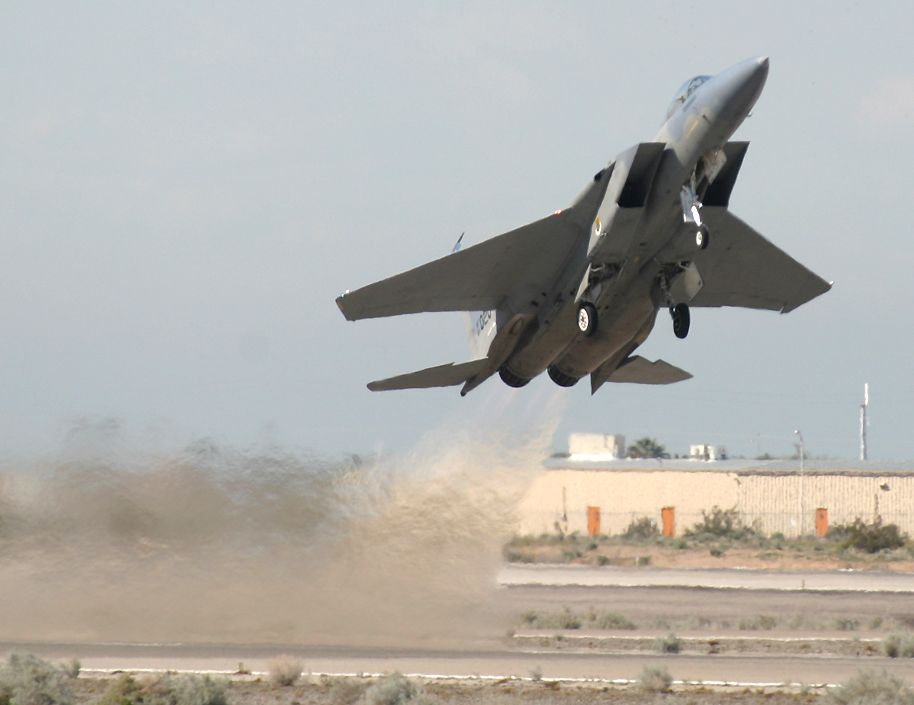
F-15 Eagle certainly wasn't going to let the F-16 have all the fun!
The performance started off with a spectacular steep takeoff with afterburners
in action, and continued through various passes at low and high speed which
showed off the Eagle's incredible power. The F-15 has been
America's premier air-to-air combat aircraft since it entered service in
the mid 1970s, a position it's now relinquishing to the F-22 Raptor.
Like the navy's F-14 Tomcat, which was also designed purely for air-to-air
combat, the Eagle was later reworked to make it capable of dropping ordnance
onto ground targets. The F-15E Strike Eagle has a second crew
member who operates the targeting systems while the pilot maneuvers the
aircraft. |
 |
| However,
as you can see this is the single seat air superiority version of the Eagle,
and he's out to show that it can put on as spectacular a display as the
Fighting Falcon! |
 |
Check
out the static display at the 2005 Yuma
airshow.
  |