| Oshkosh
AirVenture 2002 Post WW2 Aircraft |
| The
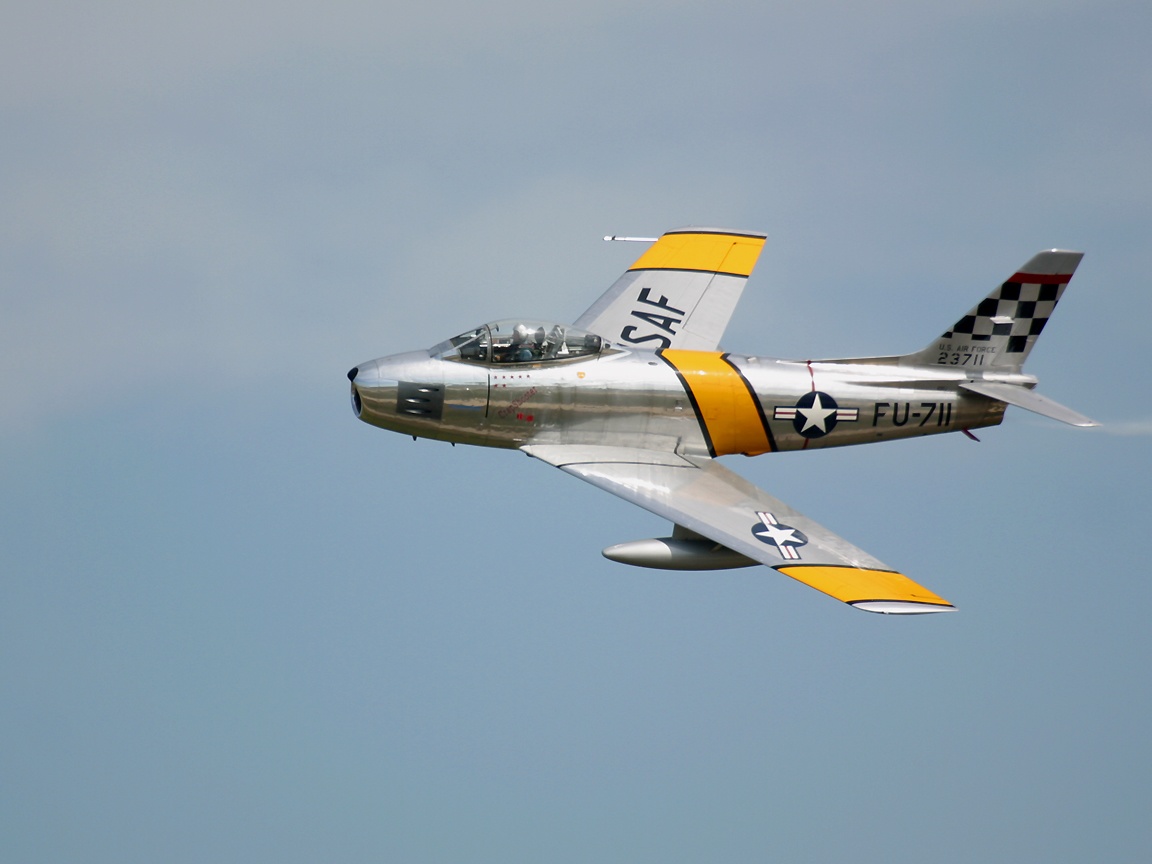
F-86 Sabre was the first swept-wing jet fighter to fly with the United
States Air Force. It had very good performance for the time,
going supersonic in a shallow dive just a few weeks after Chuck Yeager
became the first man to break the sound barrier, flying the rocket propelled
X1. Sabres were pitted against MiG-15s during the Korean war;
the MiG could outclimb the Sabre, but the Sabre was faster in a dive and
had better horizontal maneuverability. Overall, some people
consider the MiG slightly superior to the Sabre, but because of better
pilot training the Americans achieved a better than 8-to-1 kill ratio against
the communist pilots. Ironically, both aircraft were originally
powered by the same jet engine, the British designed Nene. |
 |
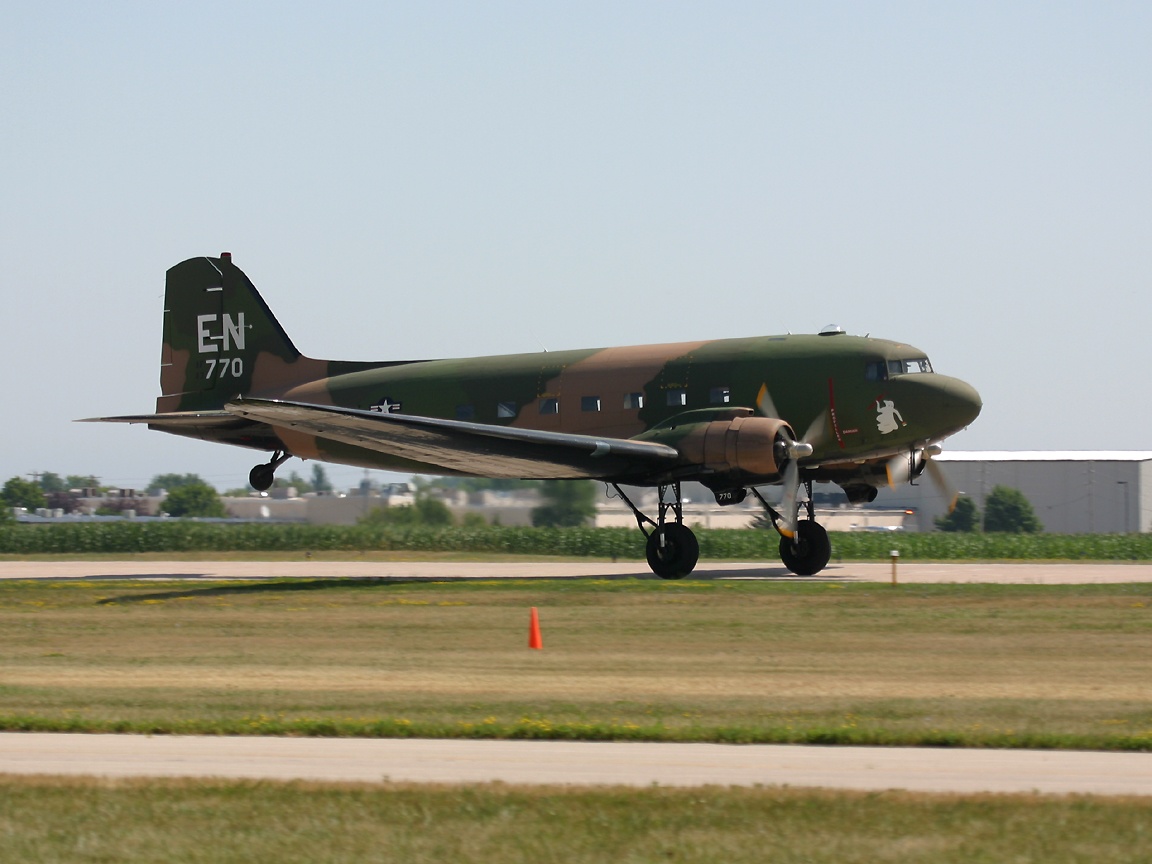
| OK,
so what's a world war two DC-3 Dakota doing in the post world war two highlights
page? Well, for starters this is a military version, so it's
not a DC-3, it's a C-47. And furthermore, it's a Vietnam era
AC-47 "Spooky" gunship - the "A" standing for "attack". Fifty
three C-47s were converted to AC-47s during the Vietnam war, each armed
with three 7.62mm gatling guns. They would circle around an
enemy position and rain down fire against it. Crews and forces
on the ground called the AC-47s "Spooky" or "Puff the Magic Dragon". |
 |
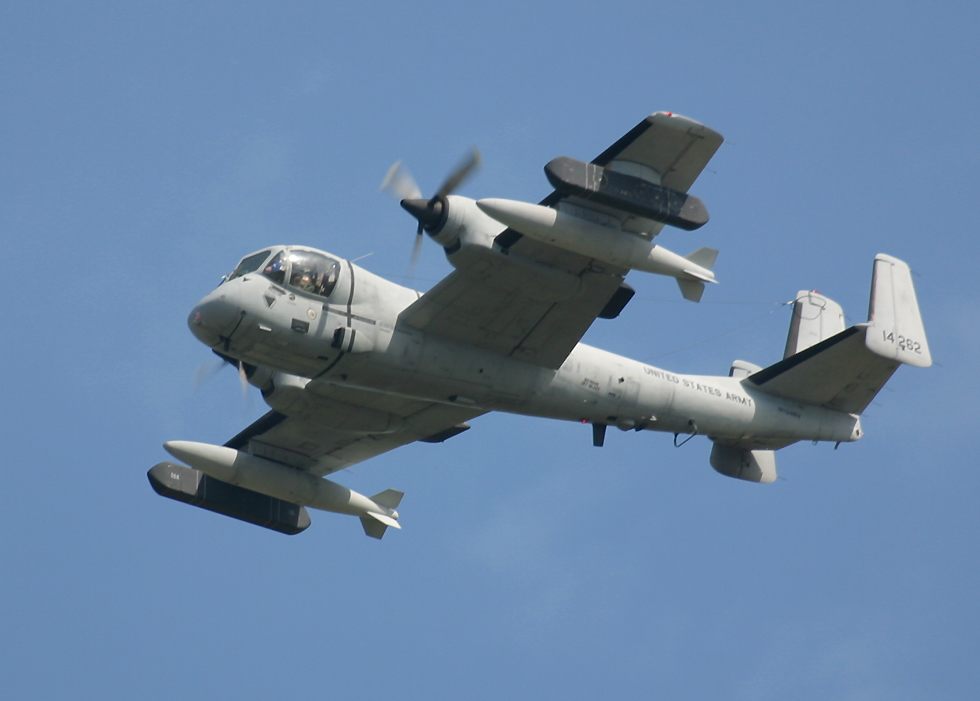
| The
Grumman OV-1 Mohawk is another Vietnam era aircraft. Designed
as an armoured battlefield surveillance aircraft, it was eventually equipped
to carry guns and rockets. It's unusual to have an army aircraft
built by Grumman, since they normally build naval aircraft; however the
original intention was for both the army and the marines to be equipped
with Mohawks. |
 |
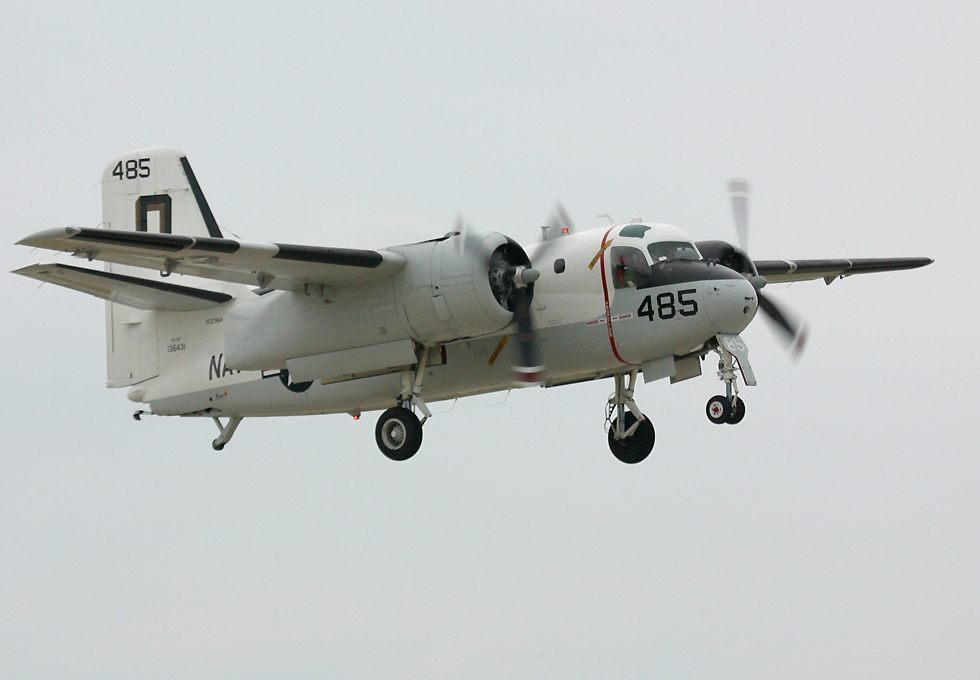
| Here's
another Grumman, the S-2 Tracker. The tailhook at the rear
gives the Tracker away as a carrier-borne aircraft. Originally
designed as a submarine hunter killer (hence the name Tracker), it also
served as a cargo plane bringing people, mail and supplies onto aircraft
carriers at sea. |
 |
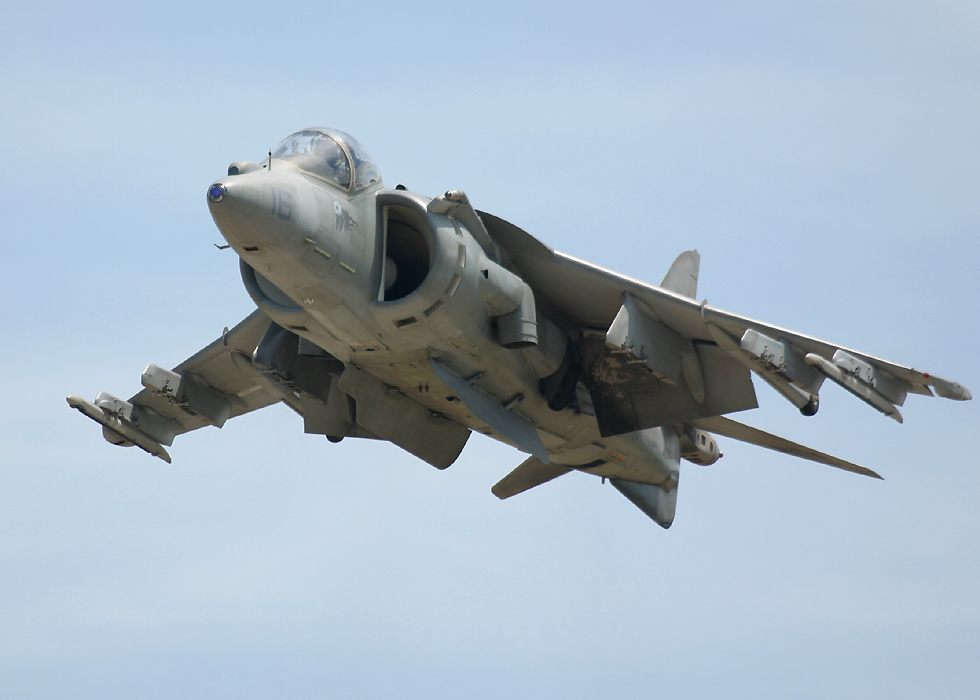
| The
AV-8B Harrier is the United States marine corps' favorite aircraft, valued
for its vertical take-off and landing capabilities and heavy payload.
The Harrier's ability to do vertical or short take-offs and landings also
allows it to operate from marine corp aircraft carriers, which are much
smaller than the navy equivalents. This is one of the few aircraft
in the American armed forces which was developed overseas, in this case
by the British. The AV-8B is a significantly heavier and more
capable version of the original British Harrier, which was used in both
fighter and attack configurations. The AV-8B is a regular guest
at Oshkosh, but parents should be warned that its ear-splitting performance
might be a bit too much for their children! |
 |
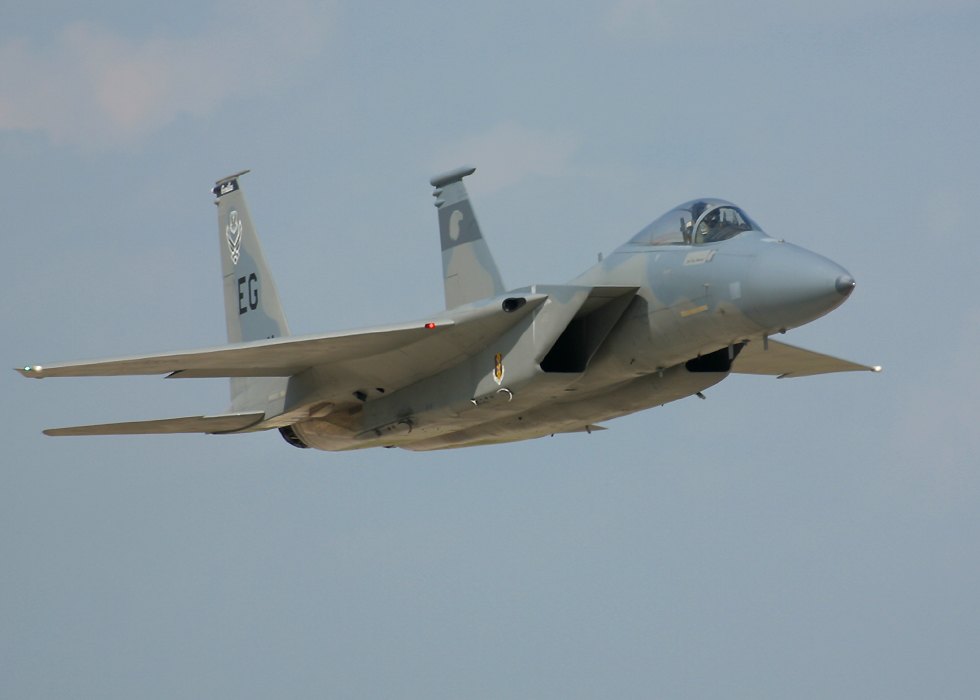
| The
F-15 Eagle is perhaps the world's best fighter aircraft, rivalled only
by Russian fighters like the MiG-29 "Fulcrum" and the Su-27 Flanker or
Su-35 Super Flanker. |
 |
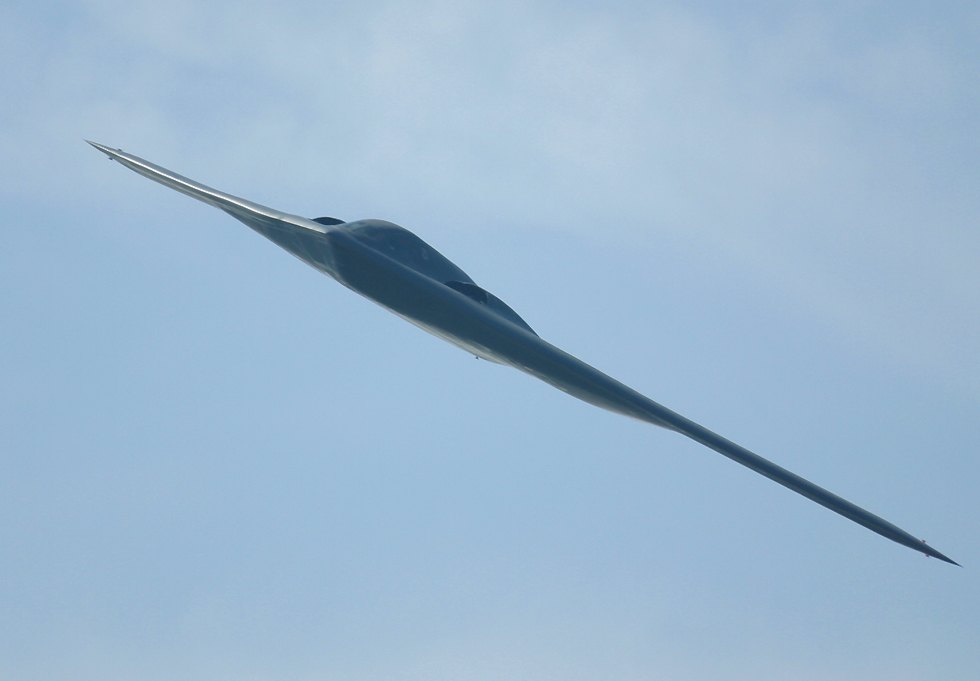
| The
Northrop B-2 "Spirit" stealth bomber has to be one of the most interesting
aircraft on the planet. It's apparently futuristic looks are
misleading, however, since it's derived from a very similar looking flying
wing bomber which Northrop had in the air in 1946! The story
is explained in more detailed in this page about a B-2
flying at the Frederick Airshow of 2002, together with some B-2
closeups at the same show. |
 |
 |