
Heinkel He 111 Bomber at Frederick 2000 Airshow
|
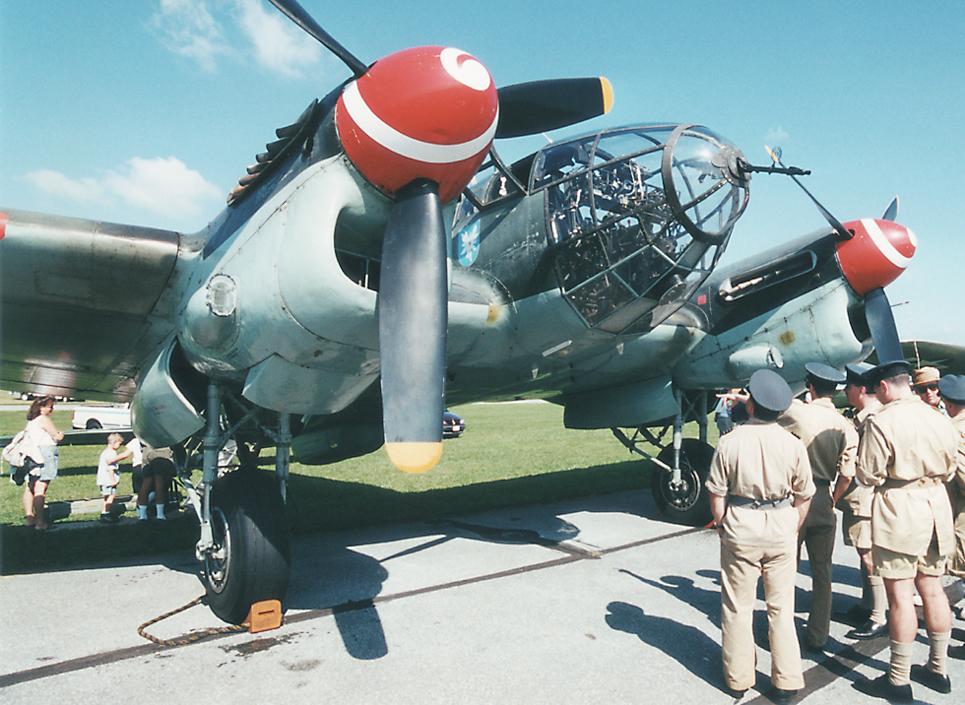
The Heinkel company in Germany flew the first prototype He 111 in February of 1935, however as with so many aircraft types developed at that time, it was supposedly designed to be an airliner, and entered service as such with Lufthansa in 1936. |
 |
|
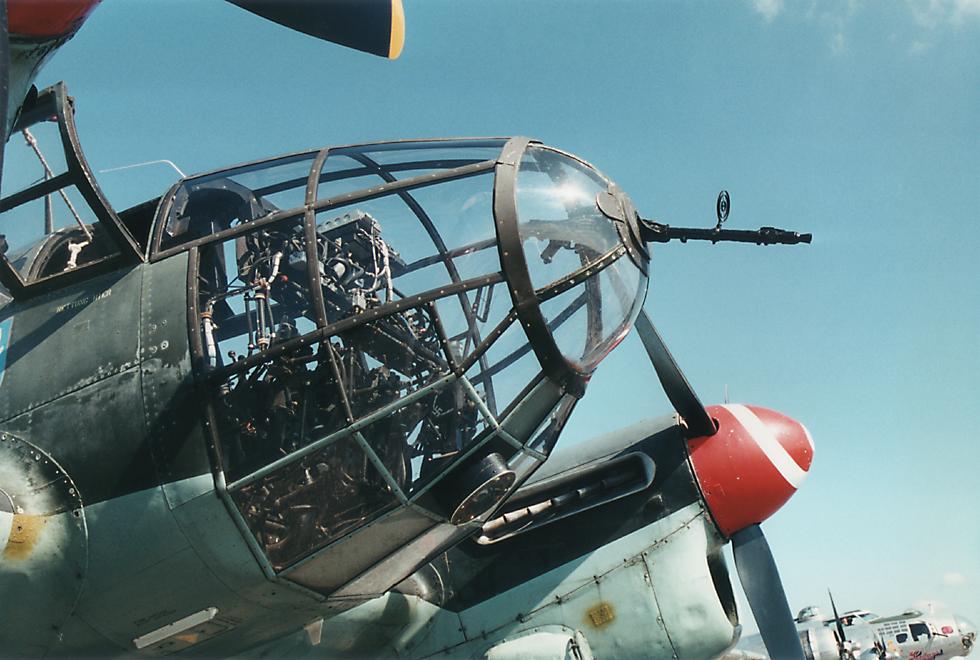
As you can see from the previous photo, when used as a bomber the He 111 had a machine gun fitted in the nose, and both a dorsal hump and a ventral gondola were also added, each equipped with a single machine gun. Later models could be armed with up to seven 7.92mm machine guns, a 13mm machine gun and a 20mm cannon. |
 |
|
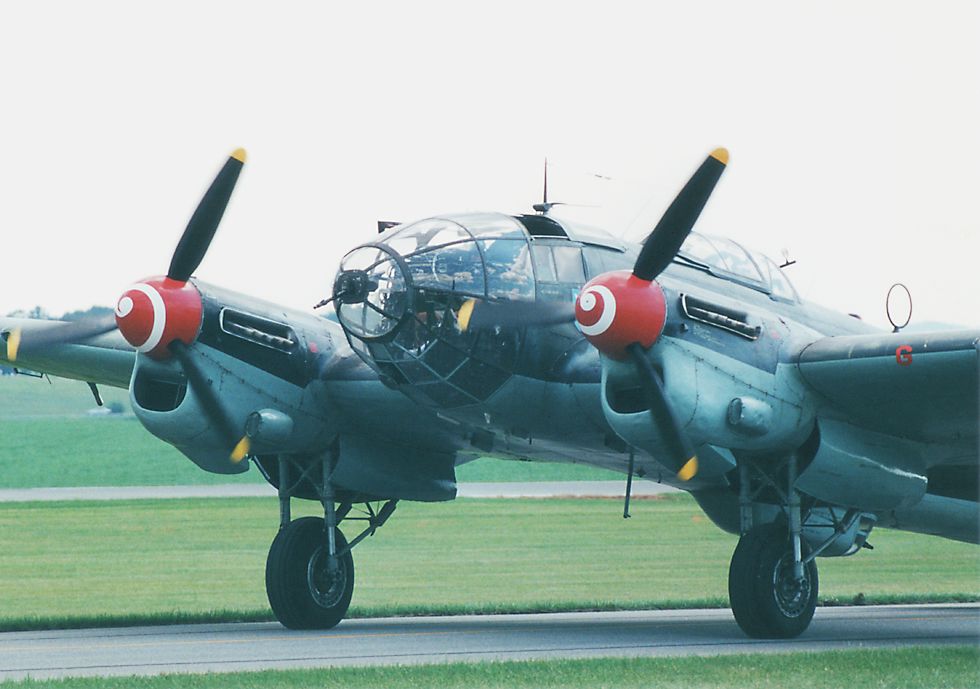
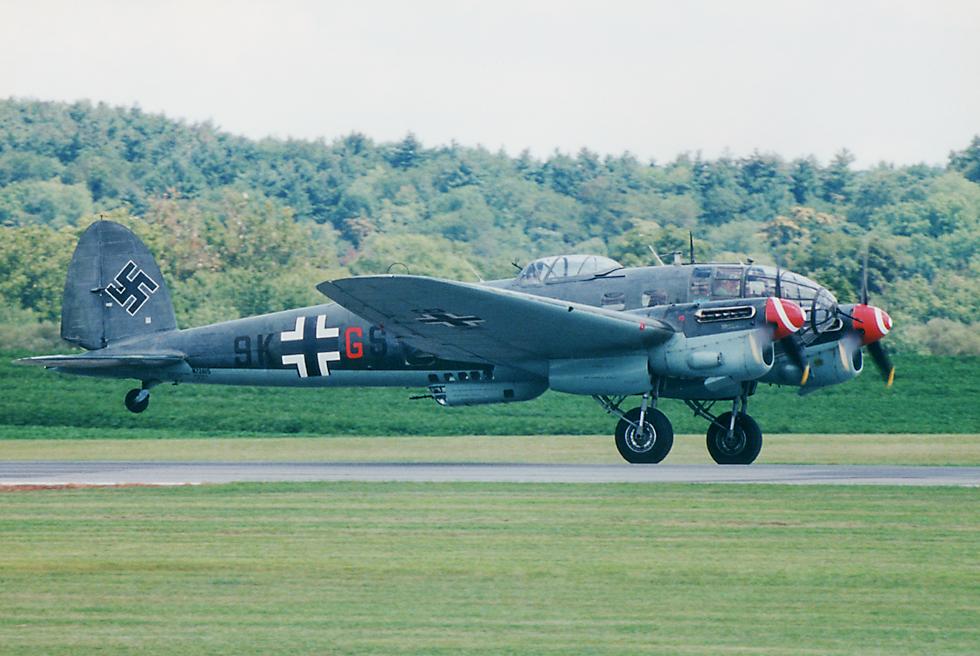
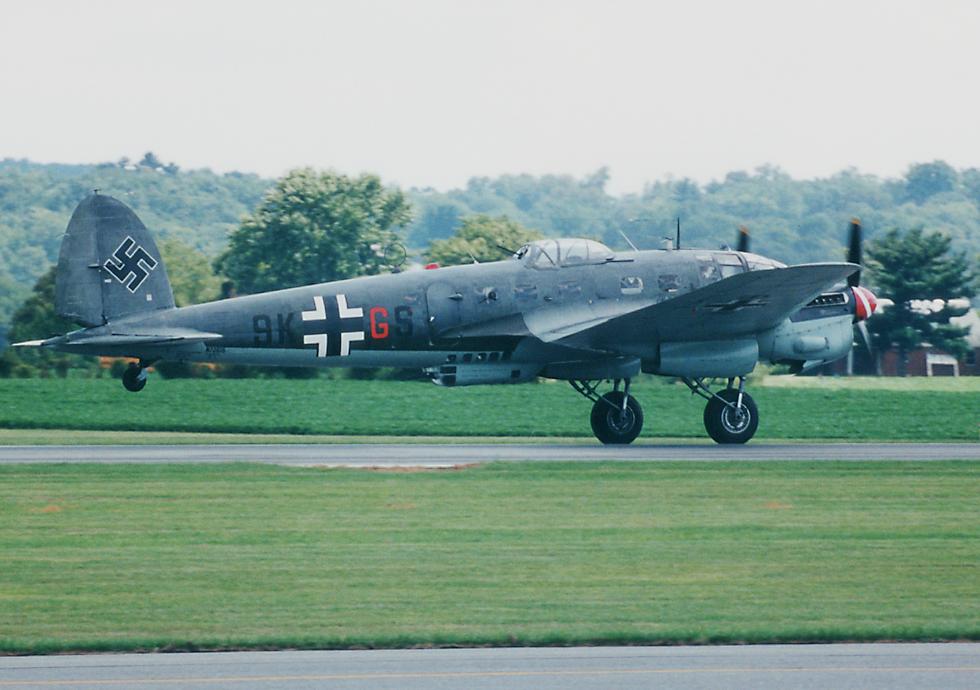
Here you see it taxying out for its display. Although this is the form of the aircraft most people are familiar with, it wasn't until late 1938 that the bullet-shaped nose was introduced, earlier models having a more conventional stepped windscreen like a B-17 Flying Fortress. |
 |
|
The He 111 went through a large number of different versions, varying by the powerplants that were used, the defensive armament, and the bombloads and bomb carrying mechanisms (internal to the fuselage, external and even in cells within the inner wing sections). |
 |
|
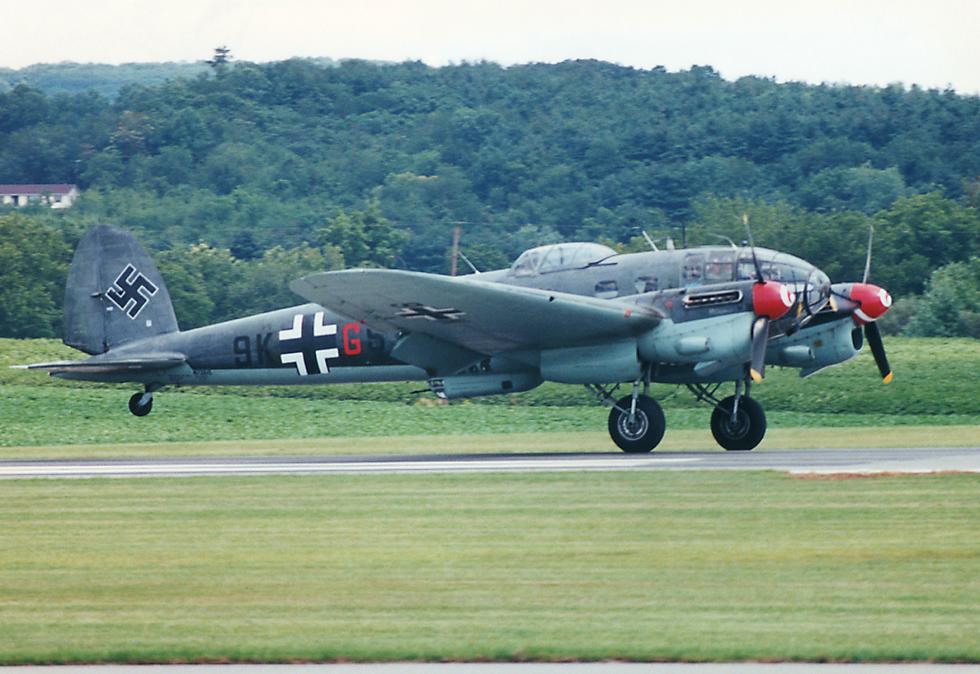
In this photo of the He 111 on its takeoff roll, you can clearly see the three defensive machine guns which equipped early models. |
|
|
Since it was one of the losing combatants during the war, it's very rare nowadays to see any German aircraft flying at airshows, though there are a few, such as Messerschmitt Bf109E and Bf109G fighters and a couple of examples of the Mitsubishi Zero fighter in more or less original condition. |
 |
|
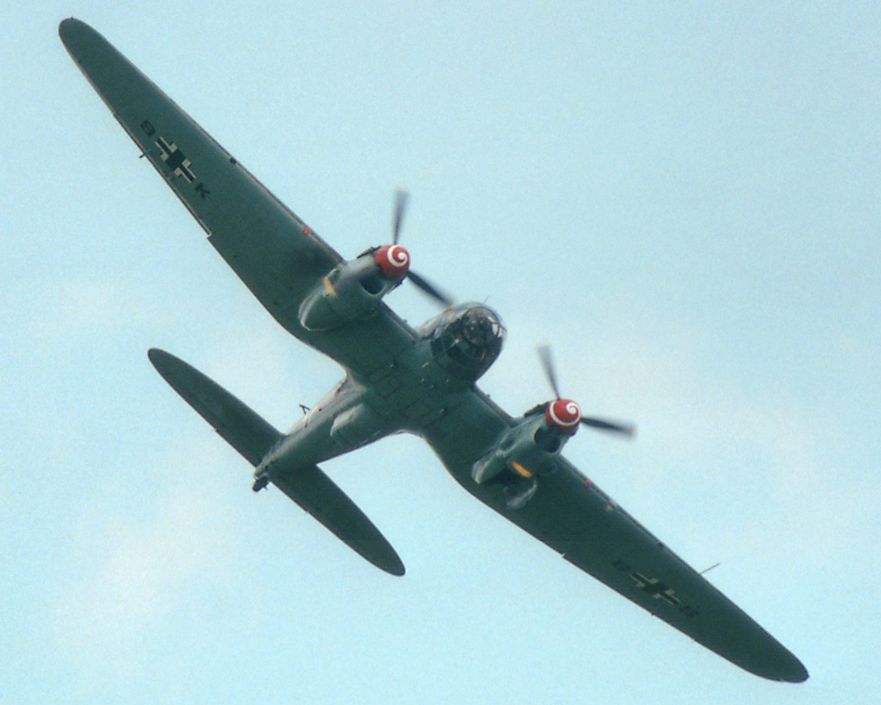
Early aircraft used a variety of engines, including BWM radials, but the aircraft remained underpowered until 1000 horsepower Daimler Benz engines were fitted in 1936, giving it much more potential as a military type. As well as allowing a greater bomb load, the increased power took the top speed from 170 miles per hour (275 km/h) to 227 miles per hour (365 km/h). |
 |
|
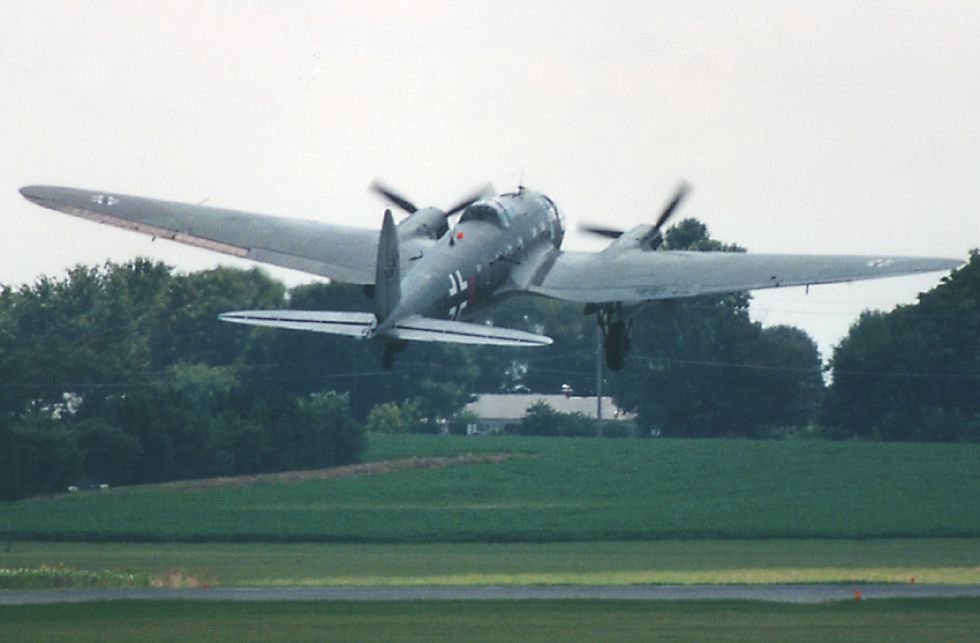
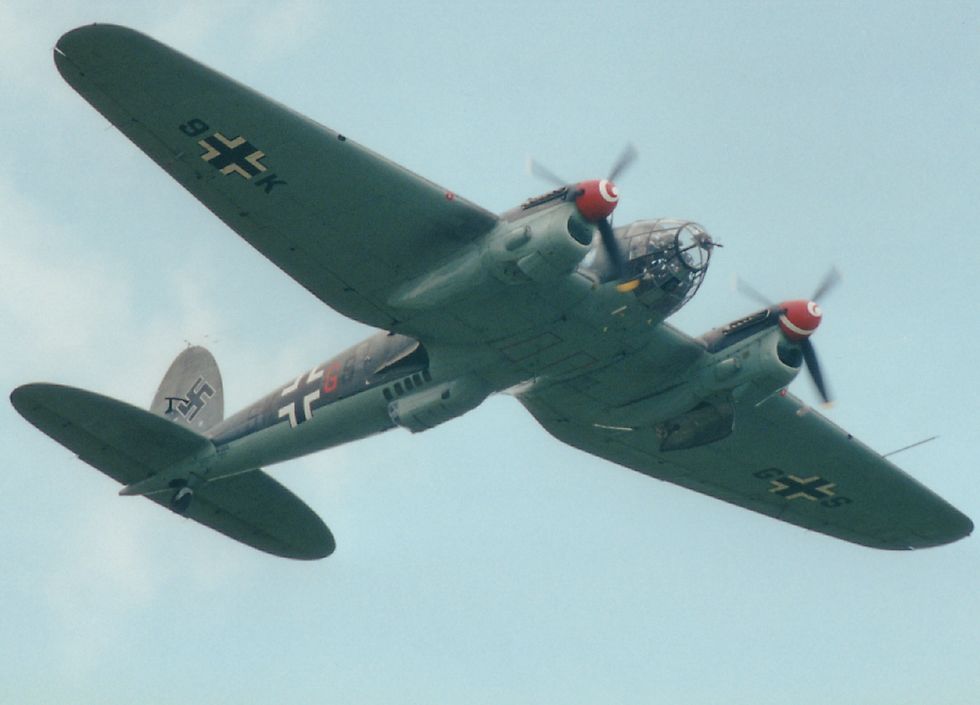
When taken into conflict during the Spanish civil war this speed allowed the He 111 to outrun most of the fighter aircraft it faced, such as the Russian designed Polikarpov I-5 biplane. Early models had a true elliptical wing, but to simplify manufacturing the leading and trailing edges were made straight, with the trailing edge bending into an inverted gull wing before merging into the fuselage. You can see that the leftmost undercarriage door didn't close after takeoff, instead it remained open during the entire display. |
 |
|
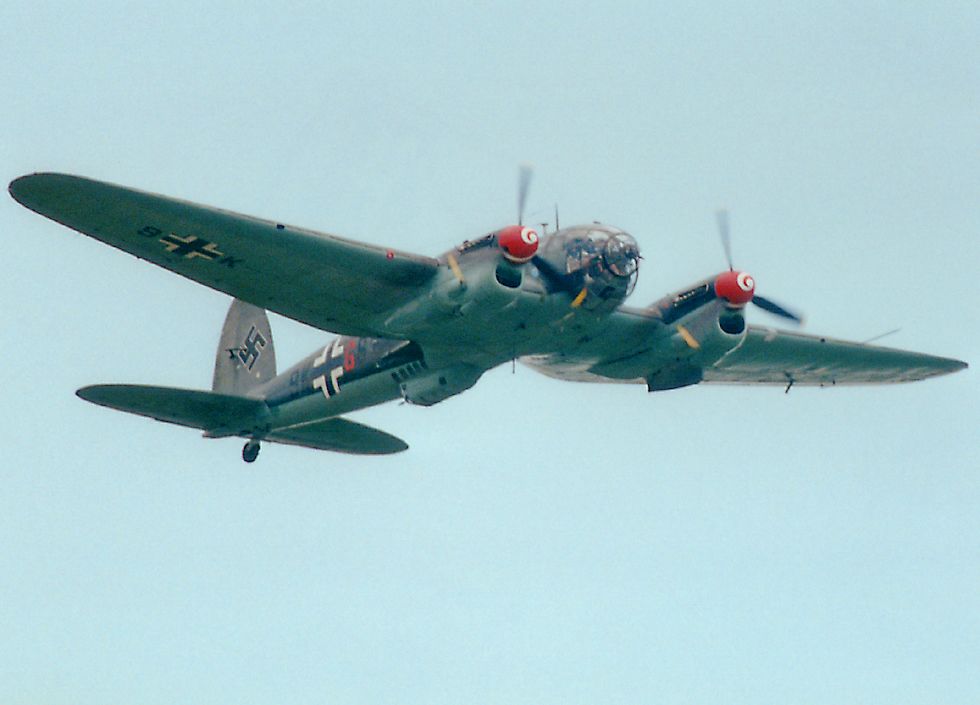
With no real opposition the Heinkels of Germany's Condor Legion were able to carry their internal bombloads of 1000 kilograms (2205 pounds) with impunity, their most famous or infamous action being the bombing of the town of Guernica. This attack was effectively an experiment conducted by the Germans in April of 1937 to determine what was required to completely obliterate a city by aerial bombardment. |
 |
|
The German successes in Spain and later in Poland and France left them over-confident, and it wasn't until the Battle of Britain that they realized how underarmed and helpless the He 111 was against modern fighters like the Hurricane and Spitfire. Although they caused enormous damage against British cities, large numbers of Heinkels were being shot down and it became clear that they couldn't operate during the daytime, so the bombing campaign switched to night raids. With the bombload increased to a maximum of 5500 pounds these attacks continued to be a serious problem until the British regained complete dominance of their air space. As late as 1944 over 100 He 111s were converted to serve as launch platforms for early V1 buzz bombs, about 80 of these models were shot down before they were phased out in preference to launching the V1s from ramps. Other versions were used as torpedo bombers or as a carrier for early radio-controlled smart bombs like the Fritz X and the rocket propelled Hs 293 anti-shipping missile. Perhaps the most extraordinary variant was the He 111Z "Zwilling" which consisted of two He 111s joined wingtip to wingtip, with a fifth engine mounted in the middle; this type was used to tow the giant Messerschmitt Me 321 glider. |
 |
|
Although it was apparent that the He 111 was becoming obsolete, too few replacements like the Ju 88 were available, so the Heinkel was forced to soldier on, and it was still being manufactured in the latter part of 1944, though by this time they were operating mainly as transports or for small scale night actions. The final size of the production run was 7,300 aircraft. |
 |
|
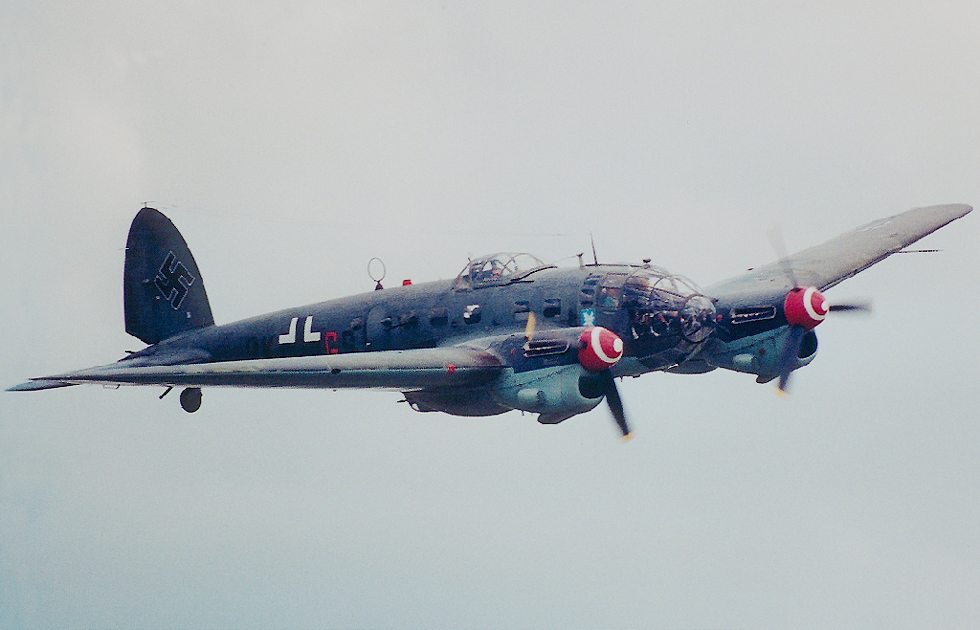
This particular aircraft was license built by the Spanish company CASA, which made well over 200 CASA 2.111s both during and after the war, powered by either German Jumo engines or, after the war, British Rolls-Royce Merlins. This one has Merlins, but you can see a German built He 111 with Jumo engines on display in the RAF Museum at Hendon. After Spain retired this type in 1965 a large number of them, including this one, were used in the movie "Battle of Britain", and later the Arizona wing of the Commemorative Air Force bought this aircraft, which had previously served as a personal and staff transport for none other than General Franco of Spain. |
|
|
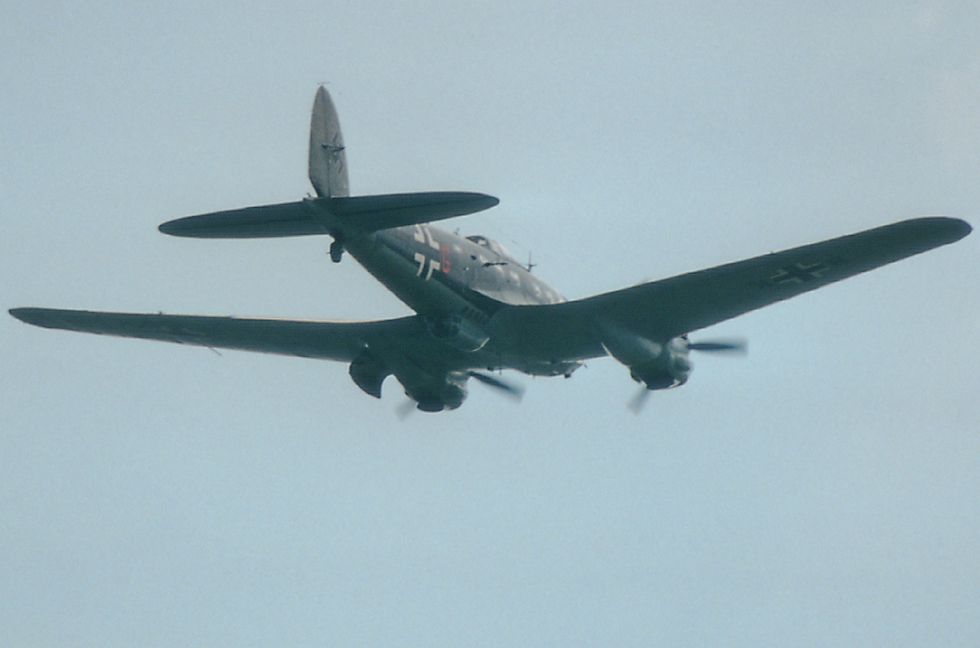
Tragically, this aircraft and its crew of two were lost in July of 2003 when it crashed at Cheyenne, Wyoming after losing the left engine while approaching the airport for a landing. |
 |